Home / News / Industry News / Ceramic Brake Pads Explained: Performance, Longevity, and Why Drivers Are Switching
 2026.01.30
 Industry News
Content
Ceramic brake pads are made from a dense blend of ceramic fibers, bonding agents, and small amounts of copper or metal shavings that improve heat transfer. Unlike traditional semi-metallic pads, they rely on friction stability rather than aggressive abrasion to stop your vehicle efficiently.
When the brake pedal is pressed, ceramic material grips the rotor surface evenly, converting motion into heat with minimal vibration. This balanced friction process leads to smoother deceleration, quieter braking, and consistent performance even under repeated heavy use.
Because ceramic pads handle heat exceptionally well, they maintain stopping power during highway driving, mountain descents, and urban stop-and-go traffic where brake fade can become an issue.
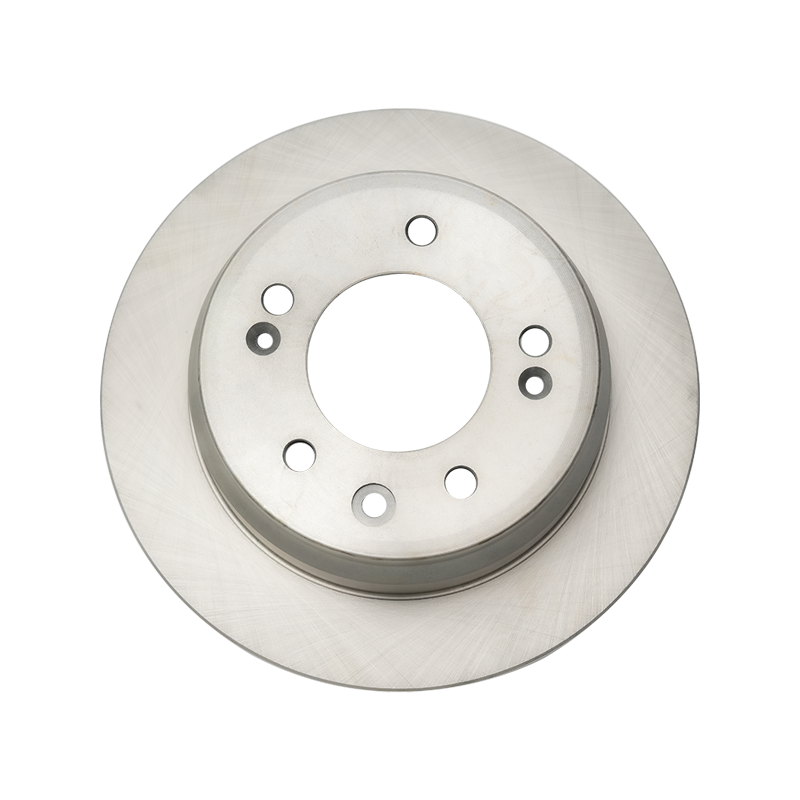
Ceramic brake pads perform best when paired with high-quality rotors designed for smooth heat dissipation. This combination maximizes braking efficiency while minimizing wear and vibration.
Drivers who combine ceramic brake pads with coated or vented rotors often experience smoother pedal feel and significantly reduced maintenance costs over time.
Understanding how ceramic pads compare with organic and semi-metallic options helps drivers make an informed decision based on driving habits and performance expectations.
| Brake Pad Type | Noise Level | Dust Output | Durability | Heat Resistance |
| Ceramic | Very Low | Minimal | High | Excellent |
| Semi-Metallic | Moderate | High | Moderate | Very Good |
| Organic | Low | Moderate | Low | Poor |
Ceramic brake pads clearly stand out for everyday driving comfort, cleanliness, and long-term reliability.
Ceramic materials disperse heat evenly across the rotor surface, preventing hotspots that lead to brake fade. This allows for confident braking during extended downhill drives or aggressive traffic situations.
Thanks to their fine friction texture, ceramic pads generate minimal vibration. This eliminates squealing commonly associated with metal-based brake systems.
Drivers notice smoother braking response and predictable stopping distance regardless of temperature or load conditions.
While ceramic brake pads often cost more initially, their extended lifespan offsets the upfront investment. Many drivers report 30% to 50% longer service intervals compared to semi-metallic pads.
Lower dust production also reduces wheel cleaning time and prevents long-term rim corrosion, preserving vehicle appearance and resale value.
Ceramic brake pads are ideal for drivers who prioritize comfort, reliability, and clean performance. They are especially beneficial for:
High-performance racing vehicles may still favor specialized metallic compounds, but for everyday road use, ceramic pads deliver superior overall balance.
Proper installation plays a major role in maximizing ceramic brake pad benefits. Always clean rotor surfaces thoroughly before fitting new pads and apply high-temperature brake lubricant to contact points.
After installation, perform a controlled bedding-in process by making gradual stops from moderate speeds. This helps evenly transfer friction material onto the rotor for optimal braking performance.
Ceramic brake pads represent a modern solution to common braking frustrations such as dust, noise, and rapid wear. Their ability to maintain performance under heat while preserving rotor health makes them one of the best brake pad choices for daily driving.
When combined with quality rotors and proper installation, ceramic pads deliver smooth, quiet, and dependable braking that lasts longer and requires less maintenance—making them a smart investment for most vehicle owners.
Recommended Products


+86-139 6193 3287
+86-515-88410559

+86-515-88580498

reickchina@reickparts.com

B1002 Huabang Dong No.1# South Renmin Road, Tinghu District, Yancheng City, Jiangsu, China
Copyright © 2024 Yancheng Reick Automotive Parts Co., Ltd. All Rights Reserved.
Automotive Brake Manufacturers Automotive Clutch Parts Suppliers



 English
 Español
 italiano