2026.07.03
 Industry News
Content
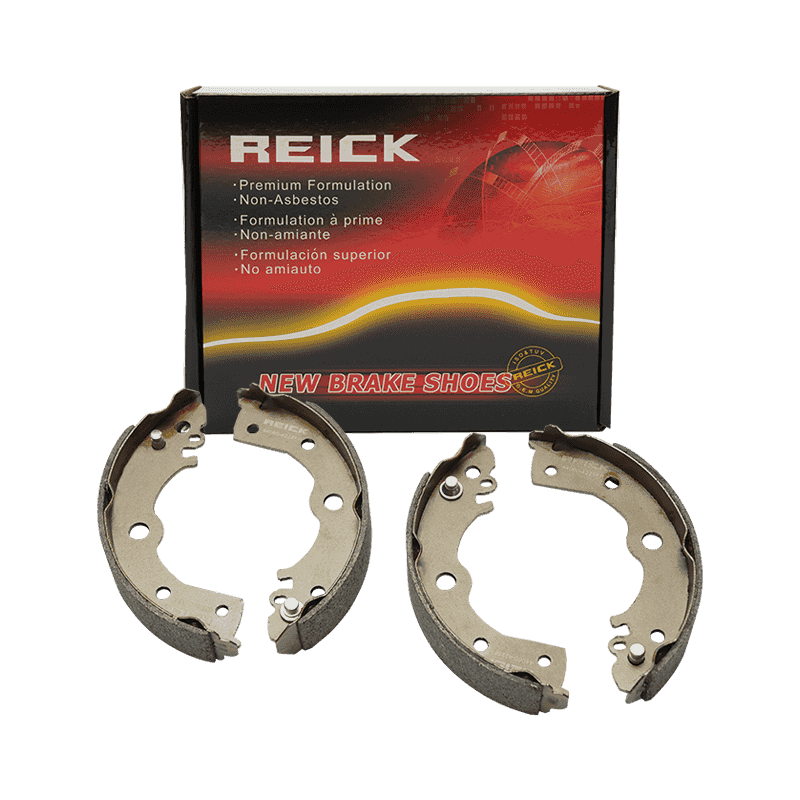
Ceramic brake shoes provide the most refined braking experience for everyday driving. They combine significantly lower noise, minimal visible dust, and a friction level that remains stable across a wide temperature window, making them the top choice for drivers who prioritize comfort, cleanliness, and long component life. In controlled dynamometer tests, ceramic formulations can reduce brake dust output by up to 70 percent compared to typical semi-metallic shoes, while rotor wear often drops by 20 to 30 percent.
The term ceramic brake shoe refers to a friction material built around ceramic fibers, non-ferrous fillers, and high-performance bonding agents. Small amounts of fine copper or other metals are sometimes included for heat transfer, but leading formulations now follow copper-free standards to meet environmental regulations. This blend creates a material that is dense enough to resist fade yet soft enough to avoid aggressive rotor scoring. Unlike fully dense ceramic rotors found in motorsport, these shoes are engineered to be compliant and predictable on cast iron drums or discs used in standard vehicles.
A dedicated China Ceramic Brake Shoes factory with over 20 years of R&D and production experience builds quality into every batch through a strict three-phase control system. Raw material suppliers are screened and audited, incoming materials are tested for chemical composition and particle size, and the production process is designed to keep every parameter traceable. This approach limits batch-to-batch friction variation to less than ±5 percent, ensuring that the braking behavior the driver feels today will be identical after a replacement set is installed two years later.
| Quality Stage | Control Actions | Result |
|---|---|---|
| Supplier audit | On-site process review, ISO-certified material certificates | Consistent raw fiber purity above 98 percent |
| Incoming inspection | XRF spectrometry, sieve analysis, moisture testing | Rejection of out-of-spec materials before mixing |
| Process control | Real-time monitoring of press pressure, temperature, and cure time | Density variation kept within ±2 percent |
| End-of-line testing | Shear strength, hardness, and friction level spot checks per batch | Full traceability via batch code to raw material lot |
Laboratory testing reveals clear performance gaps that directly influence daily driving satisfaction. The table below summarizes data collected under the SAE J2522 test protocol, showing how ceramic shoes compare to semi-metallic and organic alternatives.
| Characteristic | Ceramic | Semi-Metallic | Organic |
|---|---|---|---|
| Friction stability (mu variation) | ±0.03 | ±0.06 | ±0.08 |
| Noise tendency | Very low | Moderate to high | Low |
| Dust generation | Minimal, light colored | Heavy, dark | Moderate, light |
| Rotor wear | Low | High | Medium |
| Effective temperature range | -20°C to 400°C | -10°C to 500°C | 0°C to 300°C |
| Typical lifespan on passenger cars | 50,000–70,000 km | 35,000–50,000 km | 25,000–40,000 km |
Ceramic brake shoes are not a universal solution for every vehicle, but they dominate their ideal application window. They excel on mid-size sedans, crossover SUVs, minivans, and light city delivery vehicles where driving rarely involves sustained high-temperature braking. The material’s stable friction and low wear make it especially suitable for stop-and-go traffic and suburban commutes. For commercial trucks carrying heavy loads or vehicles used in mountainous towing, a semi-metallic lining may still be the better choice due to its higher thermal ceiling. Understanding this fitment logic helps workshops and importers avoid misapplication and warranty returns.
Even the best ceramic brake shoes require correct installation and a proper bedding cycle to deliver their full potential. Skipping these steps can lead to uneven material transfer, vibration, and a permanent drop in friction consistency. Technicians should follow a structured run-in procedure immediately after installation.
A ceramic brake shoe is only as good as the engineering and process discipline behind it. A specialized China Ceramic Brake Shoes factory that has invested over 20 years in R&D understands how small adjustments in fiber length, filler ratio, or curing cycle shift the friction curve. This depth of experience translates into products that pass not just one sample test but maintain their performance through thousands of production sets. When every batch is traceable from the raw material lot to the final packaging, distributors and workshops gain the confidence to recommend ceramic shoes without fear of inconsistency. That reliability, combined with the inherent benefits of the material, is what makes a professionally manufactured ceramic brake shoe the intelligent default for a wide range of passenger vehicles.
Recommended Products


+86-139 6193 3287
+86-515-88410559

+86-515-88580498

reickchina@reickparts.com

B1002 Huabang Dong No.1# South Renmin Road, Tinghu District, Yancheng City, Jiangsu, China
Copyright © 2024 Yancheng Reick Automotive Parts Co., Ltd. All Rights Reserved.
Automotive Brake Manufacturers Automotive Clutch Parts Suppliers



 English
 Español
 italiano