2026.05.20
 Industry News
Content
Every time you press the brake pedal, a chain of precisely engineered events fires in milliseconds — and the only thing standing between you and a collision is the condition of your car's braking system. Brake failure is not a rare horror story; it is the direct result of worn or neglected brake system parts. Knowing what each component does, and when to replace it, is the most practical safety knowledge a driver can have.
Modern automobile brakes are a hydraulic system. Pressing the pedal activates the master cylinder, which pushes brake fluid through steel lines to the calipers or wheel cylinders at each corner. That fluid pressure clamps the friction material against a spinning rotor or drum, converting kinetic energy into heat and slowing the wheel. The system runs in parallel circuits — if one circuit loses pressure, the other still provides partial braking.
Most current vehicles pair disc brakes on the front (where 70–80% of braking force is applied) with either disc or drum brakes on the rear. Anti-lock braking (ABS) adds wheel-speed sensors and a control module that modulates pressure automatically to prevent wheel lockup during hard stops.
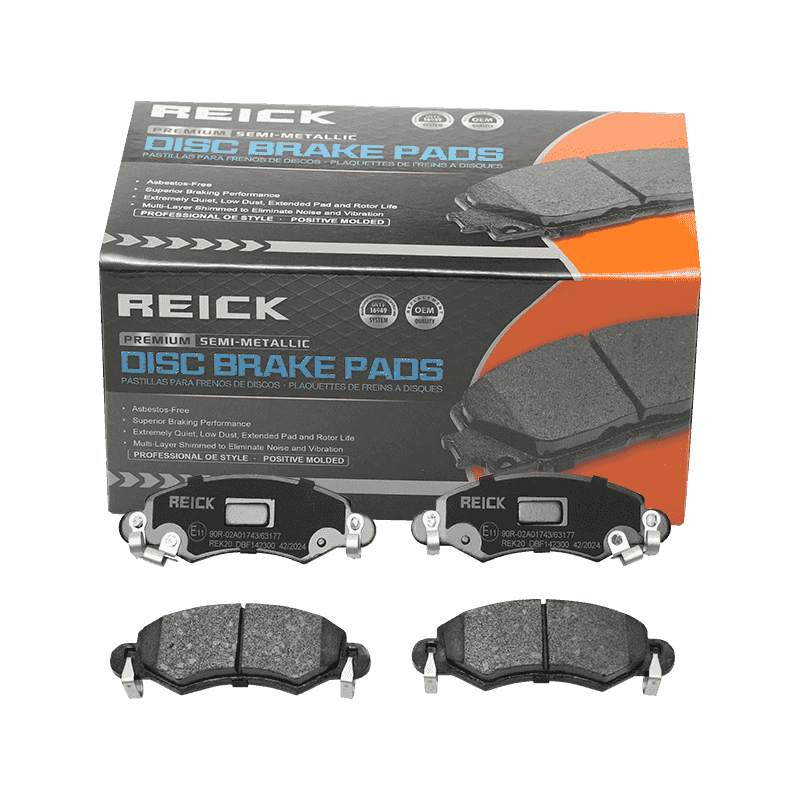
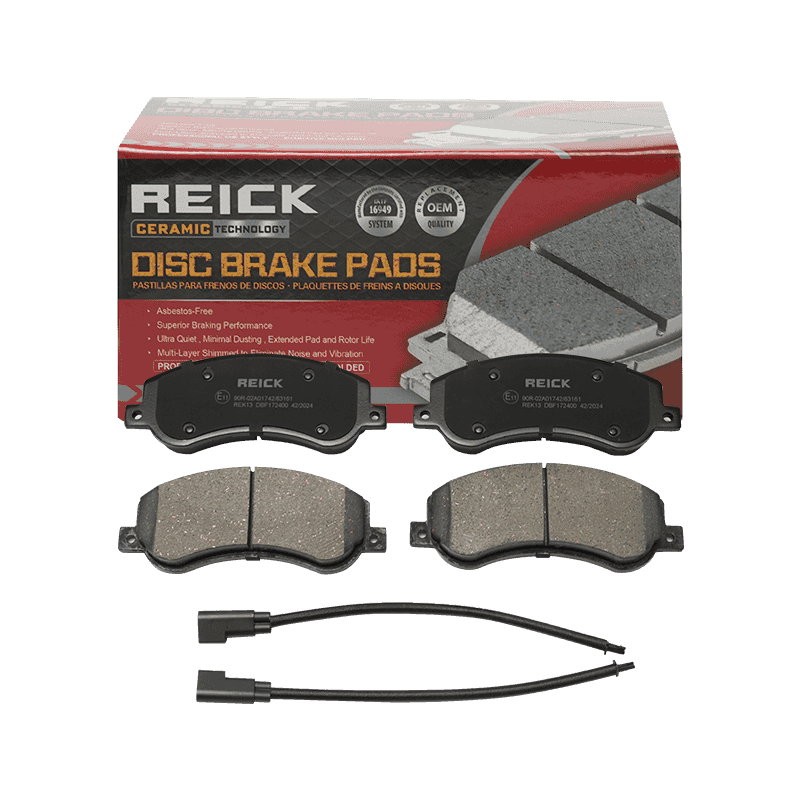
Brake pads are the highest-wear item in a disc brake system. They press against the rotor to create friction, and they degrade with every stop. Service life depends heavily on material: semi-metallic brake pads handle heat well and suit aggressive driving, while ceramic brake pads run quieter, produce less dust, and are a practical choice for daily commuters. Most pads include a wear indicator — a metal tab that produces a high-pitched squeal when the friction material drops below safe thickness. Replace at or before that signal; waiting until you hear metal-on-metal grinding means rotor damage is already underway.
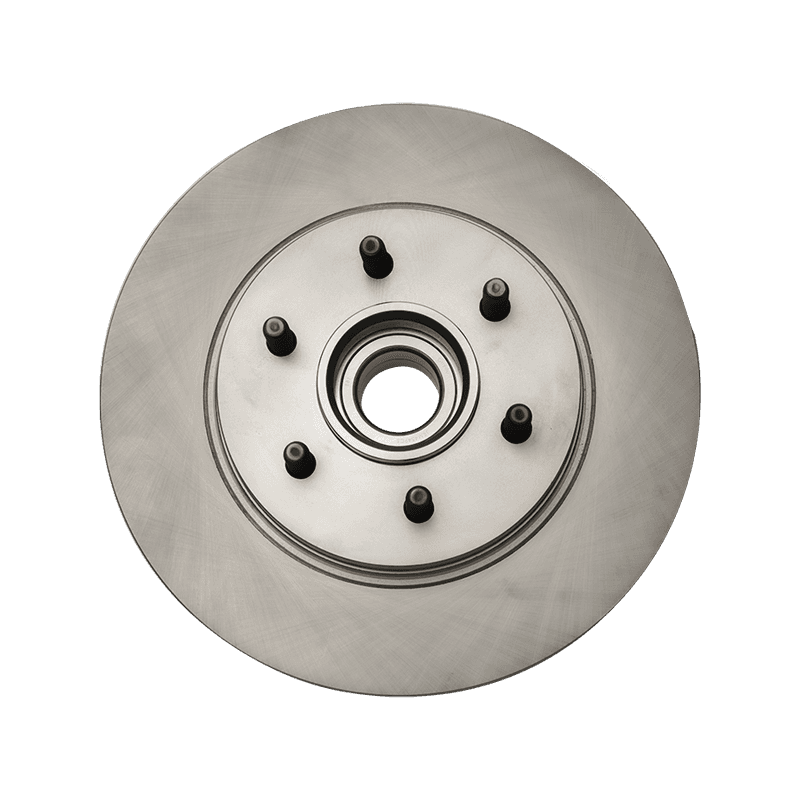
The rotor is the flat iron disc that spins with the wheel. Its job is to provide a stable, flat surface for the pads to clamp against and to dissipate the enormous heat generated by repeated stops. A rotor in poor condition — warped from heat cycles, grooved from worn pads, or corroded from sitting unused — produces vibration through the pedal and extended stopping distances. Replacement brake disc rotors are typically changed in pairs (both fronts or both rears) to maintain balanced braking. Replace them whenever a pad set is exhausted or when rotor thickness falls below the manufacturer's minimum specification.
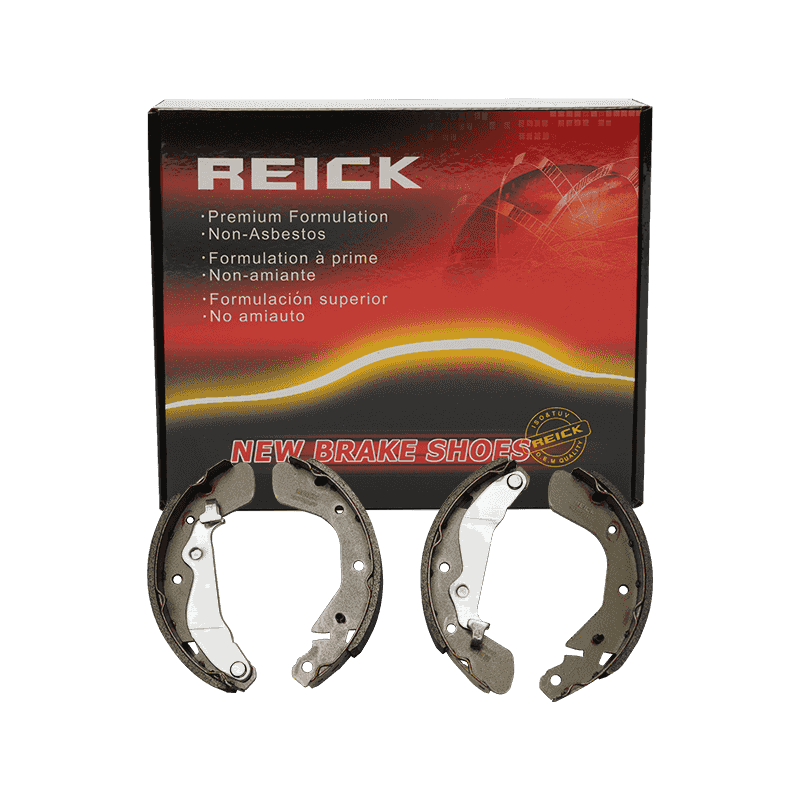
Drum brake systems — still found on rear axles of many economy and light-duty vehicles — use brake shoes instead of pads. Shoes are curved friction surfaces that press outward against the inside of a rotating drum. They tend to last longer than pads because the rear axle carries less braking force, but contamination from a leaking wheel cylinder seal will destroy them quickly. Check shoes whenever rear brake performance feels uneven or the parking brake requires excessive pull.
The brake booster (vacuum servo) multiplies the force you apply to the pedal — typically by a factor of 2 to 4 — so that stopping a two-ton vehicle requires only light foot pressure. A failing booster makes the pedal feel hard and stiff, and braking distances increase noticeably. On turbocharged and hybrid vehicles, an electric vacuum pump or electrohydraulic booster takes over the same function.
The master cylinder converts pedal pressure into hydraulic pressure and distributes it through the brake lines. Modern tandem master cylinders split the system into two independent circuits for redundancy. Brake fluid is hygroscopic — it absorbs moisture over time, which lowers its boiling point and can cause vapor lock under heavy braking. Most manufacturers recommend a fluid flush every two years regardless of mileage.
| Type | Heat Resistance | Noise/Dust | Best For |
|---|---|---|---|
| Ceramic | Good | Low | Daily commuting, passenger cars |
| Semi-Metallic | Excellent | Moderate | Performance driving, towing, trucks |
| Low-Metal / Organic | Moderate | Low–Moderate | Light urban use, older vehicles |
A simple rule: inspect automobile braking components at every tire rotation, roughly every 5,000–7,500 miles. The warning signs to act on immediately are:
Brake fade — the temporary loss of stopping power after repeated hard stops — is caused by overheated pads or boiled brake fluid. It is common during mountain descents or track use and a reminder that thermal management is a key selection criterion when choosing brake system parts.
Braking systems are evolving faster than at any point since the introduction of ABS. The U.S. NHTSA finalized a federal standard requiring automatic emergency braking on all new passenger vehicles by September 2029, projecting the change will save at least 360 lives and prevent 24,000 injuries per year. Electric and hybrid vehicles increasingly rely on regenerative braking — using the motor as a generator to recover energy — which reduces wear on traditional friction components significantly. However, the physical brake pads, rotors, and hydraulic hardware remain essential as the backup and low-speed stopping system in every design.
Regardless of how sophisticated the electronics become, the underlying brake system parts are the final line of mechanical defense. Selecting quality components — and replacing them on schedule — remains a non-negotiable part of vehicle ownership.
Recommended Products


+86-139 6193 3287
+86-515-88410559

+86-515-88580498

reickchina@reickparts.com

B1002 Huabang Dong No.1# South Renmin Road, Tinghu District, Yancheng City, Jiangsu, China
Copyright © 2024 Yancheng Reick Automotive Parts Co., Ltd. All Rights Reserved.
Automotive Brake Manufacturers Automotive Clutch Parts Suppliers



 English
 Español
 italiano