2026.04.23
 Industry News
Content
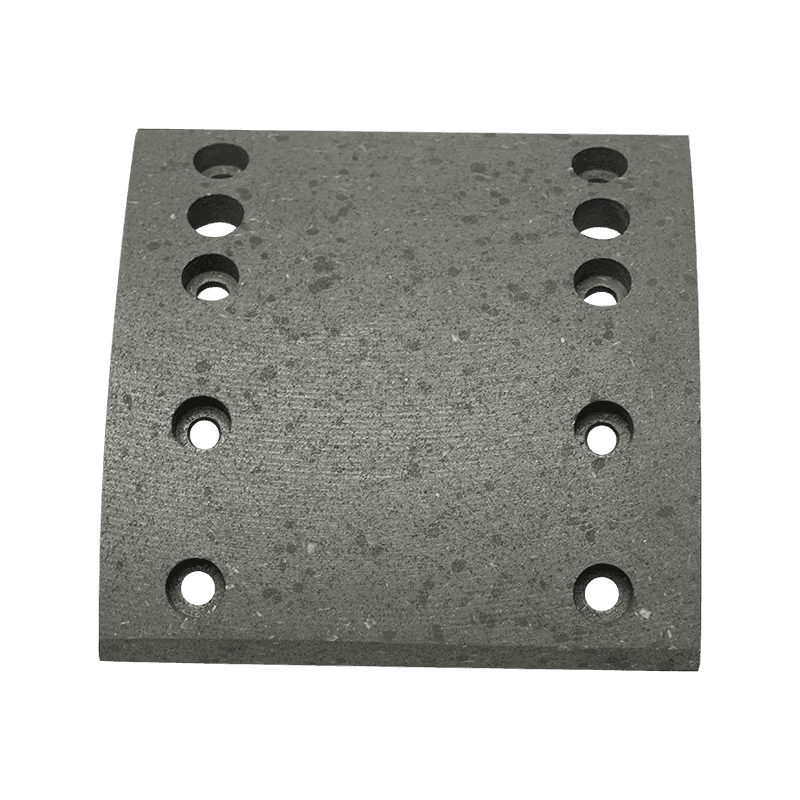
Brake shoes are the friction components inside drum brake systems. When you press the pedal, they press outward against the drum to slow your vehicle. The material they're made of determines how well they handle heat, noise, dust, and wear — and the two dominant options today are ceramic and semi-metallic.
Here's how they actually compare.
Semi-metallic brake shoes are composed of metal fibers — typically steel, copper, and iron — bonded with graphite lubricant and fillers. Metal content typically ranges from 30% to 70%, depending on the application, from daily commuting formulas to heavy-duty variants.
Ceramic brake shoes are built from dense ceramic compounds combined with copper fibers and other high-performance binders. The result is a harder, more thermally stable material that behaves very differently under friction compared to metals.
This is where semi-metallic shoes have a clear structural advantage. Metal conducts and dissipates heat efficiently, which means semi-metallic shoes resist brake fade better during sustained high-temperature braking — like long downhill stretches, towing, or repeated hard stops.
Ceramic shoes handle moderate heat well and stay consistent across typical driving temperatures. However, in extreme conditions, they can experience more fade than semi-metallics because ceramic compounds don't conduct heat as effectively.
Semi-metallic shoes offer stronger initial bite, especially at lower temperatures or when heavy loads are involved. The gritty metal content creates more aggressive friction against the drum surface.
Ceramic shoes deliver smooth, consistent stopping power suited to normal driving. They perform reliably in everyday conditions but aren't designed for the kind of repeated high-demand braking that semi-metallics are built to handle.
Ceramic shoes generate higher-frequency vibrations that fall outside the range of human hearing — the practical result is significantly less audible squeal. They also produce finer, lighter-colored dust that's less visible on wheel surfaces.
Semi-metallic shoes tend to be noisier, particularly during cold starts or in wet conditions. The metal-on-drum contact produces more dust as well, which can accumulate on wheels over time.
| Factor | Ceramic | Semi-Metallic |
|---|---|---|
| Heat Resistance | Moderate | High |
| Stopping Power | Smooth, consistent | Stronger bite |
| Noise Level | Very low | Higher (esp. when cold) |
| Dust Output | Low | More dust |
| Lifespan | Longer under normal use | Faster wear in mild use |
| Cost | Higher upfront | More affordable |
The right choice depends on how and where you drive:
If your vehicle uses drum brakes at the rear — as many sedans, light trucks, and economy cars do — the drum-and-shoe interaction also matters. Both ceramic and semi-metallic shoes must be properly matched to drum diameter, width, and the vehicle's brake system design. Browse our full range of brake shoes to find the right fit, or explore our ceramic brake shoes if quiet, low-dust performance is your priority.
Recommended Products


+86-139 6193 3287
+86-515-88410559

+86-515-88580498

reickchina@reickparts.com

B1002 Huabang Dong No.1# South Renmin Road, Tinghu District, Yancheng City, Jiangsu, China
Copyright © 2024 Yancheng Reick Automotive Parts Co., Ltd. All Rights Reserved.
Automotive Brake Manufacturers Automotive Clutch Parts Suppliers



 English
 Español
 italiano