2026.04.16
 Industry News
Content
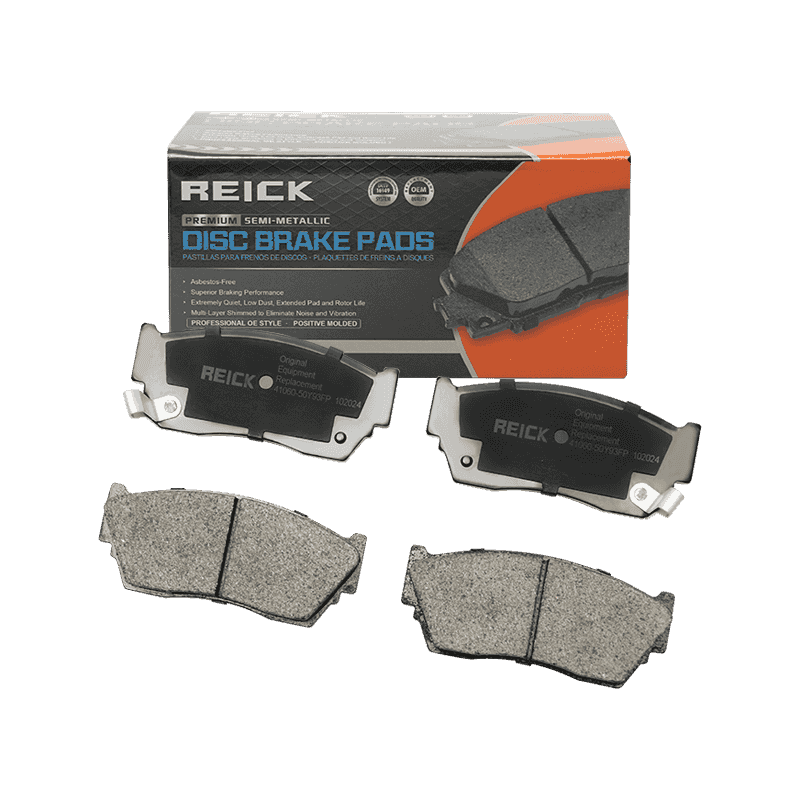
Semi-metallic brake pads have established themselves as the preferred friction material for high-performance driving due to their exceptional ability to handle extreme temperatures, deliver consistent stopping power, and maintain structural integrity under severe stress. These pads contain 30% to 65% metal content by weight, typically incorporating steel, iron, copper, and other metallic fibers bonded with synthetic resins. This composition creates a braking solution that outperforms organic alternatives and offers distinct advantages over ceramic counterparts in performance-oriented applications.
High-performance driving generates braking temperatures that can exceed 500°C (932°F) during aggressive deceleration from high speeds. Semi-metallic pads excel in these conditions because the metallic components conduct heat away from the rotor surface more efficiently than non-metallic alternatives. This thermal conductivity prevents brake fade, a dangerous reduction in stopping power that occurs when friction materials overheat and lose their coefficient of friction.
Racing applications demonstrate this advantage clearly. Track vehicles equipped with semi-metallic pads can complete 20 to 30 consecutive high-speed laps without experiencing significant performance degradation, whereas organic pads typically fade after 5 to 8 laps under identical conditions. The metallic content acts as a heat sink, dissipating thermal energy through the brake caliper and into the surrounding airflow.
| Friction Material | Maximum Operating Temperature | Fade Resistance Rating |
|---|---|---|
| Organic (NAO) | 350°C | Low |
| Semi-Metallic | 650°C | Excellent |
| Ceramic | 550°C | Good |
Durability separates recreational driving components from professional-grade equipment. Semi-metallic brake pads typically deliver 30,000 to 70,000 miles of service life under normal driving conditions, but their real advantage emerges under high-performance stress. During track days or spirited mountain driving, these pads maintain consistent wear rates whereas softer materials degrade exponentially.
The metallic reinforcement prevents material breakdown at the molecular level. When subjected to repeated thermal cycling between ambient temperature and extreme heat, semi-metallic pads resist glazing and crystallization. This structural stability means drivers can rely on predictable pedal feel and consistent bite characteristics throughout an entire performance driving session, rather than experiencing the gradual degradation common with less robust materials.
Independent testing reveals that during high-performance driving cycles:
The friction coefficient determines how effectively brake pads convert kinetic energy into thermal energy. Semi-metallic pads maintain a coefficient between 0.35 and 0.45 across a broad temperature range, providing the aggressive bite that performance drivers require. This high friction level enables shorter stopping distances from high speeds, a critical safety factor when driving at highway-plus velocities.
Unlike ceramic pads, which require warming to reach optimal friction levels, semi-metallic compounds deliver consistent performance from cold starts through sustained high-temperature operation. This characteristic proves essential for street-driven performance vehicles that must perform reliably in daily traffic before reaching canyon roads or track environments.
Testing from 100 km/h (62 mph) to complete stop on warm brakes demonstrates measurable advantages:
High-performance braking generates substantial mechanical forces. The shear forces between pad and rotor during aggressive deceleration can exceed 2,000 psi in performance applications. Semi-metallic pads resist chunking, cracking, and delamination due to the reinforcing properties of embedded metal fibers. These fibers create a composite structure that distributes mechanical loads across the entire pad surface rather than concentrating stress at specific points.
This structural robustness translates to safer performance driving. Pad failure during high-speed deceleration can result in catastrophic loss of braking ability. The metallic content provides a failsafe mechanism where even if the organic binder degrades under extreme heat, the metal fibers maintain some level of friction contact until the vehicle can be safely stopped.
While ceramic pads command premium pricing for their dust-reduction benefits, semi-metallic pads offer superior value for drivers prioritizing performance. A complete set of performance semi-metallic pads typically costs 30% to 50% less than equivalent ceramic formulations. When combined with longer service intervals under demanding conditions, the cost-per-mile advantage becomes substantial.
For drivers who participate in regular track days or autocross events, this economic efficiency allows more frequent pad replacement without prohibitive expense. Maintaining fresh friction material ensures optimal performance and safety, making semi-metallic pads the practical choice for sustained high-performance driving programs.
Selecting semi-metallic pads requires acknowledging specific characteristics. These pads generate more visible brake dust than ceramic alternatives due to the metallic content wearing away during use. Additionally, they may produce slightly more noise during low-speed stops, though modern formulations have significantly reduced this tendency through improved shim designs and friction material engineering.
Rotor wear represents another consideration. The harder metallic compounds accelerate rotor wear compared to softer organic materials, though this effect has diminished with modern low-metallic and copper-free formulations that maintain performance while reducing abrasive characteristics. For dedicated performance vehicles, the trade-off favors pad longevity and consistent performance over rotor preservation.
Proper installation maximizes the benefits of semi-metallic pads. The bedding-in process requires specific attention to establish an optimal transfer layer between pad and rotor. New pads should undergo 8 to 10 moderate stops from 60 mph to 20 mph, followed by 3 to 4 aggressive stops from 80 mph to 20 mph, allowing cooling periods between each deceleration event.
This procedure deposits an even layer of friction material across the rotor surface, preventing uneven wear and ensuring consistent performance. Skipping this break-in period results in reduced effectiveness and potential noise issues throughout the pad service life. High-performance semi-metallic compounds particularly benefit from proper bedding due to their higher operating temperature ranges.
Semi-metallic brake pads dominate high-performance driving because they deliver the essential combination of thermal resistance, mechanical durability, and consistent friction characteristics that demanding applications require. Their ability to maintain structural integrity and stopping power under conditions that destroy lesser materials makes them indispensable for track use, spirited street driving, and any application where reliability under stress takes priority over convenience features. For drivers who measure performance in lap times and stopping distances rather than wheel cleanliness, semi-metallic pads remain the definitive choice.
Recommended Products


+86-139 6193 3287
+86-515-88410559

+86-515-88580498

reickchina@reickparts.com

B1002 Huabang Dong No.1# South Renmin Road, Tinghu District, Yancheng City, Jiangsu, China
Copyright © 2024 Yancheng Reick Automotive Parts Co., Ltd. All Rights Reserved.
Automotive Brake Manufacturers Automotive Clutch Parts Suppliers



 English
 Español
 italiano