Home / News / Industry News / Why Ceramic Brake Pads Are the Top Choice for Smooth and Quiet Driving
 2026.04.10
 Industry News
Content
Not all brake pads are built the same. Ceramic brake pads are engineered from a dense blend of mineral fiber, aramid fiber, and ceramic fiber, bonded with high-temperature resins and trace amounts of nonferrous materials that improve heat transfer. This unique composition sets them apart from semi-metallic and organic alternatives in ways that matter most to daily drivers.
When you press the brake pedal, ceramic material grips the rotor surface evenly, converting kinetic energy into heat with minimal vibration. Unlike metallic compounds that rely on aggressive abrasion, ceramic pads use friction stability to deliver smooth, controlled deceleration — stop after stop, in traffic or on the highway.
The result is a braking experience that feels predictable, refined, and quiet — qualities that define the modern driving standard for passenger cars and mid-to-high-end vehicles worldwide.
Brake squeal is one of the most common driver complaints — and one of the easiest to solve by switching to ceramic pads. The fine friction texture of ceramic material dampens high-frequency vibrations that typically register as squealing or grinding in metal-based systems. In practice, this means ceramic pads operate at sound frequencies above the normal human hearing range under most braking conditions.
This noise reduction isn't cosmetic. It reflects the material's ability to absorb vibration rather than transmit it through the rotor and into the cabin. For city commuters dealing with constant stop-and-go traffic, the difference is immediately noticeable. The pedal feel is smooth and progressive — no sudden harshness, no embarrassing squeaks at intersections.
Ceramic pads also reduce vibration transferred to the steering wheel during deceleration, contributing to a calmer, more controlled driving experience overall.
One of the most visible advantages of ceramic brake pads is what they don't produce: heavy, dark brake dust. Semi-metallic pads, composed of 30–70% metal content, generate significantly more dust during normal braking — dust that coats alloy wheels, accelerates corrosion, and demands frequent cleaning.
Ceramic pads, by contrast, produce a finer, lighter-colored dust that is far less likely to bond to wheel surfaces. For drivers who care about vehicle appearance, this is a meaningful quality-of-life improvement. Wheels stay cleaner longer, reducing maintenance time and protecting wheel finish from long-term staining and pitting caused by metallic particle buildup.
Beyond aesthetics, lower dust output means fewer abrasive particles circulating around the brake system, which contributes to reduced wear on surrounding components including calipers and rotors.
Heat is the enemy of braking performance. During heavy use — highway driving, long descents, or congested city traffic — brake pads heat up rapidly. If a pad cannot handle that heat effectively, the result is brake fade: a loss of stopping power that compromises safety at the worst possible moment.
Ceramic brake pads are engineered for thermal stability across a wide operating range. The ceramic fiber structure disperses heat evenly across the rotor surface, preventing the hotspot formation that triggers fade. This allows for confident, consistent braking during extended downhill drives and repeated stops in heavy traffic — scenarios where inferior pads begin to lose effectiveness.
It is worth noting that in extreme-duty applications — such as racing, heavy towing, or mountain driving under sustained load — semi-metallic pads may dissipate heat more aggressively. But for the vast majority of everyday road use, ceramic pads provide more than adequate thermal performance with the added benefit of stability and consistency.
Ceramic brake pads typically carry a higher upfront price than semi-metallic or organic options. However, evaluating cost on purchase price alone misses the full picture. Because ceramic material is harder and more wear-resistant, many drivers report 30% to 50% longer service intervals compared to semi-metallic pads under regular driving conditions.
Longer pad life means fewer replacements over the vehicle's lifetime. Combined with reduced rotor wear — ceramic material is less abrasive than metallic compounds, meaning rotors last longer too — the total maintenance cost over several years often favors ceramic pads despite the higher initial investment.
For drivers accumulating significant highway mileage or urban commute hours, this extended service life delivers real financial value alongside the comfort benefits.
| Feature | Ceramic Brake Pads | Semi-Metallic Brake Pads |
|---|---|---|
| Noise Level | Very low / near silent | Moderate to high |
| Brake Dust | Minimal, light-colored | Heavy, dark |
| Rotor Wear | Low (less abrasive) | Higher |
| Lifespan | 30–50% longer vs. semi-metallic | Moderate |
| Heat Dissipation | Even thermal distribution | Strong, fast heat transfer |
| Best For | Daily commuting, city, highway | Heavy loads, towing, track use |
| Upfront Cost | Higher | Lower to moderate |
Ceramic brake pads are not a universal answer — but they are the right answer for a clearly defined group of drivers. If your vehicle is used primarily for daily commuting, city errands, or highway travel, ceramic pads deliver the best overall balance of comfort, cleanliness, and durability. They are particularly well-suited for:
For drivers who regularly tow heavy loads, navigate extreme grades, or participate in track driving, semi-metallic brake pads or low-metal brake pads may be better suited to those specific demands. Understanding your driving profile is the most important step in selecting the right friction material.
Even the highest-quality ceramic pads deliver suboptimal results if improperly installed or matched with worn components. A few key practices ensure you realize their full performance and lifespan:
For drivers in colder climates, it is also worth noting that ceramic pads maintain more consistent friction levels in low temperatures compared to other pad types — though they may require a brief warm-up period on frosty mornings before delivering their full initial bite. Learn more about how brake pads perform in cold weather to set the right expectations for your region.
Not all ceramic brake pads are manufactured to the same standard. Material composition, fiber quality, bonding agents, and production tolerances all influence how a pad performs in real-world conditions. Sourcing from a supplier with verified production controls and relevant certifications — such as IATF16949 system certification — ensures that each pad meets consistent friction, durability, and safety benchmarks.
Vehicle compatibility is equally important. Ceramic pads must be matched to the correct year, make, model, and trim to ensure proper fitment with the caliper, rotor diameter, and braking system specifications. Universal pads may compromise performance and safety if they do not integrate precisely with the existing braking hardware.
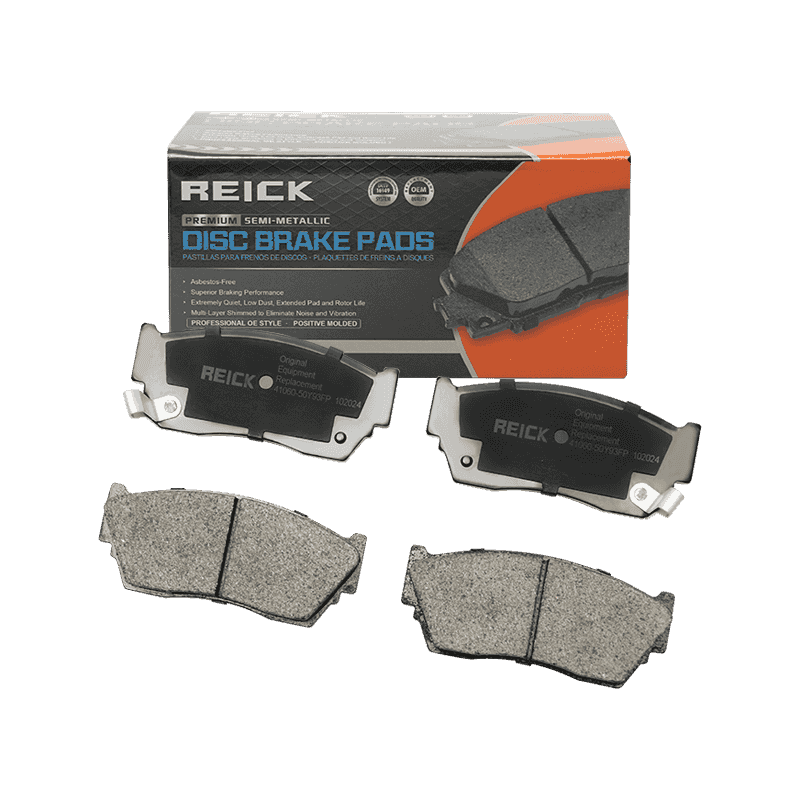
Explore REICK's range of ceramic brake pads — engineered for mid-range to high-end passenger vehicles, formulated with high ceramic fiber content, and validated against OE testing standards to deliver the quiet, clean, and reliable braking performance modern drivers expect.
Recommended Products


+86-139 6193 3287
+86-515-88410559

+86-515-88580498

reickchina@reickparts.com

B1002 Huabang Dong No.1# South Renmin Road, Tinghu District, Yancheng City, Jiangsu, China
Copyright © 2024 Yancheng Reick Automotive Parts Co., Ltd. All Rights Reserved.
Automotive Brake Manufacturers Automotive Clutch Parts Suppliers



 English
 Español
 italiano