2026.06.18
 Industry News
Content
A manual transmission vehicle loses roughly 30% of its clutch friction capacity before the driver ever notices a problem. By the time you feel slippage on a highway on-ramp, the clutch disc, cover, and release bearing are often well past their replacement window. Catching this early — and choosing the right parts — is the difference between a single repair and a chain of drivetrain problems.
This guide breaks down how the three core components work together, the warning signs you can't afford to ignore, and the exact specifications you need to match when buying replacement parts.
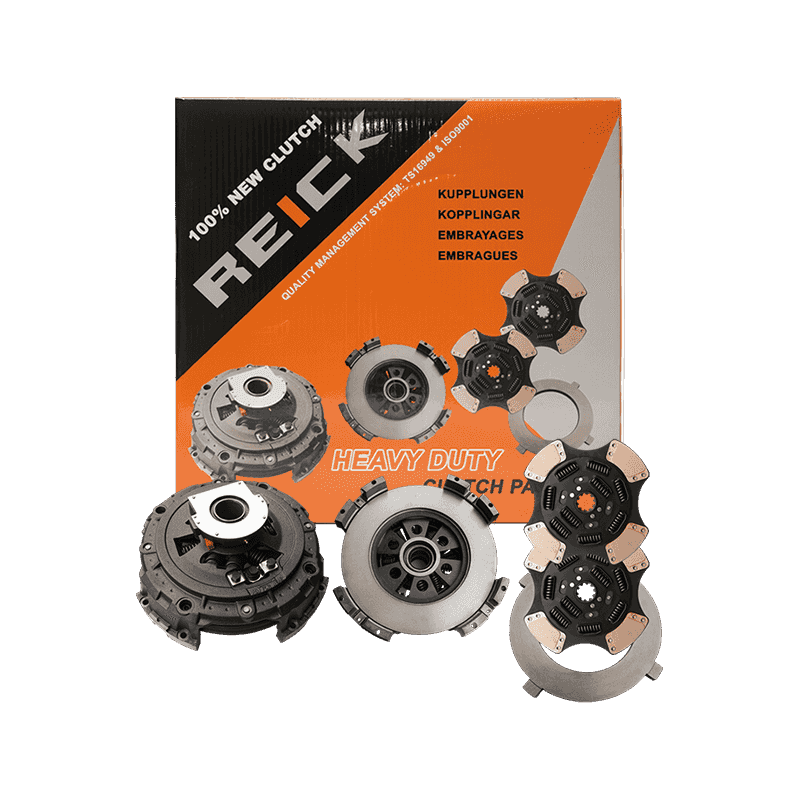
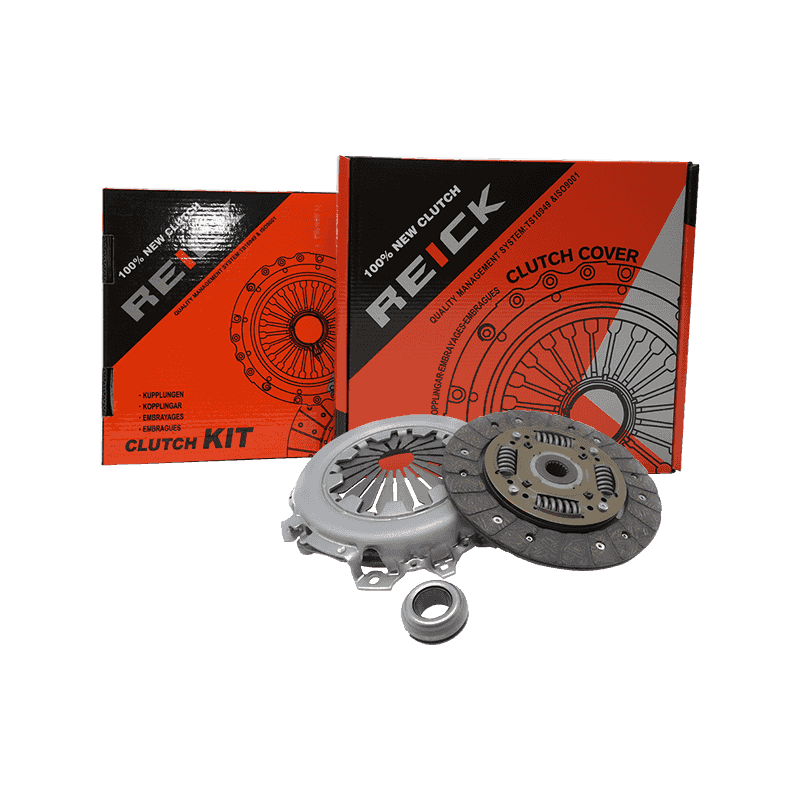
A complete clutch kit for passenger cars is not just a single part — it's an engineered system of three interdependent components that must wear and perform in sync.
Replacing all three together is the industry standard for a reason: pulling the transmission to replace just the disc wastes labor cost when the cover and bearing are equally worn and equally close to failure.
The single most common sourcing mistake is matching a kit by vehicle model alone without verifying dimensional specs. Two different engine variants of the same car model can require completely different clutch assemblies.
Here are real-world specifications from production clutch disc and cover sets to illustrate what to compare:
| Part Number | Application | Clutch Cover Size | Clutch Disc Size |
|---|---|---|---|
| 826634 | Citroën Berlingo / Fiat Scudo / Peugeot 308 | φ230 × φ154 × φ254 | φ229 × φ155 × 18mm |
| 826213 | Citroën C3 / Fiat Qubo / Peugeot 307 | φ201 × φ132.4 × φ224 | φ200 × φ137 × 18mm |
Notice that the Berlingo/Scudo/308 kit uses a 230mm cover and a 229mm disc, while the smaller C3/Qubo/307 platform drops to 201mm cover with a 200mm disc — a 30mm difference that makes the assemblies completely non-interchangeable despite the vehicles sharing a brand family. Always cross-reference by OE part number (the convert numbers in the table above map to LUK, Valeo, and Sachs catalogues) before ordering.
Quality-certified kits — those manufactured under IATF 16949 process controls — ensure that friction material composition, spring preload values, and dimensional tolerances are consistent batch to batch. This matters when you're sourcing for a fleet: one off-spec disc in a bulk order can translate to uneven wear across your vehicles.
Even a correctly specified clutch cover and disc assembly will fail prematurely if installed incorrectly. Four practices make the biggest difference:
A clutch system works as a unit — the disc, cover, and bearing degrade together and should be replaced together. Sourcing the right kit means verifying cover diameter, disc outer diameter, disc thickness, and OE cross-reference numbers, not just the vehicle name. Quality-controlled kits matched to OE specification and backed by documented certifications give you the predictable service life your maintenance schedule depends on. Get the specs right the first time, install carefully, and the repair will outlast your next two service intervals.
Recommended Products


+86-139 6193 3287
+86-515-88410559

+86-515-88580498

reickchina@reickparts.com

B1002 Huabang Dong No.1# South Renmin Road, Tinghu District, Yancheng City, Jiangsu, China
Copyright © 2024 Yancheng Reick Automotive Parts Co., Ltd. All Rights Reserved.
Automotive Brake Manufacturers Automotive Clutch Parts Suppliers



 English
 Español
 italiano