Home / News / Industry News / How to Choose Automotive Brake Pads: Types, Position & Replacement Guide
 2026.06.12
 Industry News
Content
Brake pads are the single most replaced safety component on any vehicle — yet most drivers only think about them when the squealing starts. Choosing the right set before failure happens saves rotor damage, shortens stopping distances, and keeps repair costs predictable. Here is what actually matters when selecting automotive brake pads for your vehicle.
Material composition determines roughly 80% of a brake pad's behavior. There are three mainstream formulations, each with a distinct trade-off.
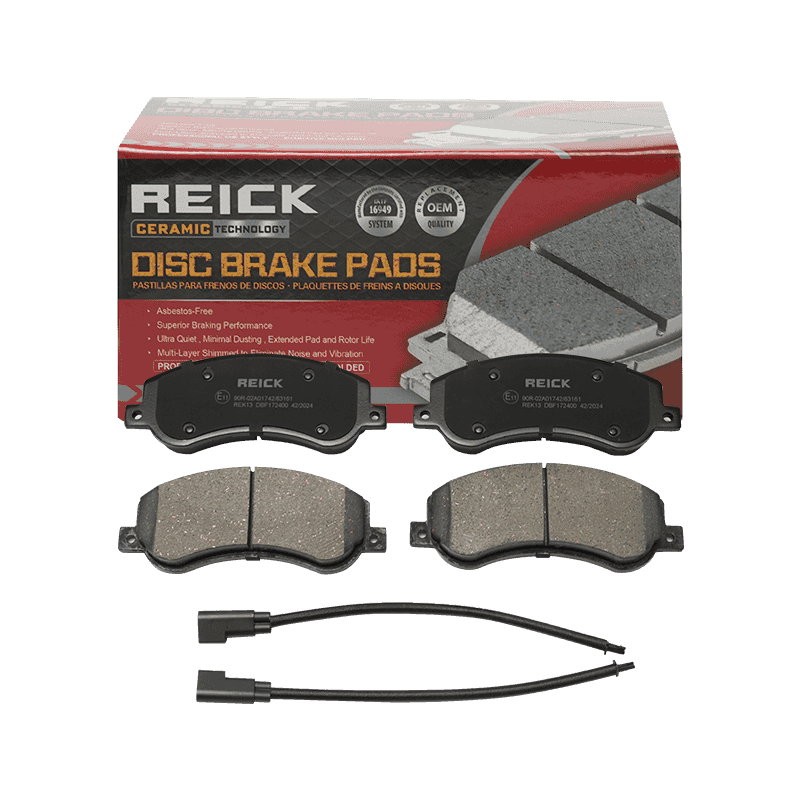
Ceramic brake pads use a blend of ceramic fibers and bonding agents. They run quiet, produce fine light-colored dust that doesn't cling to wheels, and handle heat well across a wide temperature range. They are the default choice for daily commuters and most passenger cars. Reick's ceramic brake pads — such as the GDB1724 front disc pad for Ford Transit and Volkswagen Amarok (164.6 mm × 67 mm × 18 mm, 4 pcs per set) — are engineered for this use case: low NVH, consistent friction coefficient, minimal rotor wear.
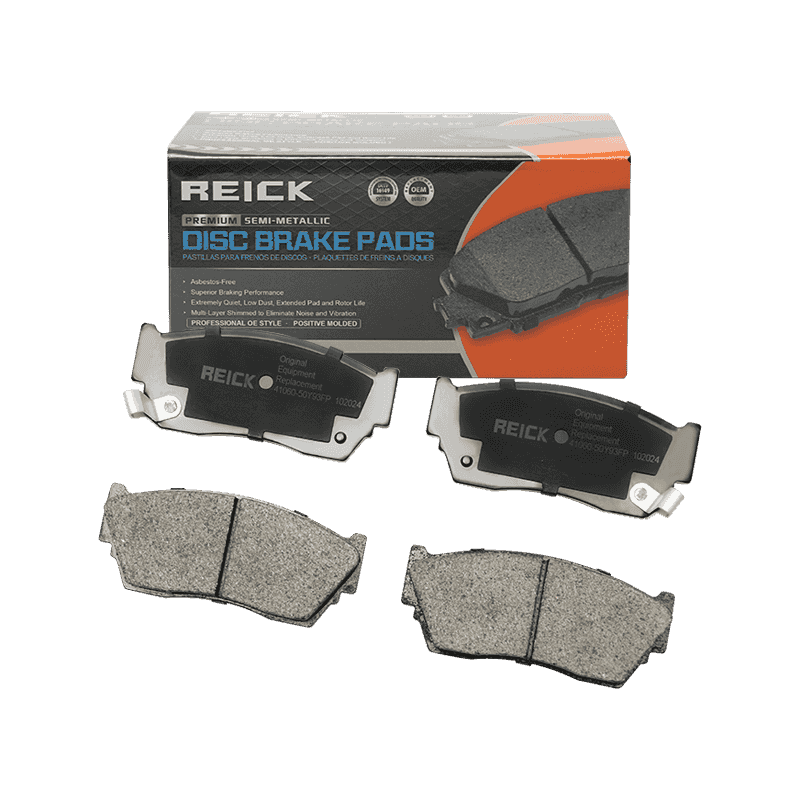
Semi-metallic brake pads contain 30–65% metal shavings (steel, copper, iron) bonded into a friction compound. They transfer heat away from the caliper faster than ceramics, which makes them resistant to brake fade under sustained hard braking. The trade-off is more noise and slightly faster rotor wear. For vehicles that tow, drive in mountainous terrain, or carry heavy loads, semi-metallic pads are the more reliable choice. Reick's semi-metallic brake pads include models like the 41080-1HL0A (138.5 mm × 48 mm × 13.9 mm) for Dongfeng/Nissan Yaris — a compact pad designed for urban-to-highway use where temperature cycling is frequent.
Low-metal brake pads sit between organic and full semi-metallic formulations. They use a smaller percentage of metallic content (typically under 30%), giving them better bite than organics while staying quieter than semi-metallics. Popular in the European aftermarket, they suit small-to-mid-size cars driven in mixed urban conditions. The FDB1423 low-metal pad (130.9 mm × 44 mm × 15.7 mm, 4 pcs per set), applicable to Opel Agila, Suzuki Swift, and Suzuki Ignis, is a representative example of this category from Reick's low metal brake pads range.
Front and rear axles absorb very different braking loads. Under emergency braking, the front axle typically handles 60–70% of total stopping force due to weight transfer toward the front of the vehicle. This means front disc brake pads wear faster, run hotter, and need a higher friction coefficient than rear pads.
For front axles, prioritize heat resistance and fade recovery. Ceramic or semi-metallic compounds both work, depending on vehicle weight and use. For rear axles, the priority shifts toward rotor protection and smooth modulation — ceramic pads are often preferred because rear brakes engage more progressively. Never mix formulations between the left and right side of the same axle; mismatched friction levels cause uneven braking and pull.
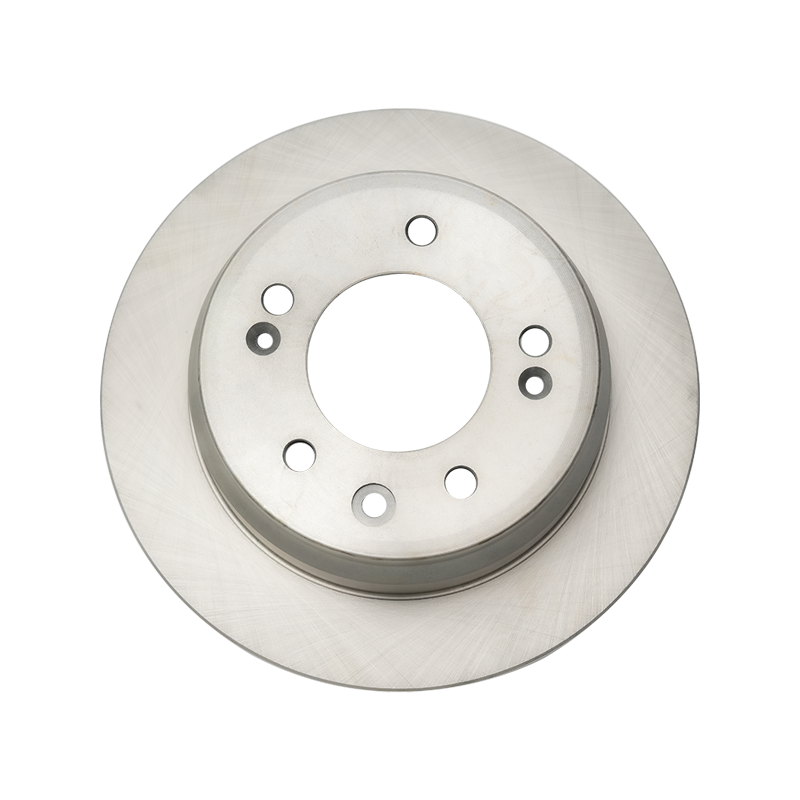
It is also worth pairing new pads with an inspection of the brake disc and rotor. A worn or warped rotor undermines even high-quality pads — the pad cannot maintain full contact area, leading to pulsation and longer stopping distances.
Most manufacturers recommend replacing car brake pads when the friction material reaches 2–3 mm. But thickness alone does not tell the full story. Glazed pads — where the surface has been overheated and hardened — can measure 5 mm and still deliver 30% less stopping power than a fresh set. Signs of glazing include a shiny, smooth surface on the pad face and a persistent high-pitched squeal even on light brake applications.
Uneven wear across the pad face points to a sticking caliper piston rather than a worn pad. Replacing the pad without addressing the caliper leads to rapid re-wear on the new set. Always compress the caliper piston before installation and inspect the slide pins for corrosion.
As a general mileage reference: ceramic and semi-metallic pads on typical passenger cars last 40,000–70,000 km on the front axle under normal driving conditions. Rear pads often last 20–30% longer due to lower thermal and mechanical load. Aggressive urban driving, regular towing, or mountainous routes can cut these figures significantly.
Clean all contact surfaces — caliper brackets, slide pins, and the backing plate mounting area — with brake cleaner before fitting new pads. Contamination from old grease or brake dust creates hot spots that accelerate uneven wear. Apply a thin layer of high-temperature brake lubricant to the slide pins and the back of the pad's metal backing plate, but keep lubricant away from the friction surface entirely.
After installation, bed the pads in properly: perform 8–10 moderate stops from 60 km/h down to 10 km/h with 30-second cool-down intervals between each. This transfers a thin, even layer of friction material onto the rotor surface and stabilizes the pad's initial coefficient of friction. Skipping the bedding process is the most common cause of squealing and vibration complaints on new pads.
Recommended Products


+86-139 6193 3287
+86-515-88410559

+86-515-88580498

reickchina@reickparts.com

B1002 Huabang Dong No.1# South Renmin Road, Tinghu District, Yancheng City, Jiangsu, China
Copyright © 2024 Yancheng Reick Automotive Parts Co., Ltd. All Rights Reserved.
Automotive Brake Manufacturers Automotive Clutch Parts Suppliers



 English
 Español
 italiano