Home / News / Industry News / Why Every Shop Should Switch to Non-Asbestos, Copper-Free Brake Shoes Now
 2026.06.05
 Industry News
Content
Brake shoe technology has quietly crossed a regulatory threshold that most workshops haven't fully processed yet. Since January 1, 2025, California and Washington require all brake friction materials to contain less than 0.5% copper by weight — and because manufacturers have standardized nationally, this effectively defines what goes on shelves everywhere. If your shop still has old-formula shoes in the back room, the clock has run out.
This article breaks down what non-asbestos and copper-free brake shoes actually are, why the distinction matters, and how to choose the right type for each job.
Non-asbestos means the friction compound contains no asbestos fibers — a requirement that's been in force since 2015 (≤0.1% by weight, per federal standards). Asbestos was once prized for heat resistance, but its fibers become airborne during brake service and are a confirmed carcinogen. Every reputable brake shoe sold today meets this threshold; if a product's origin is unclear, verify before installing.
Copper-free (Level N) is the newer, stricter standard: copper content must fall below 0.5% by weight. Copper runoff from brake dust is highly toxic to salmon and other aquatic species — prior to these regulations, vehicular braking released an estimated 1.3 million pounds of copper into California's environment in a single year. The EPA's Copper-Free Brake Initiative, signed in 2015 alongside eight major industry groups, drove the phase-out that reached its final stage on January 1, 2025.
Compliant products carry the LeafMark on packaging: one leaf (Level A, heavy metals limited), two leaves (Level B, copper <5%), three leaves (Level N, copper <0.5%). When sourcing, three leaves is the current benchmark.
Both modern shoe types can be fully non-asbestos and copper-free — the difference is in performance profile.
| Feature | Semi-Metallic | Ceramic |
|---|---|---|
| Heat Tolerance | High — suited for trucks, buses, towing | Moderate-high — optimized for consistent daily use |
| Noise Level | Can generate squeal under cold conditions | Quieter operation; integrated chamfers reduce chatter |
| Drum Wear | Higher abrasion over time | Lower drum wear; extends drum service life |
| Brake Dust | More visible dark dust | Fine, light-colored dust; cleaner wheels |
| Best For | Heavy-duty, commercial, high-load vehicles | Passenger cars, light trucks, daily drivers |
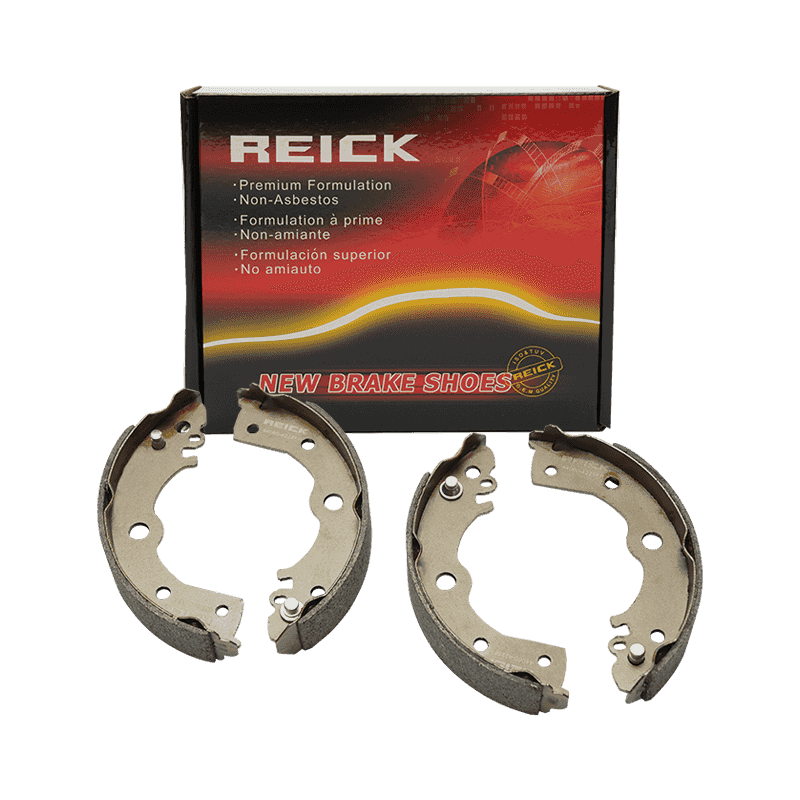
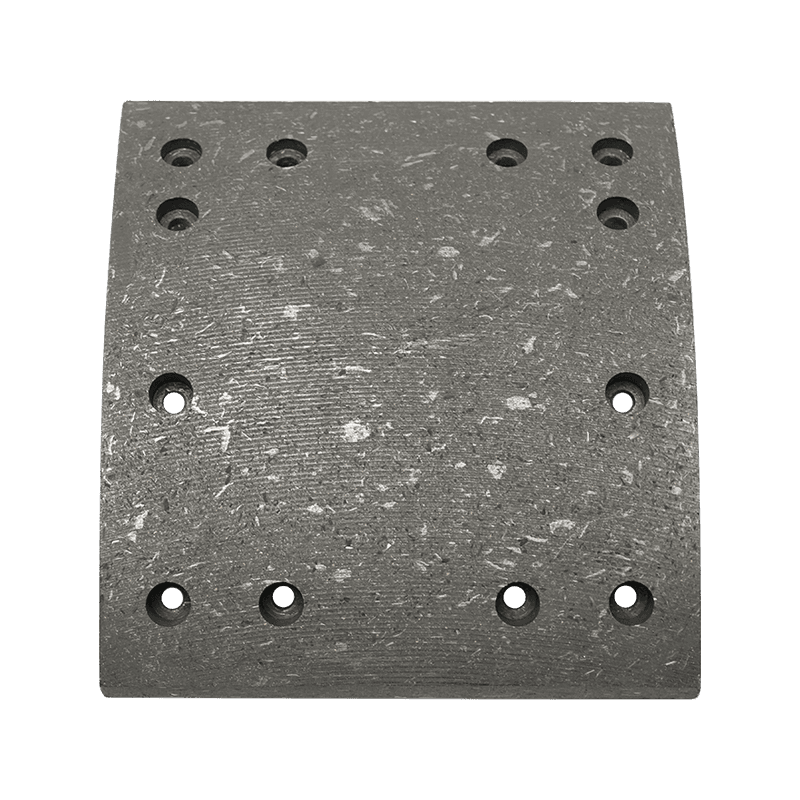
copper-free semi-metallic brake shoes for heavy-duty and commercial vehicles are the go-to choice when the vehicle regularly tows, operates under load, or runs in high-temperature conditions. The steel-fiber matrix handles thermal stress that would degrade softer compounds.
For everyday passenger vehicles and light trucks, non-asbestos ceramic brake shoes designed for quiet, low-dust performance deliver a noticeably cleaner and quieter experience — important for customers who care about NVH and wheel appearance.
Not all "non-asbestos" labeling is equal. Here's a quick checklist when evaluating a brake shoe supplier:
These aren't premium add-ons — they're the baseline for a shoe that won't generate a warranty return.
Good hardware solves nothing if the installation is sloppy. Three areas account for most brake shoe comebacks:
If you're sourcing shoes for a range of makes and models, cross-referencing against a supplier's full drum brake shoe catalog with OEM cross-references saves time and reduces the risk of fitment errors on the lift.
The 2025 copper compliance deadline isn't a future concern — it's the present standard. Any brake shoe manufactured for the U.S. market and carrying current LeafMark Level N certification is both non-asbestos and copper-free by definition. For shops and fleet operators, the practical takeaway is simple: verify the leaf rating on the box, choose the friction type that matches the vehicle's duty cycle, and install correctly. Everything else is brand selection.
For reference on the regulatory framework, Washington State's Department of Ecology maintains the official Better Brakes Law compliance requirements and phase-in timelines — useful documentation when advising fleet customers on procurement.
Recommended Products


+86-139 6193 3287
+86-515-88410559

+86-515-88580498

reickchina@reickparts.com

B1002 Huabang Dong No.1# South Renmin Road, Tinghu District, Yancheng City, Jiangsu, China
Copyright © 2024 Yancheng Reick Automotive Parts Co., Ltd. All Rights Reserved.
Automotive Brake Manufacturers Automotive Clutch Parts Suppliers



 English
 Español
 italiano