2026.02.05
 Industry News
Content
Automotive brakes convert your vehicle's kinetic energy into thermal energy through friction, bringing your car to a controlled stop. When you press the brake pedal, hydraulic pressure multiplies your foot force by 3-6 times, pushing brake pads against rotating discs or drums to create the friction needed to decelerate. Modern vehicles use either disc brakes, drum brakes, or a combination of both, along with sophisticated systems like ABS and electronic brake force distribution to ensure safe, reliable stopping power.
The hydraulic system forms the backbone of modern automotive braking. When you depress the brake pedal, it activates a master cylinder containing brake fluid. This sealed system operates on Pascal's principle, where pressure applied to an enclosed fluid transmits equally throughout the system.
The master cylinder houses two pistons that create pressure in separate hydraulic circuits. Dual-circuit systems became mandatory in 1967 after safety regulations required redundancy—if one circuit fails, the other maintains partial braking capability. The typical master cylinder generates 800-1200 psi of hydraulic pressure during normal braking and up to 2000 psi during emergency stops.
Brake fluid must remain incompressible under extreme conditions while resisting temperatures from -40°F to over 400°F. DOT 3, DOT 4, and DOT 5.1 fluids are glycol-based with different boiling points:
| Fluid Type | Dry Boiling Point | Wet Boiling Point |
|---|---|---|
| DOT 3 | 401°F (205°C) | 284°F (140°C) |
| DOT 4 | 446°F (230°C) | 311°F (155°C) |
| DOT 5.1 | 500°F (260°C) | 356°F (180°C) |
The hygroscopic nature of glycol-based fluids means they absorb moisture over time, which lowers the boiling point and reduces braking performance. Manufacturers recommend brake fluid replacement every 2-3 years regardless of mileage.
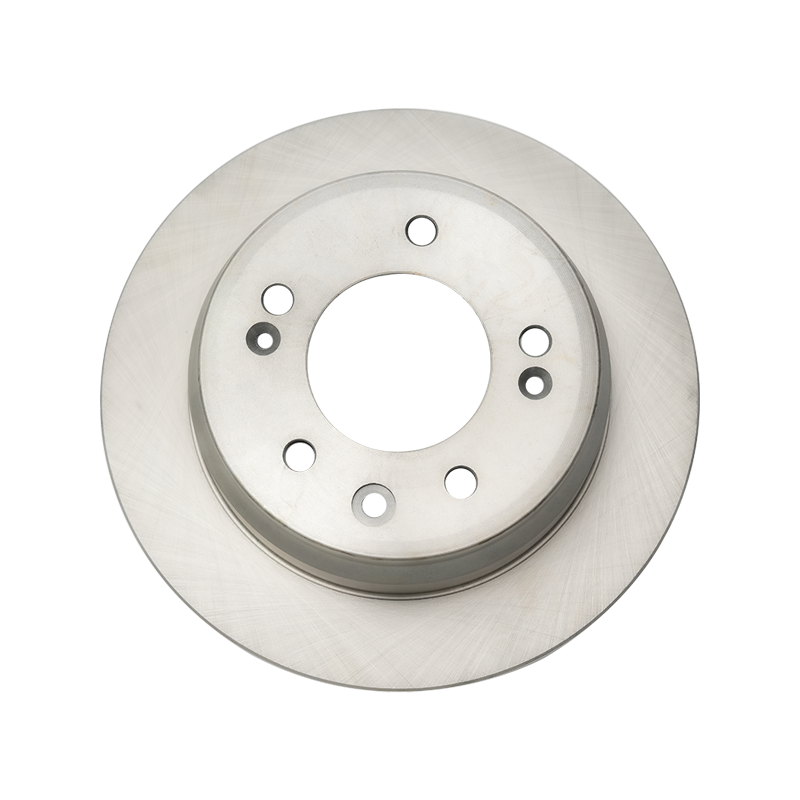
Disc brakes dominate modern vehicles due to their superior heat dissipation and consistent performance. The system consists of a rotor attached to the wheel hub, a caliper housing hydraulic pistons, and brake pads that create friction against the rotor.
Rotors come in several configurations, each optimized for different applications:
Most passenger car rotors measure 10-14 inches in diameter and weigh 15-25 pounds. High-performance applications use rotors up to 16 inches with thickness ranging from 28-32mm to handle repeated hard stops from 60 mph in under 110 feet.
Calipers come in two primary designs. Floating calipers use a single piston that pushes one pad against the rotor while pulling the caliper body to apply the opposite pad. This design costs less and appears on most economy and mid-range vehicles. Fixed calipers mount rigidly and use opposed pistons—typically 4, 6, or 8—to apply pressure evenly from both sides. Fixed calipers deliver 15-20% more clamping force with better heat management, making them standard on sports cars and luxury sedans.
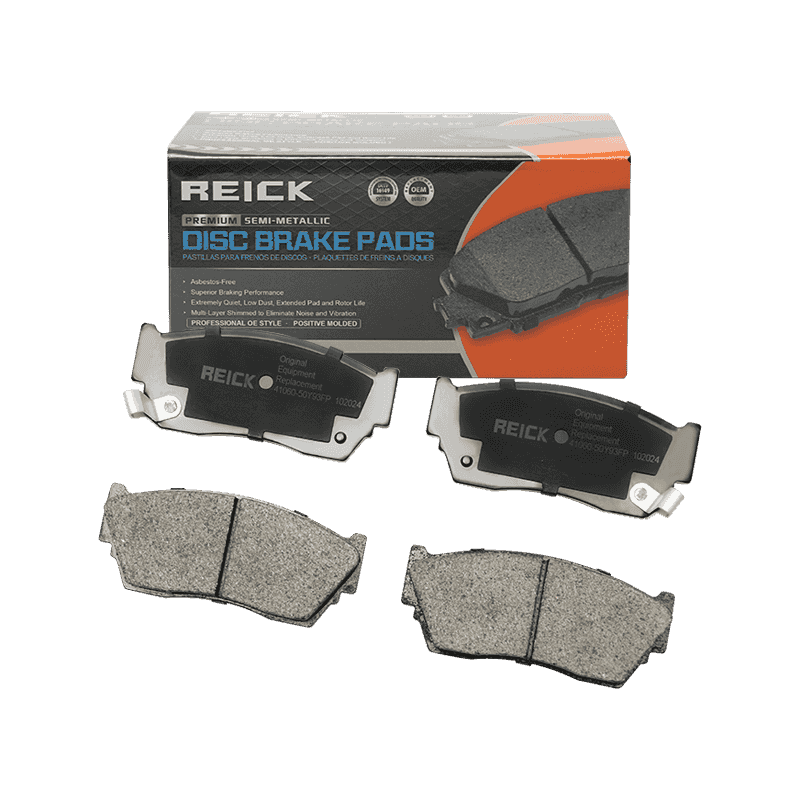
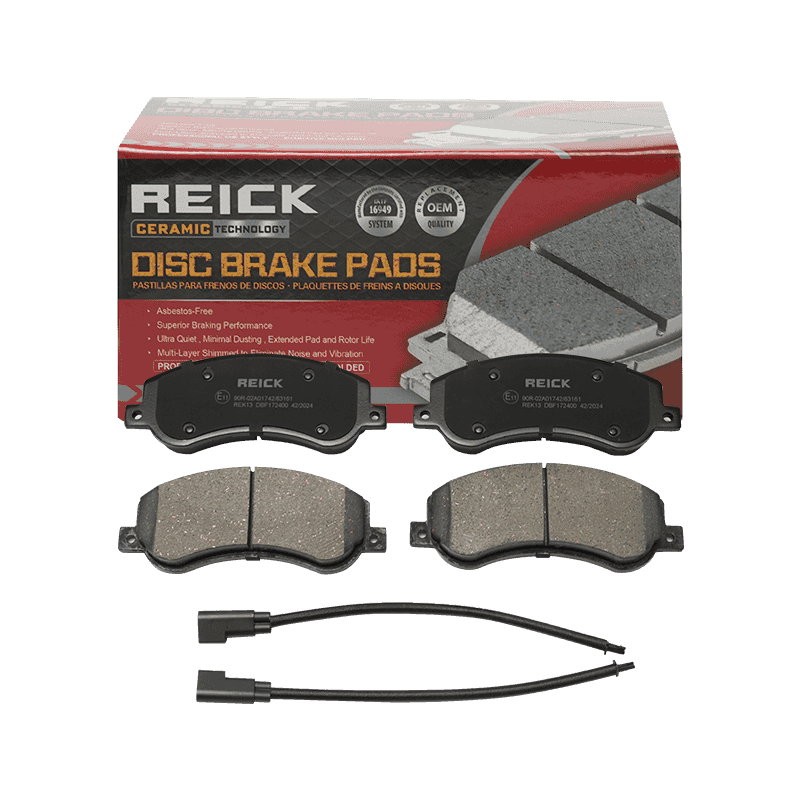
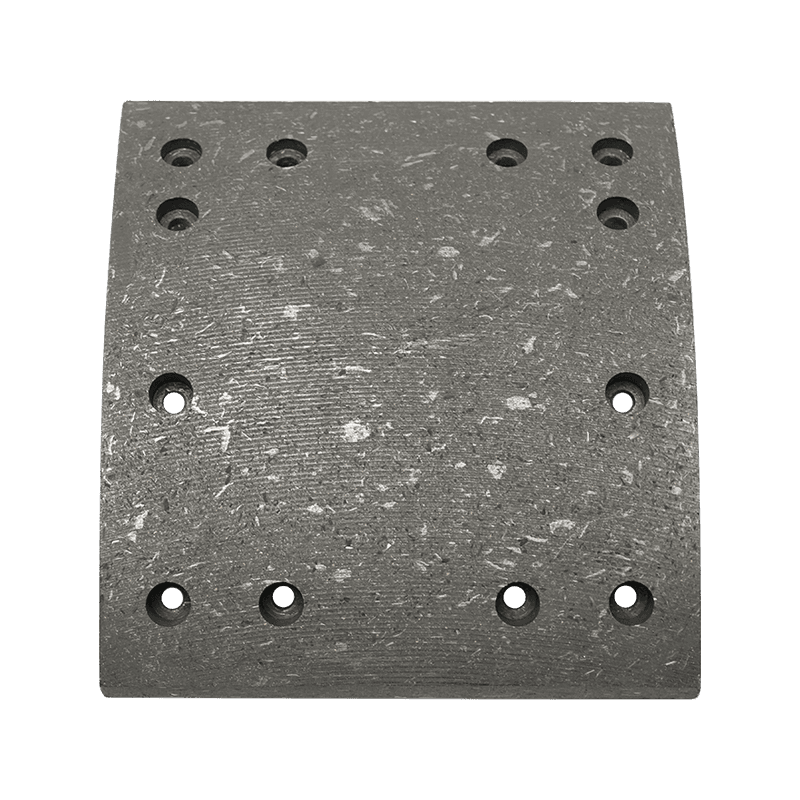
Modern brake pads blend multiple materials to balance friction, noise, dust, and wear characteristics. Semi-metallic pads contain 30-65% metal content including steel, iron, and copper, providing excellent heat transfer and durability for 40,000-70,000 miles of service life. Ceramic pads use ceramic fibers and non-ferrous materials that produce less dust and noise but cost 40-60% more. Organic pads offer quiet operation but wear faster and perform poorly when wet.
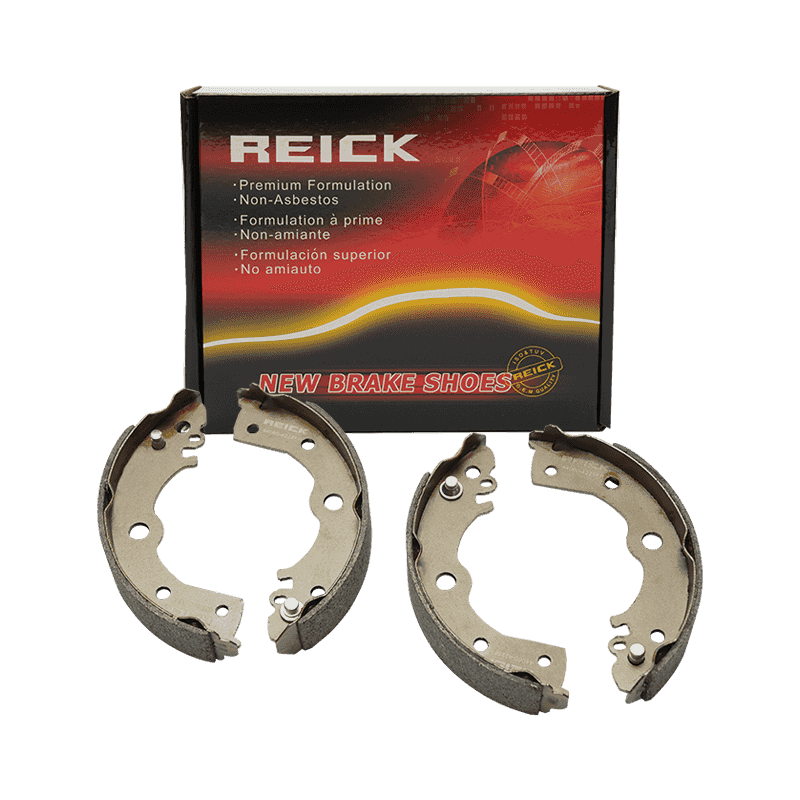
Drum brakes enclose the friction components inside a rotating drum, using curved brake shoes that press outward against the drum's inner surface. While largely replaced by discs on front axles, drums remain common on rear axles of trucks and economy cars due to lower manufacturing costs and effective parking brake integration.
Most drum systems use a leading-trailing shoe configuration. The leading shoe moves in the direction of drum rotation, creating a self-energizing effect that multiplies braking force. The trailing shoe moves against rotation, providing stability and preventing lock-up. This arrangement delivers consistent stopping power with 25-30% less pedal effort than equivalent disc systems.
Hydraulic pressure from the master cylinder enters a wheel cylinder containing two opposed pistons. These pistons push the brake shoes outward against return spring tension. The typical wheel cylinder bore measures 0.75-1.0 inches in diameter, generating sufficient force to create 400-600 pounds of shoe-to-drum pressure.
The enclosed design traps heat inside the drum assembly, limiting repeated hard braking capability. Drums can reach 400-600°F during normal use, but sustained temperatures above 500°F cause brake fade as friction materials lose effectiveness. This heat retention explains why modern vehicles use disc brakes on front axles, which handle 60-70% of total braking force during deceleration.
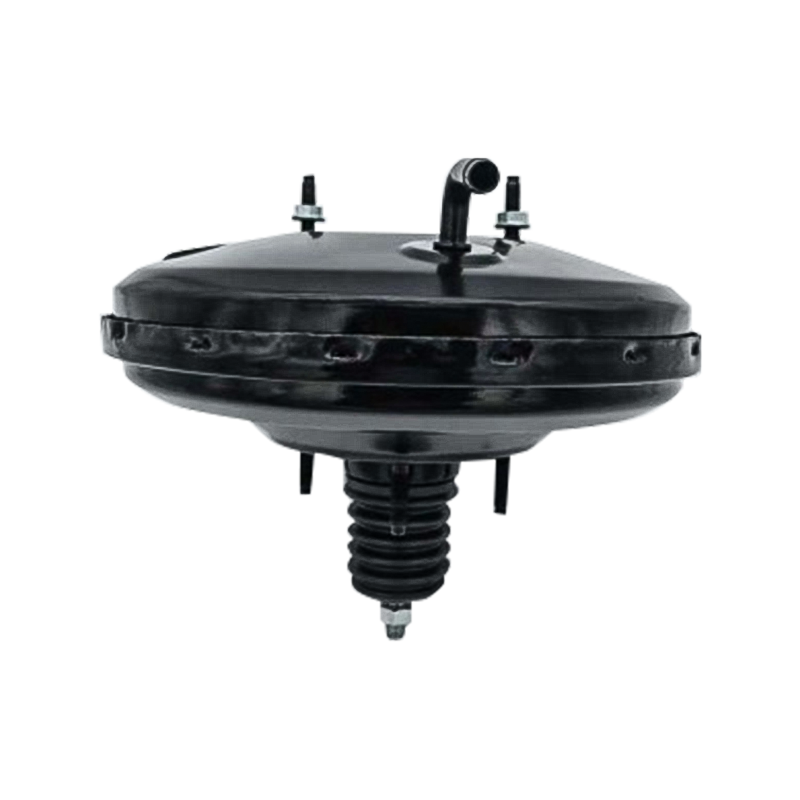
Brake boosters amplify pedal force to reduce driver effort while maintaining precise control. Without assistance, stopping a 3,500-pound vehicle from highway speeds would require over 150 pounds of pedal pressure—an unsustainable demand for most drivers.
The vacuum booster uses engine intake manifold vacuum to create a pressure differential across a diaphragm. When you press the brake pedal, a valve opens to admit atmospheric pressure on one side of the diaphragm while maintaining vacuum on the other. This 14.7 psi pressure difference pushes a rod that assists the master cylinder, multiplying input force by 3-4 times. A typical booster measures 8-11 inches in diameter and mounts between the pedal assembly and master cylinder.
Diesel engines and turbocharged vehicles often lack sufficient vacuum, requiring hydraulic assist systems. These use an engine-driven pump to pressurize hydraulic fluid to 2,000-3,000 psi, stored in an accumulator. The system provides consistent boost regardless of engine load and enables advanced features like automatic emergency braking.
Hybrid and electric vehicles use electromechanical brake boosters since they lack continuous engine operation. A motor-driven ball screw or gearbox amplifies pedal input, providing immediate response and integrating seamlessly with regenerative braking systems that can recover up to 70% of kinetic energy during deceleration.
ABS prevents wheel lock-up during hard braking by modulating hydraulic pressure up to 15 times per second. The system maintains tire traction, allowing steering control while maximizing stopping power. ABS reduces stopping distances by 10-20% on wet pavement and even more on ice or gravel.
Each wheel has a speed sensor that monitors rotation rate. When the ABS control module detects a wheel decelerating faster than the others—indicating impending lock-up—it commands a hydraulic modulator to reduce pressure to that wheel's brake. The system cycles through three phases:
Modern ABS systems process sensor data every 5-10 milliseconds, adjusting brake pressure with millisecond precision. The typical system maintains optimal slip ratio between 10-20%, where tire friction peaks. This explains the pulsing pedal sensation during ABS activation—the hydraulic modulator rapidly cycling valves to control pressure.
EBD optimizes brake balance between front and rear axles based on vehicle loading and deceleration rates. During braking, weight transfers forward, reducing rear tire traction. EBD reduces rear brake pressure proportionally to prevent premature rear wheel lock-up while maximizing front brake effectiveness.
The system monitors individual wheel speeds and calculates optimal pressure distribution continuously. In a loaded pickup truck, EBD might send 75% of braking force to the front axle, while an empty sports car receives a more balanced 65-35 split. This dynamic adjustment improves stability and reduces stopping distances across varying conditions.
Proper maintenance ensures consistent braking performance and prevents premature component failure. Understanding wear patterns and service intervals helps identify problems before they compromise safety.
Brake pads typically require replacement every 30,000-70,000 miles depending on driving style and material composition. Most pads include wear indicators—metal tabs that contact the rotor when pad thickness reaches 3mm, the minimum safe specification. Rotors last 50,000-100,000 miles but require measurement during pad replacement. Thickness below minimum specification or surface runout exceeding 0.002 inches necessitates rotor replacement.
Brake fluid testing measures moisture content and boiling point. Contaminated fluid appears dark brown instead of clear amber and may contain visible particles. Professional testing shows that 3% moisture content reduces boiling point by 25%, significantly increasing fade risk during mountain descents or repeated hard stops.
Addressing these symptoms promptly prevents damage to other components and maintains the safety margin essential for emergency stops.
Recommended Products


+86-139 6193 3287
+86-515-88410559

+86-515-88580498

reickchina@reickparts.com

B1002 Huabang Dong No.1# South Renmin Road, Tinghu District, Yancheng City, Jiangsu, China
Copyright © 2024 Yancheng Reick Automotive Parts Co., Ltd. All Rights Reserved.
Automotive Brake Manufacturers Automotive Clutch Parts Suppliers



 English
 Español
 italiano