Home / News / Industry News / Asbestos-Free Brake Linings: What They Are, Why They Matter, and How to Choose
 2026.08.21
 Industry News
Content
Every time a technician pulls a drum off a heavy truck, the same question still comes up: does this lining contain asbestos? For a surprising number of older vehicles, the answer used to be yes. Today, the decision is simpler. Asbestos-free brake linings have become the standard, not just because of regulation, but because they stop reliably, handle heat better, and pose none of the health risks that made asbestos infamous. If you maintain fleets, sell brake parts, or specify linings for industrial vehicles, here is what you need to know before buying your next set.
An asbestos-free brake lining is a friction component for drum brakes that contains no chrysotile or other asbestos fibres. Instead, manufacturers build the friction formula around aramid, mineral, glass, or other synthetic fibres, bonded with heat-stable resins and friction modifiers that control the coefficient of friction across a wide temperature range.
The change affects both complete brake shoes and separate lining segments. In a drum brake, the friction material is either bonded to the shoe or riveted to a replaceable lining that presses against the drum. Asbestos-free versions have to match the original dimensions, rivet pattern, and thermal behaviour, which is why the formulation matters just as much as the part number. For a closer look at the technology, this overview of modern asbestos-free braking systems explains how the materials are put together.
Why did the industry move away from asbestos? The evidence is well documented. Inhaled asbestos fibres can cause asbestosis, lung cancer, and mesothelioma, and mechanics who cut, grind, or blow out brake dust have been the group most exposed. That risk was serious enough that many countries banned asbestos in friction materials, and even in markets without a full ban, asbestos-containing linings have almost completely disappeared from new supply chains.
Regulatory pressure made the change permanent. The EU-wide asbestos ban, ECE R90 approval for brake components, and similar requirements in other regions have made asbestos-free construction a prerequisite for selling parts legally. OSHA and the EPA still tell workshops to treat every brake assembly as if it may contain asbestos during service. That cautious rule underlines a practical point: the safest way to protect technicians is to buy linings that are certified asbestos-free, clearly labelled, and supplied with the proper documentation.
Asbestos gained its reputation from genuine heat resistance and low material cost. Modern asbestos-free compounds were developed to close that performance gap, and they have now exceeded it. The comparison depends on the formulation, but the table below shows the general pattern for commercial drum linings.
| Property | Legacy asbestos lining | Asbestos-free lining | Practical impact |
|---|---|---|---|
| Resistance to brake fade | Fades after repeated heavy stops | Holds stable friction at higher temperatures | Safer on long descents and loaded emergency braking |
| Wear rate | Predictable but dusty | Equal or longer life in quality compounds | Fewer lining changes over the working life of the vehicle |
| Heat transfer | High thermal conductivity | Tuned to limit drum temperature spikes | Less heat checking, longer drum and seal life |
| Noise and dust | Noticeable residue on wheels | Lower dust levels and quieter stops | Cleaner workshops and less frequent wheel maintenance |
| Safety and handling | Contains a known carcinogen | Certified asbestos-free with controlled friction | Safe for technicians and consistent stopping power |
The catch is that not every asbestos-free lining behaves the same. A poorly made compound can be hard on drums, noisy, and prone to unpredictable friction. A well-designed one will match or exceed the original equipment feel. That is why material selection, not just the absence of asbestos, decides whether a lining is a true upgrade.
Start with the vehicle's working conditions, then verify the certification and part number. The order matters, because a lining that works on a parcel van can fail quickly on a loaded axle.
One further detail tends to be overlooked. The coefficient of friction for a typical asbestos-free commercial lining is usually in the 0.35 to 0.45 range at operating temperature, and it should stay consistent from the first full brake application to the end of the day. If a supplier cannot tell you the friction range, treat it as a red flag.
Heavy-duty fleets are where asbestos-free linings prove their value most clearly. Long mountainside descents, repeated stops, and maximum payloads expose weak compounds quickly. A heavy-duty truck brake lining built with heat-resistant fibres is now the typical specification for fleet operators who want consistent stopping power over a full service life.
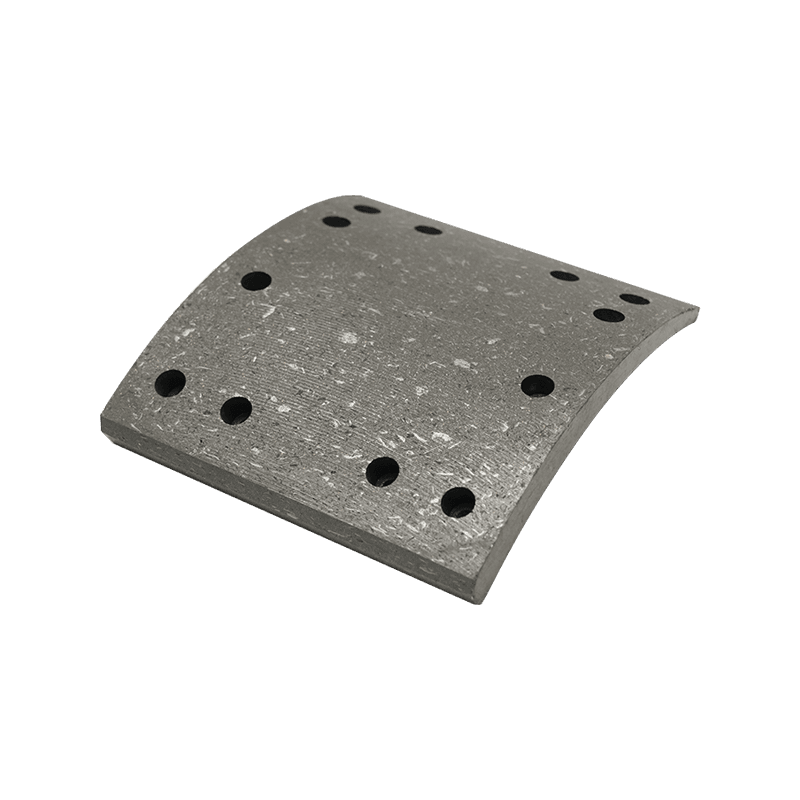 4515 Brake lining for Heavy duty truck Manufacturers - Yancheng Reick AutomotiveReick are China Manufacturers and Company of 4515 Brake lining for Heavy duty truck, Custom 4515 Brake lining for Heavy duty truck ONLINE...View Product →
Agricultural and vintage vehicles need a different kind of care. Older tractors and commercial chassis were engineered when asbestos was still the default, and an aggressive substitute can make the brakes grab or fade. A correctly formulated asbestos-free replacement restores the original braking character without modifying the drum or hydraulic system. That is why our range includes an asbestos-free replacement lining for classic tractors, designed to respect the original friction curve rather than overpower it.
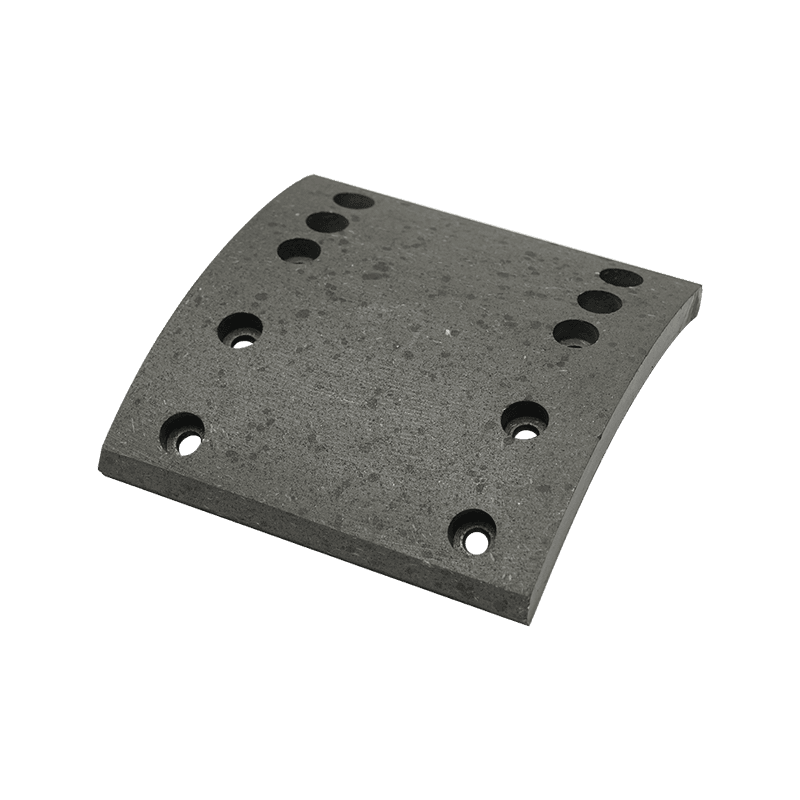 19246 Brake lining aplicable for STEYR 991-1891 1978-1985 Manufacturers - YancheReick are China Manufacturers and Company of 19246 Brake lining aplicable for STEYR 991-1891 1978-1985, Custom 19246 Brake lining aplicab...View Product →
Consistency separates a good lining from a risky one. At REICK, every batch of asbestos-free linings is tested before it ships. Our production follows the ISO/TS16949 system, and our quality procedures cover incoming materials, mixing, pressing, heat treatment, and dimensional inspection. We verify hardness and friction behaviour, and we test in the laboratory and on the road before series production begins.
We also treat the commercial side seriously. Packaging, product identification, and supporting paperwork all confirm the asbestos-free status, so a distributor can sell with confidence and a workshop can install with peace of mind. If you want to evaluate what that means in practice, our brake lining range lists the certified options and the applications each one covers.
The move to asbestos-free brake linings is not a compromise. It is a safety improvement, a compliance requirement, and in most cases a performance gain. The remaining work is simple: choose the right compound, verify the dimensions, and buy from a manufacturer that can prove the quality of the material through documentation and testing.
Whether your fleet runs heavy trucks, your stock covers agricultural machinery, or your workshop services older European vehicles, there is an asbestos-free lining that matches the original behaviour. The key is to choose it deliberately, not by habit.
Recommended Products


+86-139 6193 3287
+86-515-88410559

+86-515-88580498

reickchina@reickparts.com

B1002 Huabang Dong No.1# South Renmin Road, Tinghu District, Yancheng City, Jiangsu, China
Copyright © 2024 Yancheng Reick Automotive Parts Co., Ltd. All Rights Reserved.
Automotive Brake Manufacturers Automotive Clutch Parts Suppliers



 English
 Español
 italiano