Home / News / Industry News / Brake Disc Rotor Buying Guide: Types, Wear Limits, and Replacement Signs
 2026.08.14
 Industry News
Content
A customer drives in with a steering-wheel shake that only appears when braking from highway speed. The pads are still thick and the calipers are working, but a dial indicator shows thickness variation across the brake disc rotor. The fix is not another set of pads; it is a replacement rotor that is flat, correctly sized, and dimensionally consistent. This is why the brake disc rotor deserves the same attention as the pad when you are diagnosing a braking complaint.
Brake disc rotors, also called brake discs or brake rotors, are the round metal discs bolted to the wheel hub. When the driver presses the brake pedal, the caliper pushes two brake pads against both sides of the rotor. The friction slows the wheel, and the rotor absorbs the heat generated during the stop. If the rotor is too thin, it can overheat and fade. If it is warped or worn unevenly, the pads will not make full contact, and the driver will feel vibration or pulsation through the pedal and steering wheel.
Most replacement rotors are made from cast iron. Vented rotors, which have internal vanes between the two friction surfaces, are common on the front axle because they pull cool air through the rotor and improve heat dissipation. Solid rotors are still used on lighter rear axles. Both designs must maintain a precise minimum thickness and lateral runout specification, because small deviations change pedal feel, pad wear, and noise.
The same symptoms can have different causes, but three rotor faults account for most brake complaints.
As the rotor wears, the friction surface can become uneven. When high and low spots grow large enough, the brake pads move slightly back and forth as the rotor turns, causing a pulsing pedal and sometimes vibration in the steering wheel. This condition is often called brake judder. Replacing the pads without correcting rotor thickness variation often brings the vibration back after only a few thousand kilometres.
Lateral runout is the side-to-side wobble of the rotor as it rotates. Too much runout pushes the caliper piston back into its bore, which increases pedal travel and causes the pads to wear unevenly. Corrosion between the rotor and hub, or incorrect wheel tightening, can create runout even on a new rotor. Cleaning the hub face and checking runout with a dial indicator are essential steps before declaring a rotor bad.
Severe overheating can turn parts of the rotor surface hard and shiny. These hard spots reduce friction and are often accompanied by vibration or noise. Deep scoring from worn-out pads or embedded debris damages the friction surface and can ruin a new set of pads. Rust will also form on rotors that sit for weeks. Surface rust is common and may disappear after a few stops, but flaking or pitting usually means the rotor should be replaced. If you need a more structured checklist for the workshop, our guide to when to change brake discs walks through the visible and measurable signs in order.
Brake rotors come in several designs, and each design changes cooling, pad life, noise, and price. The table below summarizes the most common choices.
| Design | Typical use | Main trade-off |
|---|---|---|
| Solid | Rear axles on compact cars; low-cost OEM systems | Less cooling capacity, lower thermal capacity |
| Vented | Front axles on most cars; heavier vehicles | Better cooling, but heavier and more expensive |
| Drilled | Styling-focused street performance; some sport models | Improves wet bite and appearance, but can crack under hard track use |
| Slotted | Performance brake pads; repeated heavy braking | Cleans pad surface, but accelerates pad wear |
| Drilled and slotted | Street performance and show vehicles | Good compromise for street use if quality casting is used |
For a normal street-driven pickup or sedan, a quality vented rotor is still the best starting point. Drilled rotors look aggressive, but they do not automatically shorten stopping distance and can develop hairline cracks under extreme thermal stress. Slotted rotors help pads release gases and particles during hard braking, but the slots increase pad wear. Choose a design based on vehicle weight, driving style, and pad compound, not just appearance.
Many rotor failures start with the brake pad. If a pad is worn down to the backing plate, metal will score the rotor. If the pad compound is too aggressive for the rotor, friction material can transfer unevenly and create the vibration known as judder. When a rotor is replaced, install a fresh set of pads at the same time. If the existing rotor is machined, measure it after machining and confirm that it still has enough metal above the minimum cast thickness.
New rotors also need a break-in cycle. The first few stops should be moderate so that the pad material transfers evenly to the rotor surface. Avoid hard panic stops during the first 200 kilometres unless necessary. A proper break-in reduces the chance of hard spots and helps the new brake disc rotor bed in smoothly.
Buying a rotor by diameter alone is not enough. The same vehicle family can have different hub heights, offsets, bolt patterns, and minimum thickness values. A direct-fit replacement needs to be catalogued by the original equipment reference number.
On North American trucks, the Ford F-150 and Lincoln Mark carry a heavy vehicle weight and often work under trailer braking. A direct-fit brake disc rotor for Ford F-150 and Lincoln Mark removes the guesswork of measuring offset, bolt circle, and height on the first job.
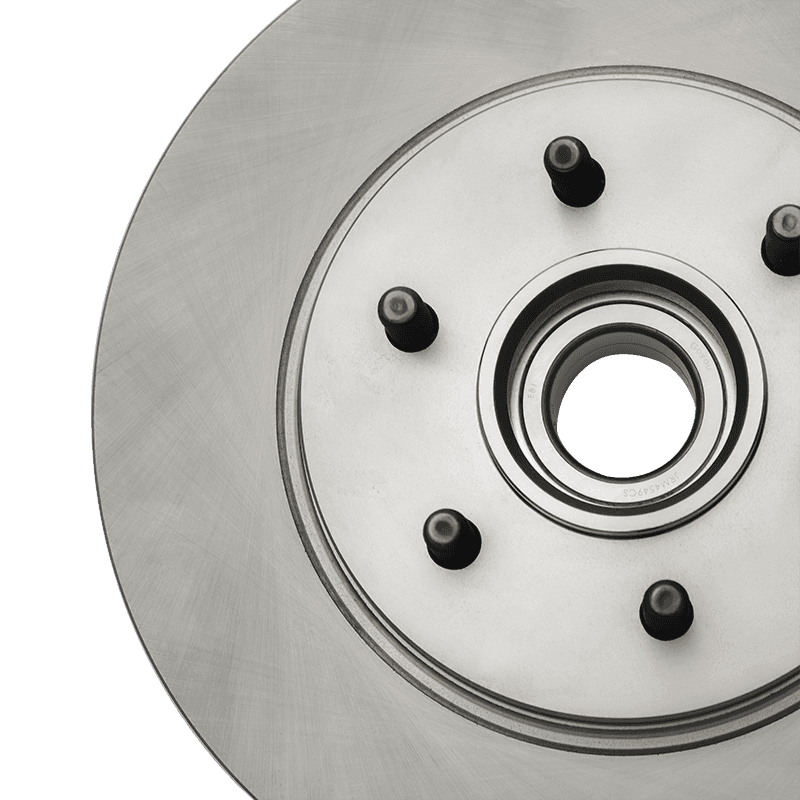 54107 Brake disc rotor for FORD TRUCK F150 and LINCOLN TRUCK Mark Manufacturers Reick are China Manufacturers and Company of 54107 Brake disc rotor for FORD TRUCK F150 and LINCOLN TRUCK Mark, Custom 54107 Brake disc r...View Product →
Asian market cars follow the same rule. The brake rotor disc for Hyundai Sonata, Kia K5, and Sportage is listed with the original OE reference, so a parts counter can confirm fitment without pulling the wheel. That kind of clarity matters for a shop placing a stock order and for a distributor who sells to multiple repair shops.
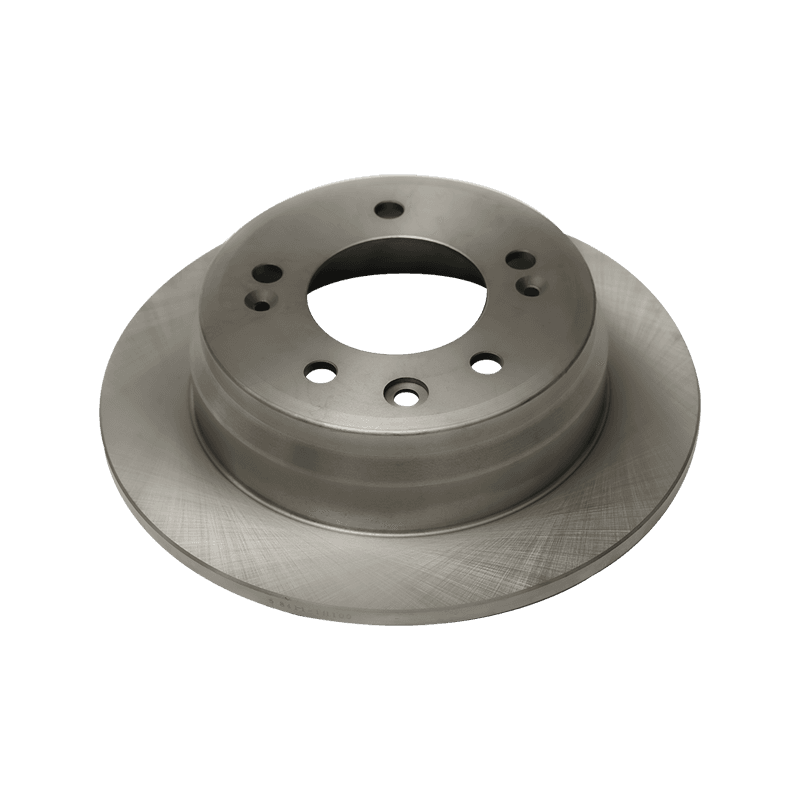 58411-1H100 Brake rotor disc for HYUNDAI Sonata, KIA K5 and Sportage ManufactureReick are China Manufacturers and Company of 58411-1H100 Brake rotor disc for HYUNDAI Sonata, KIA K5 and Sportage, Custom 58411-1H100 Bra...View Product →
A brake disc rotor is a precision component, not a commodity piece of iron. Thickness, flatness, vent design, and OE fitment determine how the entire brake system behaves. Start with the vehicle identification, verify the OE number, and choose a rotor from a supplier that checks every production step. That approach reduces comebacks, protects the customer, and makes the repair easier for the technician.
Recommended Products


+86-139 6193 3287
+86-515-88410559

+86-515-88580498

reickchina@reickparts.com

B1002 Huabang Dong No.1# South Renmin Road, Tinghu District, Yancheng City, Jiangsu, China
Copyright © 2024 Yancheng Reick Automotive Parts Co., Ltd. All Rights Reserved.
Automotive Brake Manufacturers Automotive Clutch Parts Suppliers



 English
 Español
 italiano