2026.08.07
 Industry News
Content
If you are replacing brake pads on a daily-driven car and your top priorities are low dust, low noise, and dependable stopping power in normal traffic, ceramic brake pads are the right choice for most drivers. They keep wheels cleaner, reduce squeal, and are noticeably gentler on rotors than semi-metallic alternatives. They are not the best pad for every vehicle, however; towing, track days, and extreme heat conditions call for a different friction material. This article explains what ceramic pads are, how they compare with other materials, and exactly where they excel.
Consider a common repair-shop scene: a sedan arrives with dark brown dust baked onto the front wheels and a low squeal every time the brakes warm up. The cause is usually an aggressive semi-metallic or low-metallic friction mix. Fitting a quality ceramic pad typically solves both problems on the first visit. That is why ceramic formulations have become the default recommendation for everyday commuting, SUVs, and family sedans.
Ceramic brake pads are friction components made from dense ceramic fibers mixed with copper, binding resins, and fillers, then hot-pressed and cured under heat. The ceramic content gives the pad a rigid structure that produces steady friction, while the resin system holds the ingredients together and controls how the pad wears.
The word "ceramic" does not mean the pad is brittle or behaves like pottery. The ceramic fibers are engineered for friction use: they withstand high surface temperatures, resist wear, and damp the vibration that causes brake squeal. The resulting pad is usually lighter-colored and harder than organic pads, yet softer on rotors than metallic pads.
Manufacturers start with a dry mix of ceramic fibers, metallic particles, friction modifiers, and resin powders. The mix is compressed into a backing plate under high pressure and then heated to cure the resin into a solid matrix. Finally, the pad is ground to precise thickness and shape, inspected, and often subjected to dynamometer testing for a specific friction coefficient. These process details matter because the same basic recipe can produce very different results depending on mixing time, pressure, and curing temperature.
Not every pad sold as "ceramic" contains the same amount of ceramic material. Some low-cost products use only a small percentage of ceramic fiber and rely on inexpensive fillers. Before buying, ask the supplier for the friction coefficient range, the temperature rating, and evidence of batch testing. A pad with a stable friction coefficient matters more than the name on the box.
Choosing a pad material is a trade-off, not a search for one perfect product. The practical differences show up in noise, dust, rotor wear, cold bite, heat resistance, and price. The table below compares typical behavior for passenger cars and light trucks.
| Property | Ceramic | Semi-Metallic | Low-Metallic | Organic |
|---|---|---|---|---|
| Noise | Quiet; low tendency to squeal | Moderate to high; morning squeal possible | Medium; can be noisy when cold | Quiet early in life |
| Brake dust | Light-colored, low volume | Dark, sticky, fast-accumulating | Moderate dark dust | Moderate dark dust |
| Rotor wear | Gentle | Higher abrasion and scoring risk | Moderate | Gentle |
| Cold bite | Dependable from the first stop | Less effective until warmed up | Strong once warm; abrupt when cold | Decent |
| High-temperature stability | Good for street use; fading under extreme heat | Excellent; moves heat into rotor | Good for spirited driving | Poor; fades under heavy use |
| Typical cost | Mid to high | Low to mid | Mid | Budget |
| Best use | Commuters, SUVs, family sedans | Towing, performance, heavy-duty use | European performance cars | Light-duty older vehicles |
The key takeaway: ceramic pads win for comfort and cleanliness, while semi-metallic pads still hold the advantage when braking must survive repeated high heat. The next two sections look at both sides in detail.
Brake noise comes mainly from vibration between the pad and the rotor. Metallic pads have a high resonant frequency that produces squeal and groaning. Ceramic friction materials absorb more of that vibration, which is why most ceramic pads stay silent across normal temperature ranges. For a garage owner, fitting ceramic pads is often the quickest way to end a customer's noise complaint. A separate technical article explains how ceramic brake pads improve driving comfort in more detail.
Semi-metallic and low-metallic pads shed dark iron and carbon dust that sticks to wheel faces and requires constant cleaning. Ceramic pads produce less dust, and the dust they do produce is lighter in color and less sticky. For fleet operators and daily drivers, that translates into less wheel acid exposure, fewer wash cycles, and a better-looking vehicle between services.
Because ceramic fibers are hard but not as abrasive as steel wool, they polish the rotor surface rather than rasp it. Rotors last longer with ceramic pads, and the braking surface stays smoother, which compounds the low-noise benefit. This is a meaningful cost saving for high-mileage vehicles when brake discs are expensive to replace.
A well-built ceramic pad maintains a steady friction coefficient through normal temperature changes. Drivers get a predictable, linear pedal feel without the grabbing that can occur with other materials. The pad wears more evenly too, which extends service life for everyday driving.
Ceramic pads have a real ceiling. Under sustained high heat, the resin binder can degrade faster than in a semi-metallic pad designed to transfer heat into the rotor. If you tow near maximum capacity, drive on mountain switchbacks loaded with gear, or track the car, a semi-metallic pad is usually the safer engineering choice.
Two other points matter in purchasing decisions:
For extreme cold, ceramic pads are generally reliable because their friction curve is less dependent on heat than semi-metallic pads; however, pad geometry and caliper condition often matter more than the material itself.
Fitment is the first rule of buying brake pads. The pad must match your vehicle's caliper, rotor diameter, and backing plate shape. Most suppliers list parts by OEM number and vehicle application, which removes most guesswork. REICK's product range is organized this way, and the list covers both common Japanese platforms and newer Chinese and European applications.
For example, REICK supplies front ceramic brake pads for the Mazda Familia, Nissan Sentra, and Subaru Leone, as well as a heavier-duty formulation for the BYD Tang, Ford Transit, and Volkswagen Amarok. If a vehicle is not listed, the complete ceramic brake pad range covers additional applications, and custom development can be arranged for volume buyers.
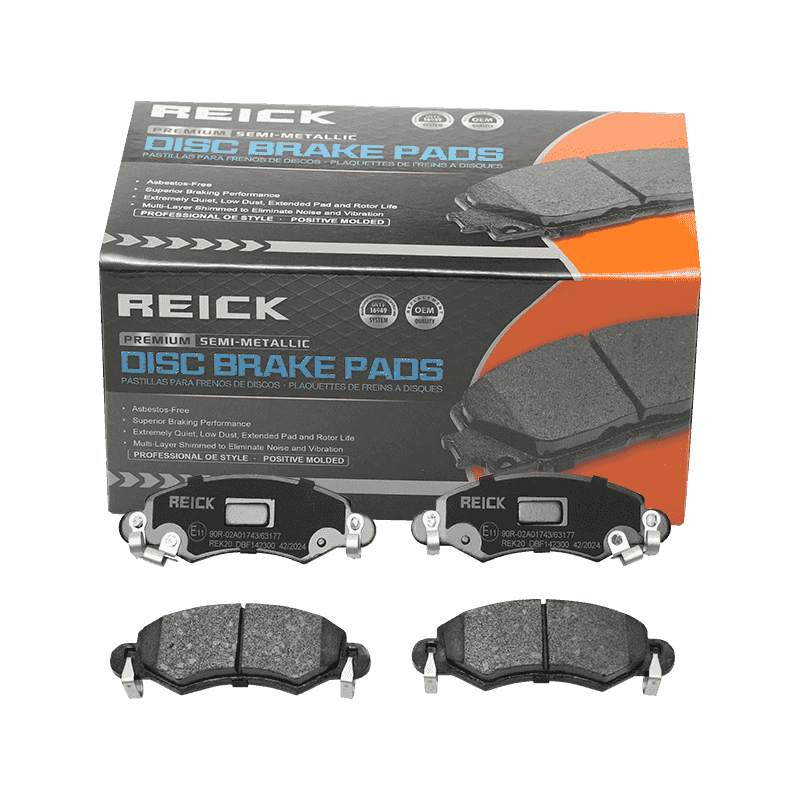
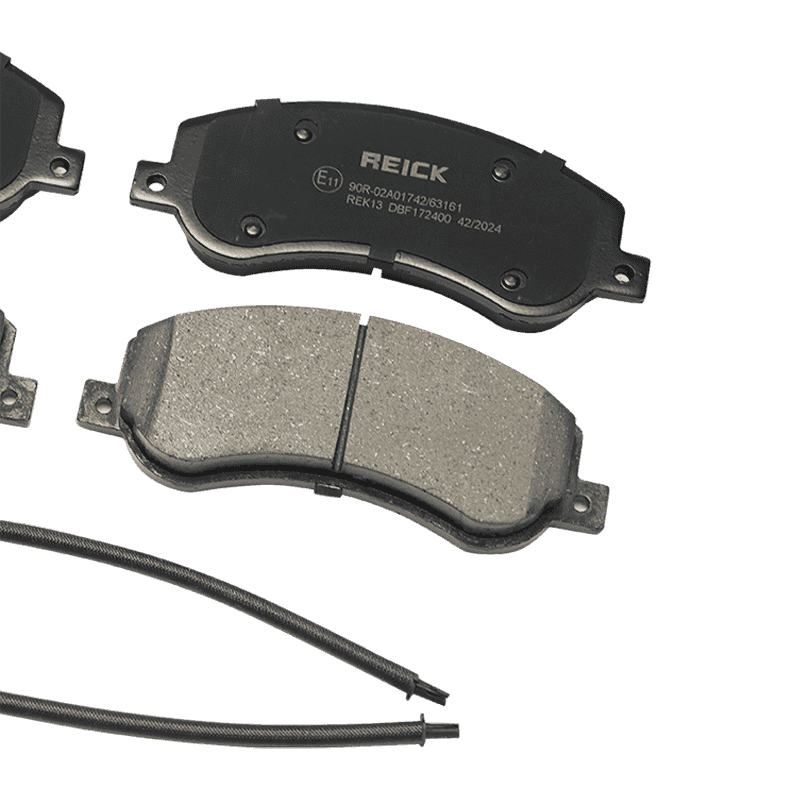 GDB1724 Front Disc brake pads for BYD Tang, FORD Transit and VOLKSWAGEN Amarok MReick are China Manufacturers and Company of GDB1724 Front Disc brake pads for BYD Tang, FORD Transit and VOLKSWAGEN Amarok, Custom GDB17...View Product →
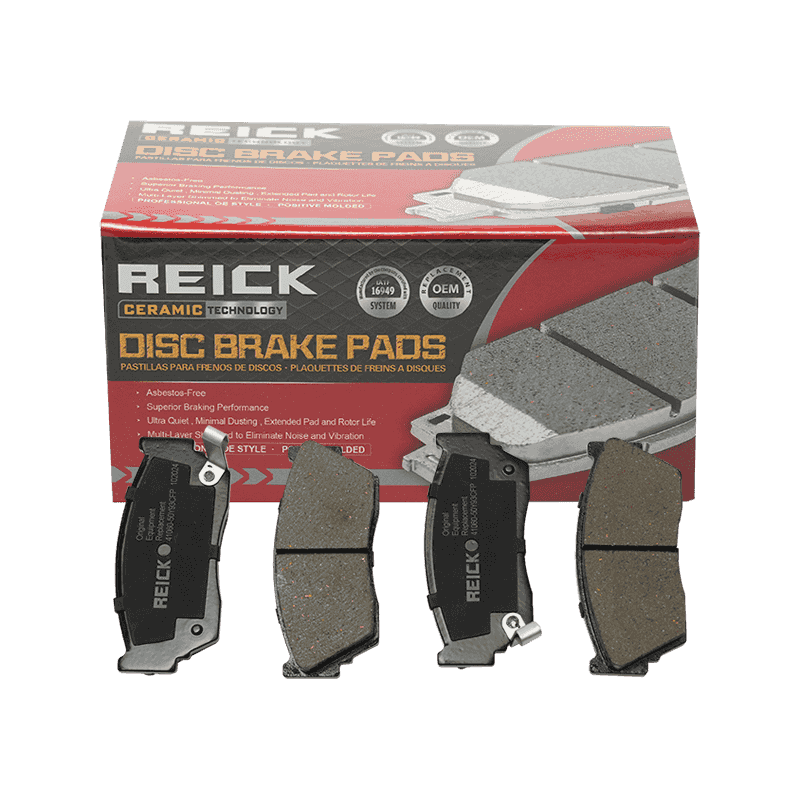
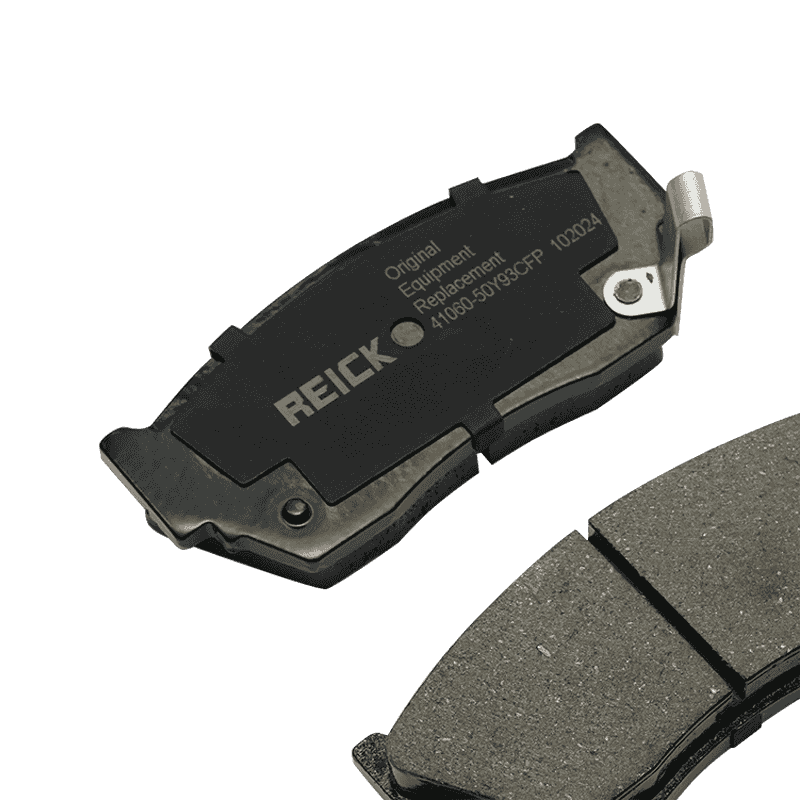 41060-50Y93 Front disc ceramic brake pad applicable for MAZDA Familia, NISSAN SeReick are China Manufacturers and Company of 41060-50Y93 Front disc ceramic brake pad applicable for MAZDA Familia, NISSAN Sentra and SUB...View Product →
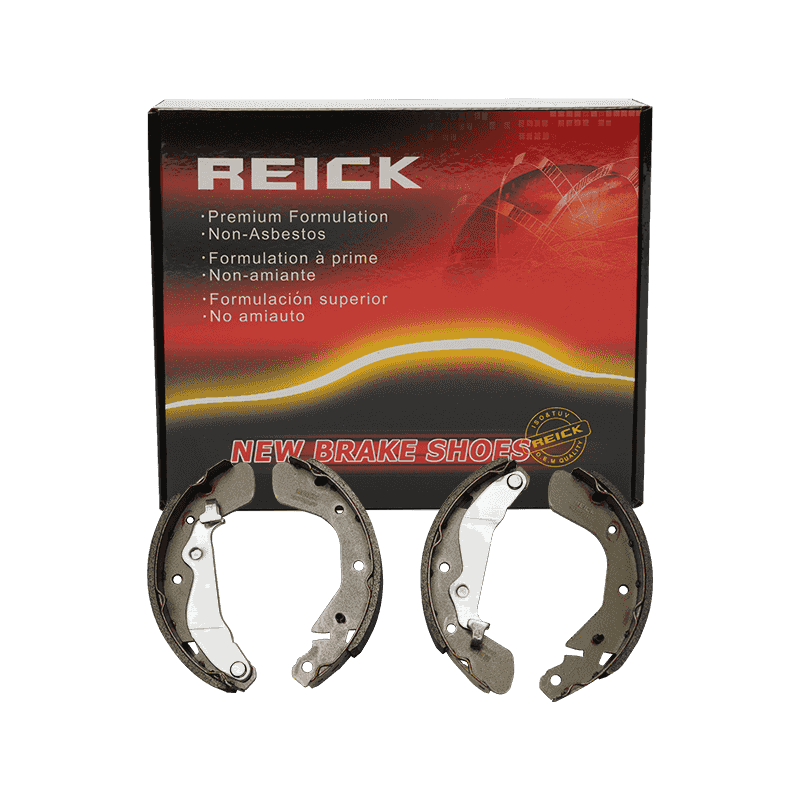
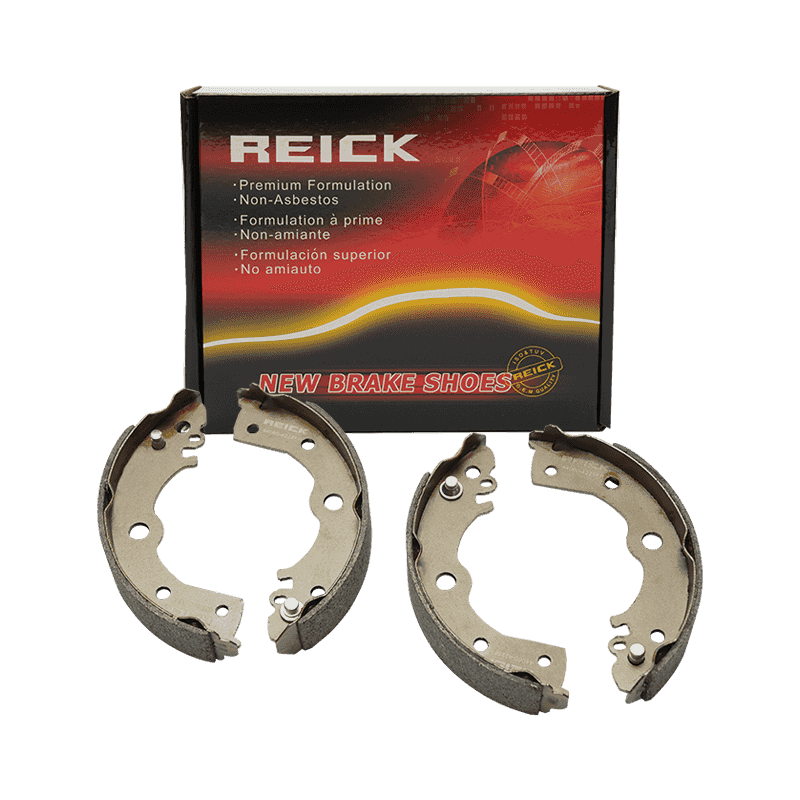
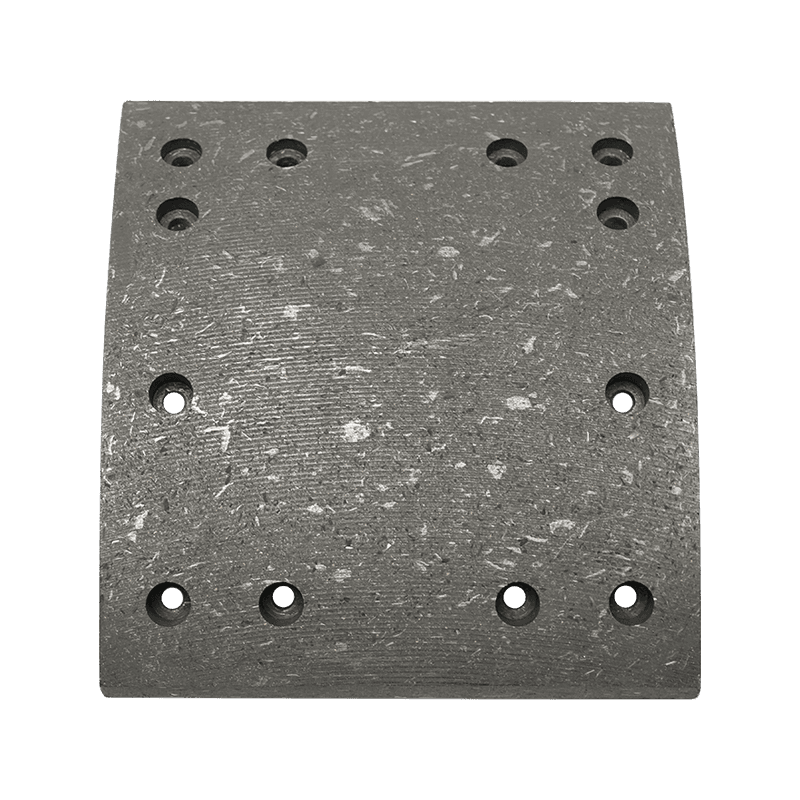
Another fitment detail: many cars use disc brakes in front and drum brakes in the rear. If that applies to your vehicle, switching the rear shoes to a ceramic formulation gives the same dust and noise benefits on the rear axle. REICK offers ceramic brake shoes for the Mazda Familia, Nissan Almera, and Nissan Sunny as a direct upgrade over standard drum linings.
Supplier verification is just as important as fitment. Ask three questions before placing an order:
These questions separate real quality from product labels.
Ceramic pads perform well right out of the box, but a proper bedding-in procedure bonds the friction material evenly to the rotor surface. Without it, the pad can form high-spots that cause vibration and reduced stopping power.
Routine checks also include brake fluid level and condition, caliper slide pins, and rotor thickness. Ceramic pads will last longer and stay quiet when the caliper moves freely and the rotor surface is smooth. Always replace pads in axle sets so braking remains balanced.
For most daily-driven cars, SUVs, and light commercial vehicles, ceramic brake pads are the strongest all-around choice: they are quiet, keep wheels clean, reduce rotor wear, and deliver stable stopping power. Choose semi-metallic pads when your use case is defined by heat: towing, track work, or heavy loads.
Quality control makes the difference between a good ceramic pad and a frustrating one. If you are buying for a workshop or distribution channel, verify the supplier's production and testing process. REICK operates its brake pad production line under ISO/TS16949-based quality management, follows ECE R90 requirements, and tests materials before batch production. You can review the quality control and production process at REICK to see how those claims are supported before you commit to a batch order.
Recommended Products


+86-139 6193 3287
+86-515-88410559

+86-515-88580498

reickchina@reickparts.com

B1002 Huabang Dong No.1# South Renmin Road, Tinghu District, Yancheng City, Jiangsu, China
Copyright © 2024 Yancheng Reick Automotive Parts Co., Ltd. All Rights Reserved.
Automotive Brake Manufacturers Automotive Clutch Parts Suppliers



 English
 Español
 italiano