2026.07.31
 Industry News
Content
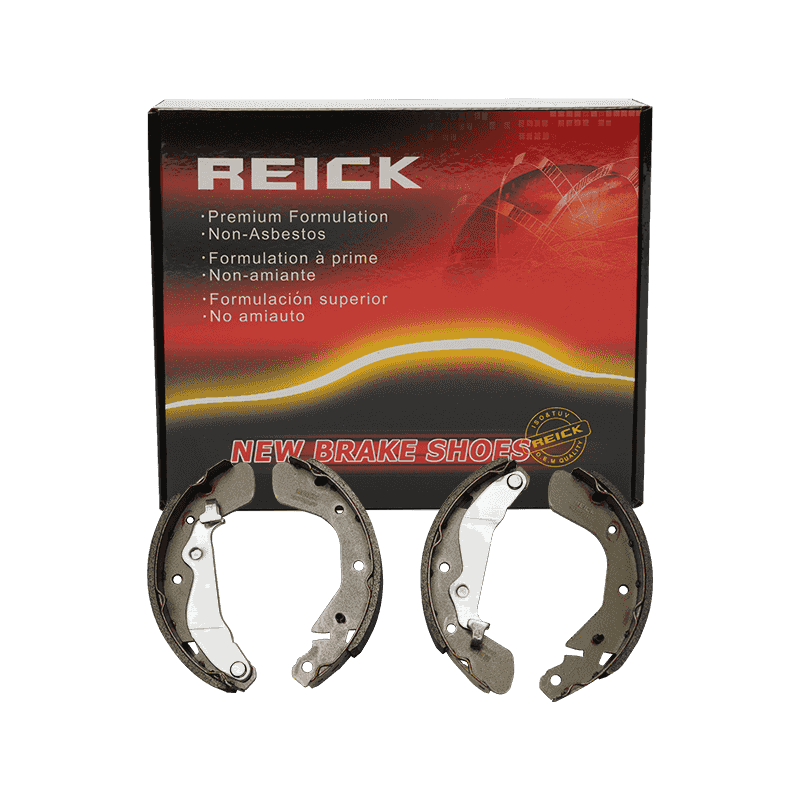
A fleet manager notices that drivers complain about squealing rear brakes, and wheels coated in black dust after just a few hundred miles. Swapping to ceramic brake shoes can eliminate both issues without sacrificing stopping power. Ceramic brake shoes are a friction formulation designed for drum brake systems that prioritize low noise, minimal dust, and stable performance.
Ceramic brake shoes are not made of pottery; the term refers to the friction material bonded to the steel shoe. This compound contains ceramic fibers, non-ferrous fillers, and specialized resins. Unlike brake pads that press against a rotor, brake shoes are curved to match the inside diameter of a brake drum. When the wheel cylinder pushes the shoes outward, the lining contacts the drum to create stopping force.
The ceramic formulation generates a light-colored, almost invisible dust that does not cling to wheels. More importantly, the friction coefficient stays stable across a wide temperature band, which translates into predictable pedal feel and consistent stopping in everyday traffic.
Choosing the right friction material for drum brakes depends on how the vehicle is used. The table below highlights the practical differences that impact daily driving, maintenance, and drum life.
| Material | Noise Level | Dust Production | Friction Consistency | Drum/Rotor Wear | Best Application |
|---|---|---|---|---|---|
| Ceramic | Very low | Minimal, light-colored | Stable across a wide temperature range | Low – extends drum life | Daily driving, commuter cars, light trucks |
| Semi-Metallic | Moderate to high | Heavy, dark, adhesive | Good at high temperatures, but may fade when cold | Moderate – can accelerate drum wear | Towing, heavy loads, frequent stop-and-go |
| Organic (NAO) | Low | Moderate, light | Fades rapidly under heat | Low | Light-duty cars, budget-conscious replacements |
Ceramic brake shoes dampen vibrations that cause squeal. The friction material has inherent sound-deadening properties, and the absence of large metallic particles reduces the high-frequency harmonics typical of semi-metallic linings. For ride-quality-sensitive drivers and fleet operators aiming to keep customers happy, the noise reduction alone justifies the switch.
The fine, light-colored dust produced by ceramic shoes does not adhere to wheels like the dark, carbon-rich dust from semi-metallic shoes. This means wheels stay cleaner longer, reducing washing frequency and corrosion risk on alloy rims. Companies running delivery fleets see lower appearance-related maintenance costs when ceramic shoes are on the rear axles.
Drum brakes are sensitive to friction material consistency because the self-energizing effect can make pedal feel unpredictable if friction varies. Ceramic shoes maintain a flat friction curve from cold starts to normal operating temperatures, eliminating grabby or fading behavior during city driving.
Ceramic friction material is less abrasive than semi-metallic compounds. Drums last longer, and the smooth surface finish left by ceramic linings helps maintain uniform contact. This lowers the total cost of ownership when factoring in drum replacement intervals.
Ceramic formulations are not designed for extreme heat. Under sustained heavy braking — such as towing a trailer down a mountain grade or frequent hard stops in fully loaded commercial vehicles — the friction coefficient can begin to drop. In those scenarios, semi-metallic shoes, which absorb and dissipate heat more aggressively, often perform more reliably. For standard passenger cars, minivans, and light-duty pickups, however, the thermal load rarely pushes ceramic shoes past their design limits.
Not all ceramic brake shoes deliver the same results. Look for these indicators when evaluating a set:
Reick Parts manufactures ceramic brake shoes under strict quality control, with material formulations tested to meet SAE J661 standards and OE-level performance. Consistent scorching and precision bonding ensure ready-to-install sets that minimize comebacks for shops and distributors.
Though ceramic brake shoes are less prone to noise, a proper break-in routine secures optimal performance. After installation, drive at moderate speed and perform 10–15 gentle stops from about 30 mph to 5 mph, allowing the shoes to transfer an even layer of friction material onto the drum surface. Avoid hard stops for the first 200 miles. This bedding process stabilizes the friction film and locks in the quiet, smooth operation ceramic shoes are known for.
Recommended Products


+86-139 6193 3287
+86-515-88410559

+86-515-88580498

reickchina@reickparts.com

B1002 Huabang Dong No.1# South Renmin Road, Tinghu District, Yancheng City, Jiangsu, China
Copyright © 2024 Yancheng Reick Automotive Parts Co., Ltd. All Rights Reserved.
Automotive Brake Manufacturers Automotive Clutch Parts Suppliers



 English
 Español
 italiano