2026.08.27
 Industry News
Content
If a customer's car leaves black dust on every wheel and squeals in stop-and-go traffic, the pads on it are almost certainly not ceramic, and switching to a ceramic compound usually fixes both complaints at once. That is the practical summary from years of friction material manufacturing: ceramic brake pads are the quietest, cleanest choice for everyday passenger cars, with predictable pedal feel and gentle treatment of rotors. What they will not do is shrug off repeated downhill braking with a loaded trailer or hard track use. Knowing where that line sits, and matching the compound to the actual duty cycle of the vehicle, is what separates a good pad recommendation from a warranty comeback.
Despite the name, a ceramic brake pad has little to do with the pottery on your dinner plate. The friction layer is a compressed blend of dense ceramic fibers, mineral fillers and bonding resins heat-cured into a solid block, with fine copper fibers mixed through the compound. Those copper fibers do two jobs: they conduct heat away from the friction surface, and they damp the high-frequency vibration that would otherwise be heard as brake squeal.
Metal content is the key difference from other formulas. A semi-metallic pad typically carries between 30 and 70 percent steel, iron or copper by weight, while a ceramic pad uses only a small fraction. Less metal means less abrasive contact with the rotor, which is one reason ceramic pads are easy on discs and why the dust they shed is light-colored and does not bond to alloy wheels the way dark metallic dust does.
Because performance depends heavily on the formulation, it pays to source from a manufacturer that controls its own mixing, pressing and curing. REICK produces ceramic, semi-metallic and low-metal pads under the same ISO/TS16949:2009-controlled process, with fitments covering Japanese, Korean, European, American and Chinese vehicle platforms.
ceramic brake pads for passenger cars and light commercial vehicles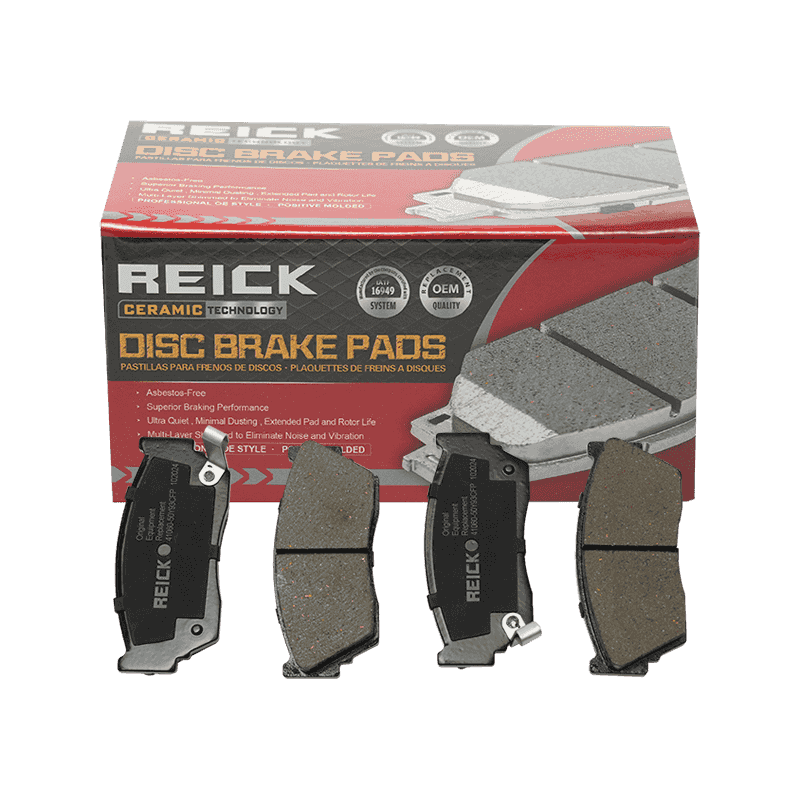 REICK Ceramic Brake Pads from an Integrated ManufacturerREICK manufactures ceramic, semi-metallic and low-metal pads under IATF 16949-controlled mixing, pressing and curing, offering OE-matched fitments across Japanese, Korean, European, American and Chinese vehicle platforms.View Product →
Ceramic pads earn their premium in several areas that drivers notice every day, and they show their limits in exactly one situation that fleet operators know well.
For buyers deciding what to stock per market segment, the practical differences come down to a handful of measurable factors.
| Factor | Ceramic | Semi-Metallic | Low-Metal |
|---|---|---|---|
| Noise | Very quiet | Prone to squeal when hot | Moderate |
| Wheel dust | Light-colored, low adhesion | Dark and heavy | Moderate |
| Heat tolerance | Moderate | Excellent, resists fade | Good |
| Cold bite | Softer when cold | Strong | Good |
| Effect on rotors | Gentle | More abrasive | Balanced |
| Typical use case | Daily commuting, city driving | Towing, performance, heavy loads | Mixed everyday use |
Choosing "ceramic" is only half the decision; the other half is making sure the pad actually matches the vehicle. Friction coefficient, backing plate geometry and compressibility are engineered per application, and the same compound behaves differently under a 1.2-ton hatchback and a 2-ton van. That is why professional catalogs list pads by OE reference number and platform rather than by size alone.
Two examples from the REICK ceramic range show how specific the matching gets. The 4106050Y93 front disc pad is validated for the Mazda Familia, Nissan Sentra and Subaru Leone, compact platforms where low noise and clean wheels are the main selling points. For buyers covering mixed fleets, the GDB1724 front pad fits the BYD Tang SUV, the Ford Transit van and the Volkswagen Amarok pickup, applications where payload changes with every customer.
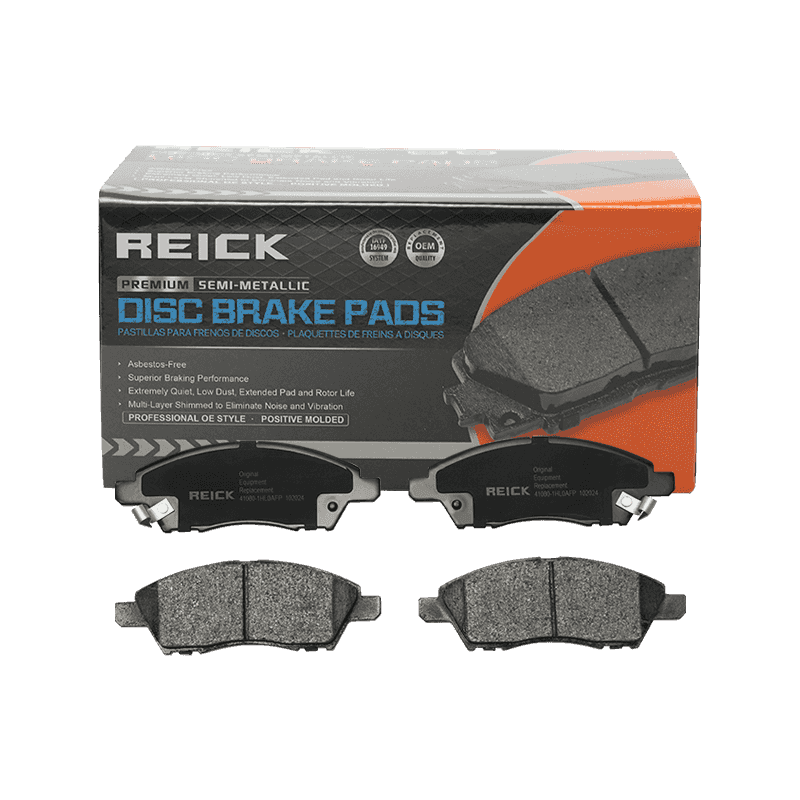
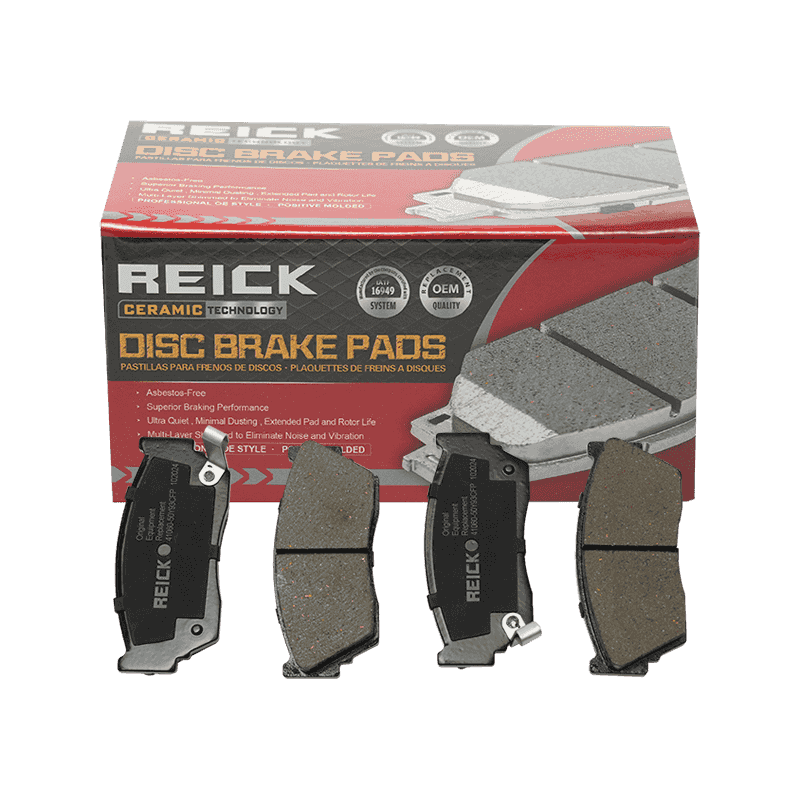
4106050Y93 front disc ceramic brake pad for Mazda Familia, Nissan Sentra and Subaru Leone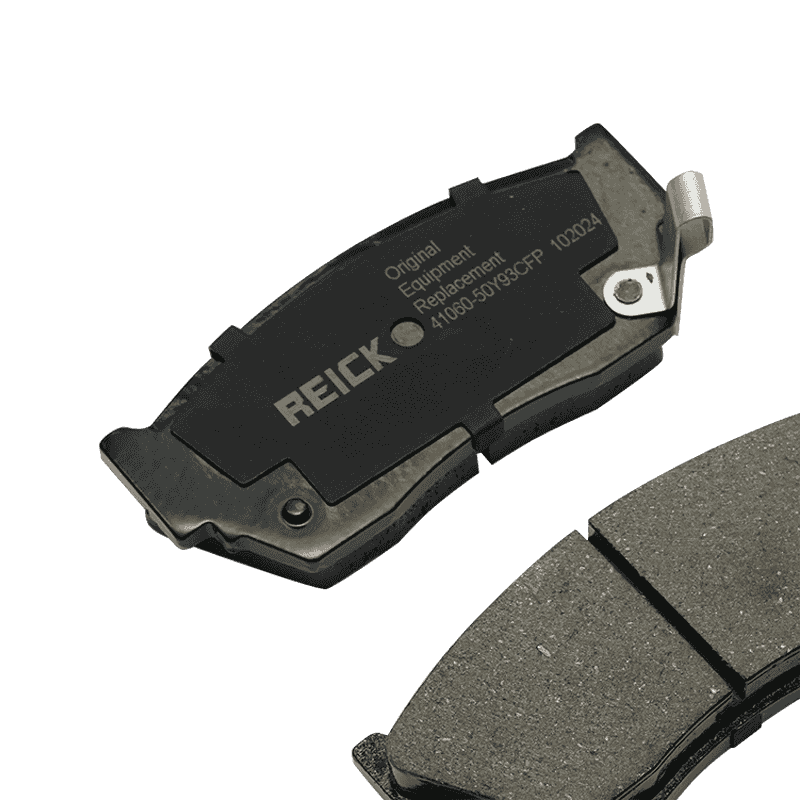 41060-50Y93 Front Ceramic Brake Pad for Mazda Familia, Nissan Sentra and Subaru LeoneThis asbestos-free, high ceramic-fiber front pad is chamfered, slotted and shimmed for maximum noise reduction and anti-fading braking, validated for compact platforms where low dust and quiet operation matter most.View Product → GDB1724 front disc brake pads for BYD Tang, Ford Transit and Volkswagen Amarok
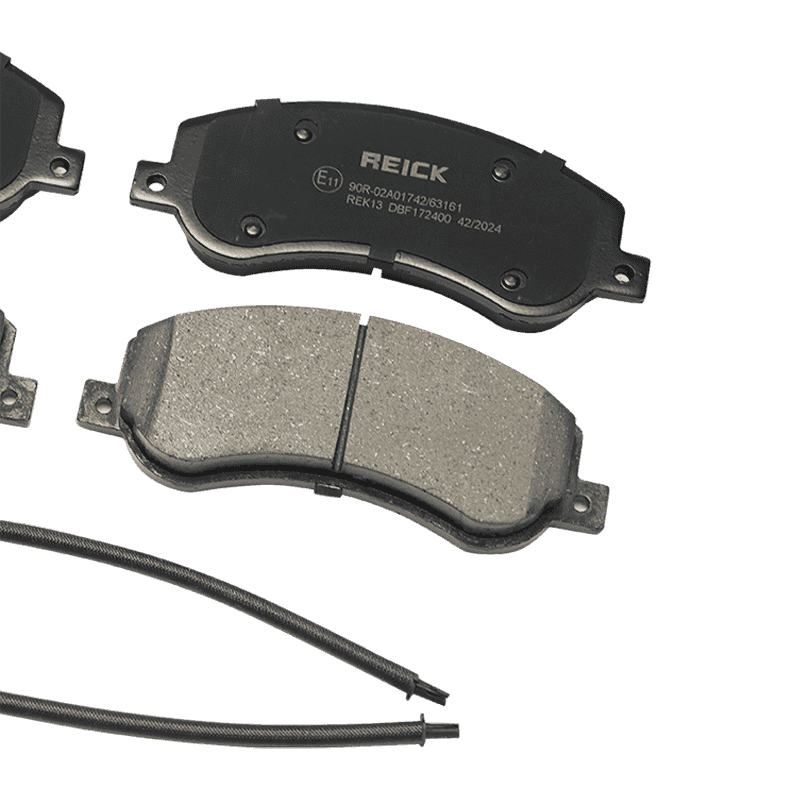 GDB1724 Front Disc Brake Pad for BYD Tang, Ford Transit and Volkswagen AmarokA front ceramic pad with exceptional anti-dust performance, shorter braking distances and quiet braking, built to OE specifications for mixed fleets spanning an SUV, van and pickup with varying payloads.View Product →
If you are unsure which specification a customer's vehicle requires, work through a systematic selection process rather than guessing from pad dimensions alone. Our guide on how to tell which brake pads you need walks through that step by step.
For distributors and workshops buying at volume, compound choice is only as good as the quality system behind it. Before committing to a supplier of ceramic pads, verify the following:
REICK's process reflects these checkpoints: drawings are CAD-designed, materials and finished products are tested, and the company states an annual brake pad capacity in the millions of pieces, supported by an R&D team of more than 180 people for custom formulations. For a buyer, that combination matters less as a slogan and more as an answer to one question: can the supplier reproduce the same pad, batch after batch?
Ceramic pads are known for longevity, but the numbers depend on duty cycle. In mixed driving, many ceramic sets deliver between 50,000 and 100,000 kilometers, while taxi or delivery use in constant stop-and-go traffic can cut that figure roughly in half. Two practices protect that lifespan:
Driving habits, vehicle weight, rotor condition and climate all shift the wear rate, so treat any mileage figure as a range rather than a promise.
The honest recommendation is straightforward. For daily-driven passenger cars, which make up the majority of the aftermarket, ceramic brake pads are the compound customers notice and rarely complain about: quiet, clean and kind to rotors. For towing, mountain routes and heavy commercial use, specify semi-metallic and explain why. Match the compound to the duty cycle, verify fitment by OE number, and buy from a manufacturer whose testing you can audit. That combination keeps wheels clean, cabins quiet and warranty claims rare.
Recommended Products


+86-139 6193 3287
+86-515-88410559

+86-515-88580498

reickchina@reickparts.com

B1002 Huabang Dong No.1# South Renmin Road, Tinghu District, Yancheng City, Jiangsu, China
Copyright © 2024 Yancheng Reick Automotive Parts Co., Ltd. All Rights Reserved.
Automotive Brake Manufacturers Automotive Clutch Parts Suppliers



 English
 Español
 italiano