2026.03.12
 Industry News
Content
Choosing the wrong brake pads is one of the most common and costly mistakes vehicle owners and fleet managers make. The wrong material can accelerate rotor wear, generate excessive noise, or simply fail to provide adequate stopping power for your specific application. As a manufacturer with over 20 years of experience producing brake components for customers across more than 50 countries, we want to give you a clear, practical framework for identifying exactly which brake pads your vehicle needs — before you place a single order.
The most fundamental starting point is your vehicle identification. Brake pad dimensions — including length, width, thickness, and caliper mounting geometry — are engineered specifically for each vehicle platform. A pad that fits a 2015 Toyota Camry will not fit a 2015 Honda Accord, even if both are mid-size sedans with similar disc brake systems.
You will need at minimum:
Front brake pads typically wear 30–40% faster than rear pads because the front axle absorbs the majority of braking force during deceleration. This means front and rear pads often differ in size and sometimes in compound formulation, even on the same vehicle.
Once you have these details, you can cross-reference against an OE part number or a parts catalog. Reputable manufacturers maintain cross-reference databases precisely for this purpose, allowing buyers to match an OEM number to a compatible aftermarket replacement.
After confirming vehicle fitment, the next decision is compound type. There are three primary material categories used in passenger car and light commercial brake pads, each with distinct performance characteristics.
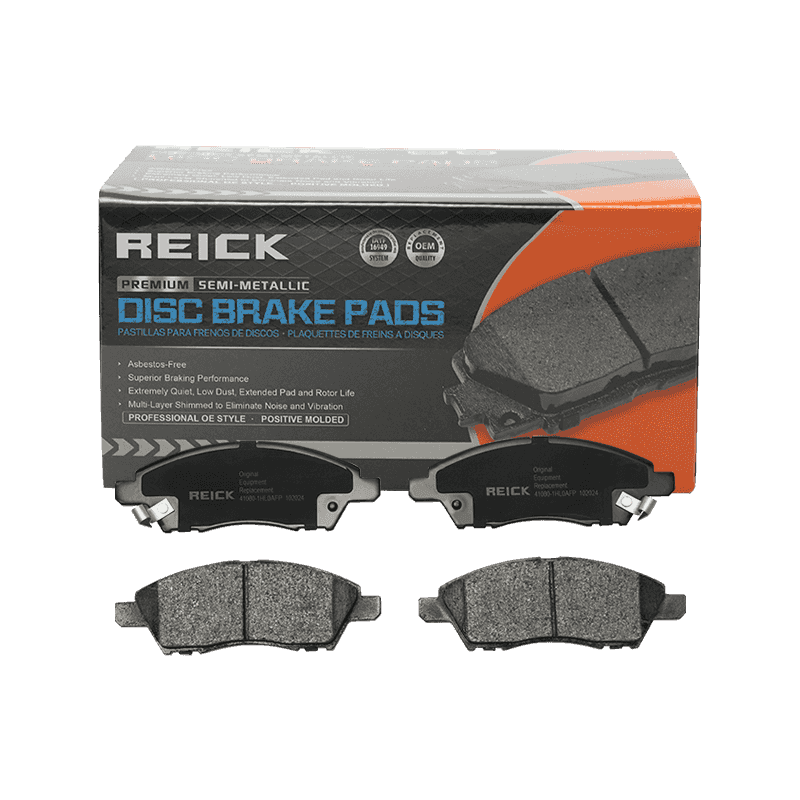
Semi-metallic pads are composed of 30–65% metallic content — typically steel wool, iron powder, and copper — bonded with friction modifiers and fillers. They are the most widely used type globally, particularly in performance driving, commercial applications, and vehicles that experience heavy or repeated braking demands.
Key characteristics include excellent heat dissipation, strong bite at high temperatures, and durability under aggressive use. The trade-off is slightly higher rotor wear and more brake dust compared to ceramic compounds. They are well-suited to sports vehicles, trucks, and any application involving towing or mountain driving.
Low-metallic pads contain a lower proportion of metal — typically 10–30% steel or copper fiber — mixed with organic binders. This formulation is particularly common in the European market, where regulations and driving patterns favor a balance between bite, pedal feedback, and rotor protection.
Low-met pads offer strong braking performance with improved thermal stability compared to purely organic pads. They may produce slightly more noise than ceramic alternatives but deliver excellent stopping power across a wide temperature range.
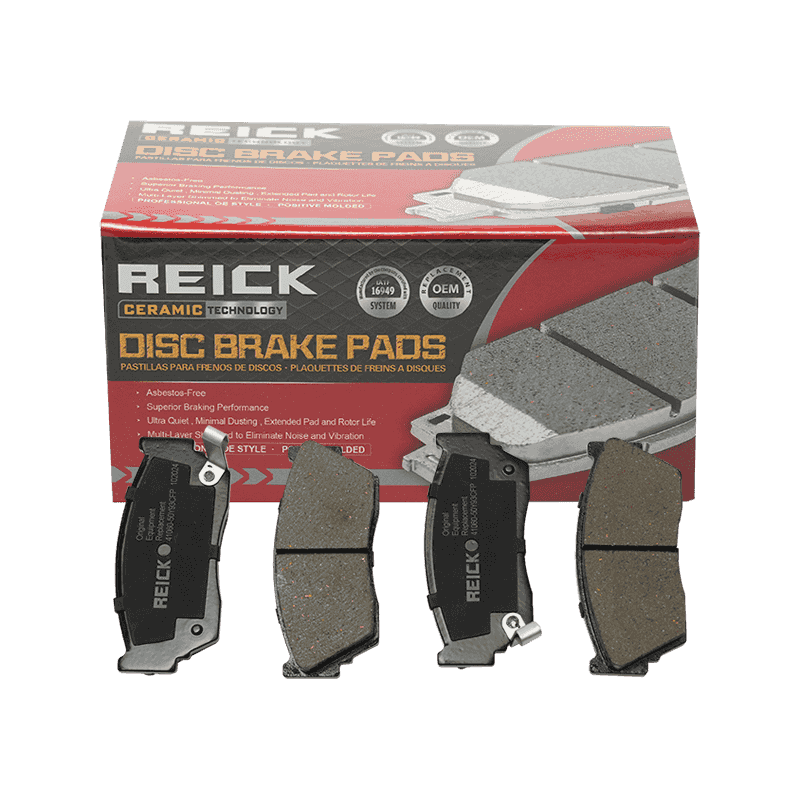
Ceramic pads use dense ceramic fibers and nonferrous fillers bonded with a high-temperature resin. They are the preferred choice for drivers who prioritize low dust, quiet operation, and extended rotor life. Ceramic pads are particularly popular in North America and for luxury or commuter vehicles used primarily in urban and highway driving.
Their limitation is cold-weather initial bite — at very low ambient temperatures, ceramic pads can feel slightly less responsive in the first few applications until they reach operating temperature. They are not the first choice for heavy-duty or high-heat racing applications.
| Type | Best For | Dust Level | Noise | Rotor Wear | Heat Resistance |
|---|---|---|---|---|---|
| Semi-Metallic | Performance, trucks, towing | High | Moderate | Moderate–High | Excellent |
| Low-Metallic | European vehicles, balanced use | Moderate | Low–Moderate | Moderate | Good |
| Ceramic | Daily commuting, luxury vehicles | Low | Very Low | Low | Moderate |
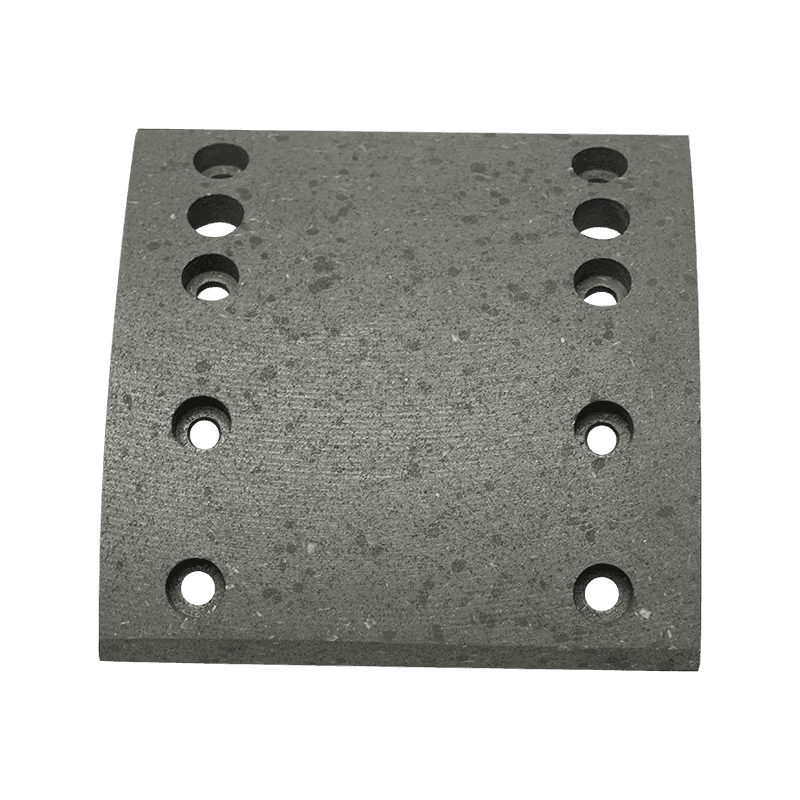
If you are sourcing for a diverse vehicle range, you can browse our full brake pad product range, which covers semi-metallic, low-metallic, and ceramic options across a broad catalog of passenger car and commercial vehicle applications.
Vehicle fitment and material type are not the only selection factors. How and where the vehicle is driven matters significantly. A pad that performs perfectly for urban commuting may be entirely inadequate for a delivery van operating in mountainous terrain or a pickup truck used for towing.
For passenger cars used predominantly in city traffic with regular stop-and-go braking, ceramic or low-metallic pads are typically the better choice. Brake temperatures in urban driving rarely exceed 300°C, which is well within the operating range of these compounds. The reduced dust and noise make them more comfortable for daily use.
Trucks, vans, and vehicles regularly carrying heavy payloads or towing trailers generate substantially more braking heat. Brake temperatures under load can exceed 500°C, a range where organic or ceramic pads may begin to fade. Semi-metallic compounds are purpose-built for this kind of thermal stress and maintain consistent friction coefficients even at elevated temperatures.
For sports vehicles or drivers who frequently use mountain roads, track days, or high-speed highway driving, high-performance semi-metallic or specialized compounds are the appropriate choice. Standard OE-equivalent pads are designed for a specific thermal window and can glaze or fade if pushed beyond their design parameters repeatedly.
If you are replacing existing pads, the condition and wear pattern of the old set can tell you a great deal about whether your current specification is correct — or whether something needs to change.
Most manufacturers recommend inspection when pad thickness reaches 3–4mm, with replacement before 2mm. Driving below 2mm of pad material risks metal-on-metal contact with the rotor, which typically causes rotor damage costing several times more to repair than a set of pads.
Brake pad specifications are not universal across markets. Procurement teams and distributors sourcing for different regions need to be aware of the relevant standards that govern friction material composition and performance.
| Region | Relevant Standard | Key Requirement |
|---|---|---|
| Europe | ECE R90 | Friction performance within ±15% of OE; copper restrictions apply in some member states |
| North America | FMVSS 135 / SB346 (copper content) | Copper content limits phasing in; performance testing per SAE J2784 |
| China / Export | GB 5763 / IATF 16949 | Friction grade classification; quality management system certification |
If you are a distributor or importer, confirming that your supplier's pads are compliant with the destination market's standards is not optional — it is a legal and liability requirement. All of our brake pad products are manufactured under an IATF 16949-certified quality management system, with testing equipment matched to OE standards to ensure each batch meets friction performance specifications.
Brake pads do not work in isolation — their performance is fundamentally linked to the rotor they contact. Mismatching pad compound to rotor type accelerates wear on both components and can compromise braking consistency.
If you are also sourcing rotors, it is always preferable to specify the pad and rotor as a matched system from the same supplier. This removes uncertainty around material compatibility and ensures consistent friction interface performance.
Before committing to a bulk order or even a single set, there are four straightforward verification steps we recommend to every buyer:
If you are purchasing for resale or fleet maintenance, do not skip the material data sheet. Friction grade mismatches of even one classification step can increase stopping distance by 10–20% under identical conditions — a difference that matters significantly in safety-critical applications.
As a professional brake components manufacturer, we supply semi-metallic, low-metallic, and ceramic brake pads covering a wide range of passenger car, commercial vehicle, and light truck applications. Our team can assist with part number cross-referencing and application matching to ensure you source the correct specification for your market.
Recommended Products


+86-139 6193 3287
+86-515-88410559

+86-515-88580498

reickchina@reickparts.com

B1002 Huabang Dong No.1# South Renmin Road, Tinghu District, Yancheng City, Jiangsu, China
Copyright © 2024 Yancheng Reick Automotive Parts Co., Ltd. All Rights Reserved.
Automotive Brake Manufacturers Automotive Clutch Parts Suppliers



 English
 Español
 italiano