Home / News / Industry News / Brake Fluid DOT 4: Boiling Points, Wet Ratings and Service Intervals Explained
 2026.11.14
 Industry News
Content
A workshop that services European sedans keeps two drums on the shelf: DOT 3 for the older stock and DOT 4 for everything that rolls in with an ESP badge on the tailgate. The gap between them is not marketing language. It is 25 C of extra dry boiling margin and 15 C of extra wet boiling margin, which is exactly the difference between a firm pedal and a long one on a mountain descent with a loaded car.
DOT 4 is a glycol-ether hydraulic fluid with borate esters added, and it must reach 230 C dry and 155 C wet boiling point before it can legally carry the DOT 4 label.
Brake fluid grade DOT 4 describes a hygroscopic glycol-based fluid whose boiling point is raised by borate ester additives, rated at a 230 C minimum when fresh and a 155 C minimum after it has absorbed water, under FMVSS 116 and ISO 4925.
The borate component does two jobs at once. It lifts the boiling ceiling above DOT 3, and it buffers the fluid so the pH stays in a range that will not attack the aluminium, rubber seals and pistons inside the caliper and master cylinder. That second job is why a cheap fluid can pass a boiling test on day one and still leave a corroded circuit behind at the end of its service life.
Just as important is what DOT 4 is not. It is not silicone fluid (DOT 5), and it is not mineral oil (the LHM used by some older European hydraulic systems). Silicone does not disperse water, so moisture pools at the low points of the circuit, and neither fluid is miscible with glycol. A single mistake in topping off can turn a routine service into a full seal rebuild.
The figure that predicts real-world behaviour is the wet boiling point, because that is the number the brakes are running on after two years of service, not the figure printed on the bottle.
Read the table below as a buying sheet rather than a chemistry lesson. The differences that matter to a workshop are the wet rating, the base chemistry and the viscosity at low temperature, because those three decide what the pedal feels like on a cold morning and under repeated hard braking.
| Fluid class | Dry boiling point | Wet boiling point | Viscosity at -40 C | Typical application |
| DOT 3 | 205 C | 140 C | Up to 1500 mm2/s | Older passenger cars, drum brake circuits |
| DOT 4 | 230 C | 155 C | Up to 1800 mm2/s | ABS-equipped cars, light commercial vehicles |
| DOT 4 LV | 230 C | 155 C | Up to 750 mm2/s | ESP and late-model ABS units, ISO 4925 Class 6 |
| DOT 5.1 | 260 C | 180 C | Up to 900 mm2/s | Track use, heavy-duty and high-temperature duty cycles |
DOT 5.1 keeps the same glycol base as DOT 4, so the two can be mixed when a customer wants extra thermal headroom. The trade is cost and, in some formulations, faster moisture pickup. For a maintenance shop, stocking DOT 4 and DOT 4 LV covers nearly the whole passenger fleet.
Brake fluid fails from the inside out: it takes on water through the reservoir vent and the seals, and every increment of water drags the boiling point down toward the wet rating.
Front calipers routinely sit between 200 C and 400 C during hard use, and the fluid in the caliper body shares that heat path. If water in the fluid reaches boiling point, the vapour bubble compresses under pedal force instead of transmitting it, so the driver has to push further before the pads clamp. That is vapour lock. It rarely arrives as a dramatic failure; it usually appears as a pedal that feels normal cold and vague after the third hard stop.
Glycol ether is hygroscopic by design, because absorbing water stops droplets forming in the circuit. A sealed system still exchanges trace moisture through the cap vent, and rubber hoses pass water vapour slowly. On a typical road car, water content climbs at roughly one to two percent per year, which means a two-year interval is a design decision rather than a sales tactic.
At around 3.5 percent water content, a 230 C fluid behaves like a 155 C fluid. The safety margin disappears long before the driver notices a soft pedal.
Out-of-specification fluid usually shows up in one of five ways, and most of them appear before a customer ever describes a soft pedal.
None of these signs replaces a boiling point test on a bench, but together they justify a flush far more convincingly than a mileage figure alone.
A complete flush takes 30 to 45 minutes on most passenger cars and consumes roughly one litre of fluid, including the ABS bleed cycle.
The most common mistake is not the bleeding order. It is letting the reservoir run dry halfway through, which pushes air into the master cylinder and turns a 40-minute job into an afternoon of bench bleeding.
Fluid is only half of the hydraulic equation; the pedal a driver judges comes from the fluid, the friction pair, the rotor surface and the booster working inside the same temperature window.
On vehicles with a late ABS or ESP block, check the cap for DOT 4 LV or ISO 4925 Class 6 before pouring. The lower cold viscosity lets the valve block cycle faster at start-up, and using a standard fluid in a system calibrated for low viscosity can slow the first ABS intervention on a winter morning. The full brake system component range has to be specified alongside the fluid, not after it.
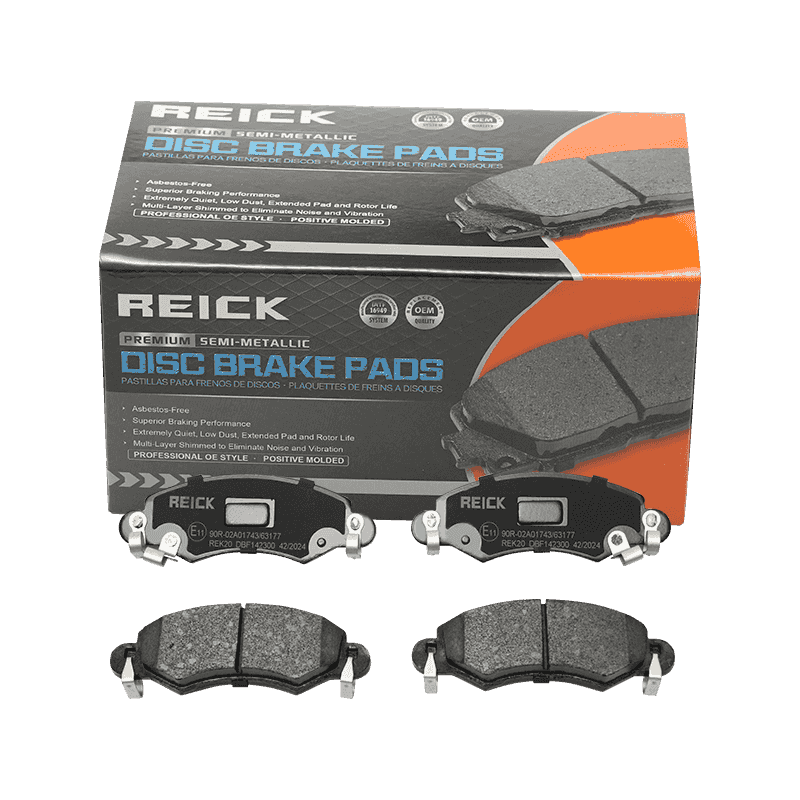
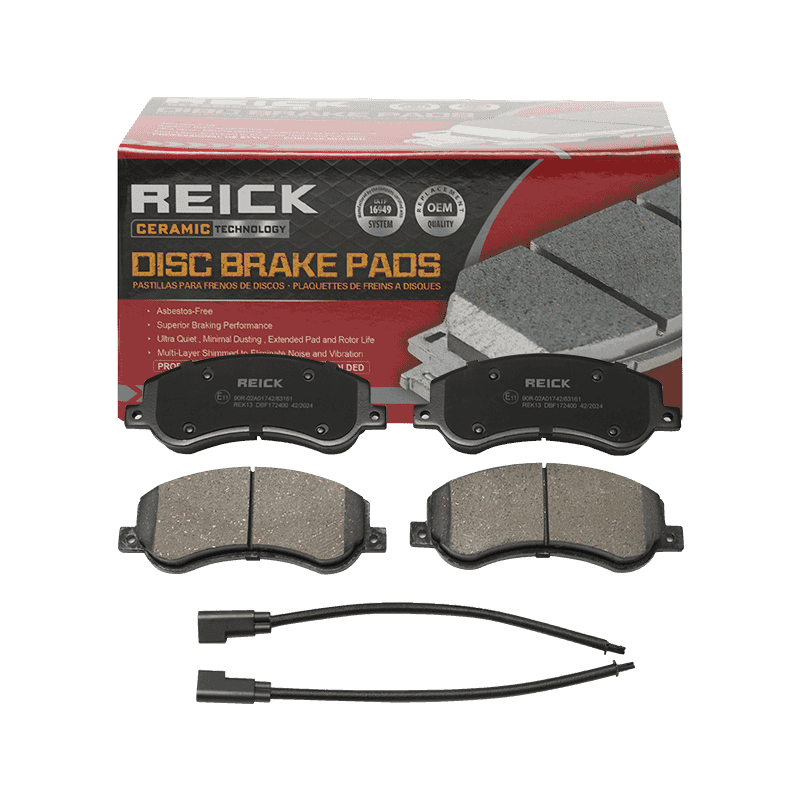
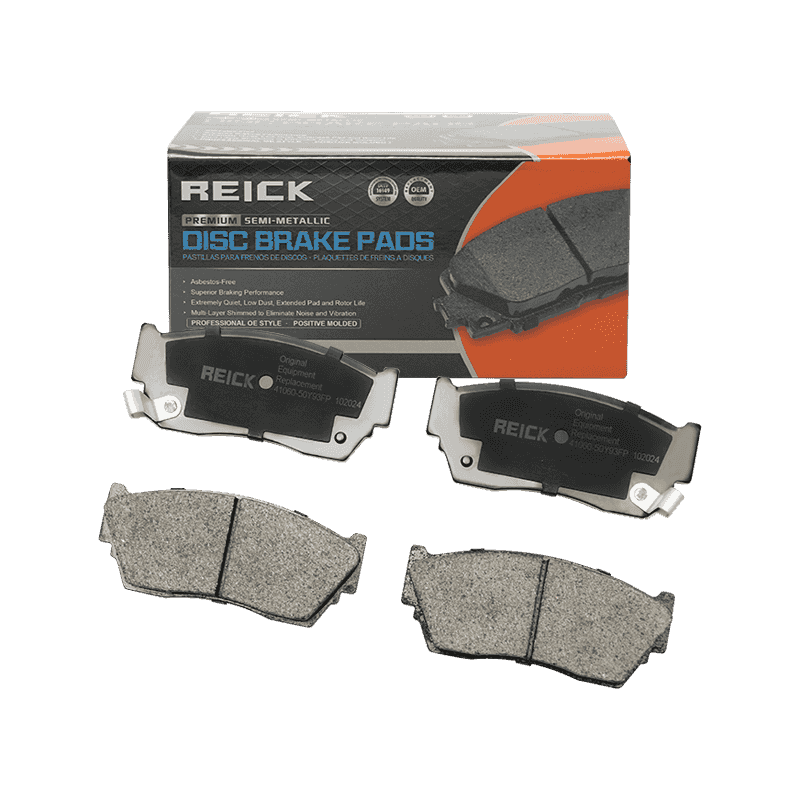 Automotive Brake Pads: Ceramic, Low-Metal and Semi-MetallicBrowse semi-metallic, low-metal and ceramic brake pads with vehicle applications and basic dimensions, useful when matching pad compound to the brake system.View Product →
A pad compound that runs hotter than the fluid can handle will always win that argument. Ceramic pads keep heat in the friction material and stay quiet, while semi-metallic compounds move heat into the caliper faster and punish an old fluid charge sooner.
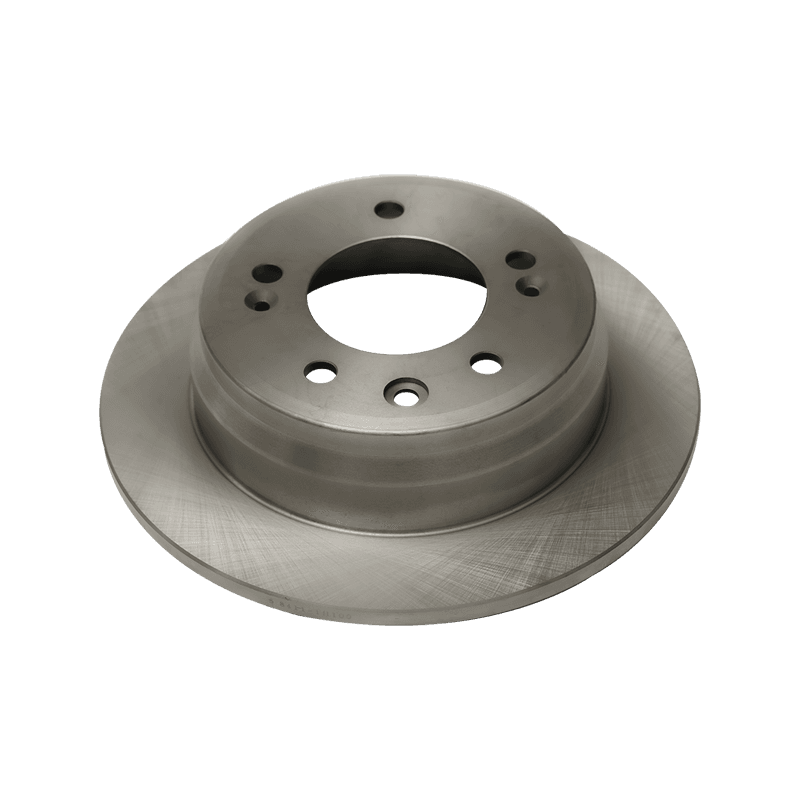 58411-1H100 Rear Brake Rotor for Hyundai and KiaSolid rear rotor for Hyundai Sonata, Kia K5 and Sportage, with 262 mm outer diameter and G3000 material; verify fitment and minimum thickness.View Product →
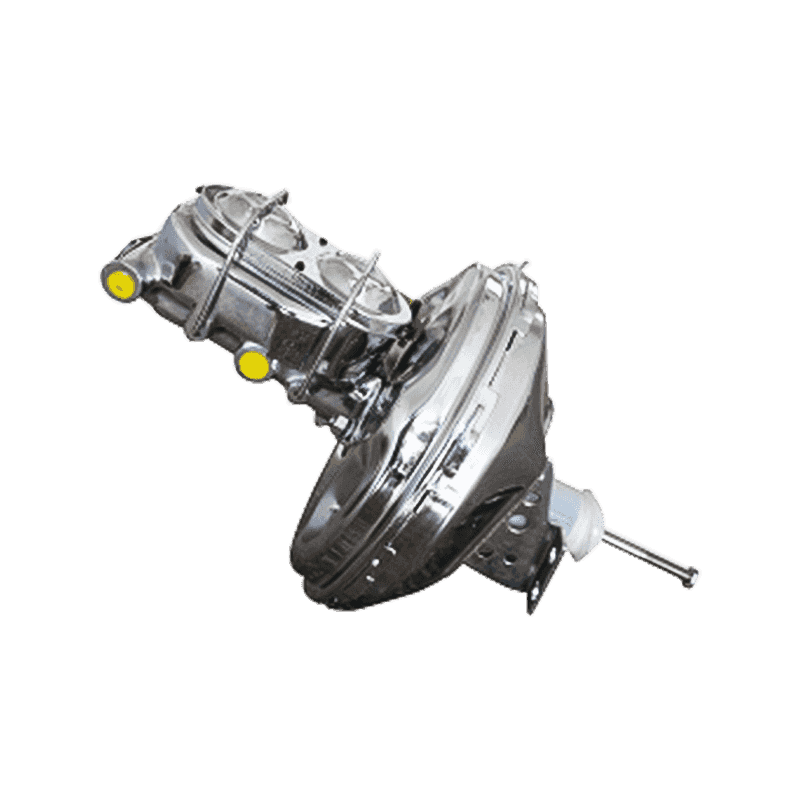
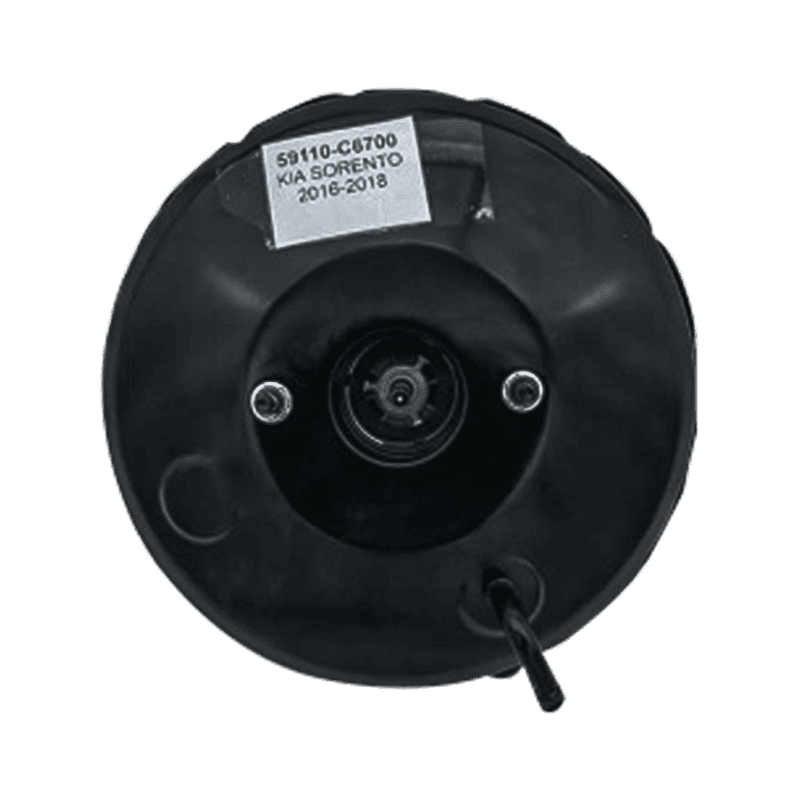 59110-C6700 Power Brake Booster for Hyundai and Kia SorentoPower brake booster for Hyundai and Kia Sorento 76-78, built to original specifications; cross-references include 591102W300, 591104Z300 and 59110C6700.View Product →
Never top up a DOT 4 circuit with DOT 5 silicone fluid, mineral oil or an unlabelled bottle from the back of a shelf. Rinse any spilled glycol fluid off painted surfaces with water immediately, because it strips paint within minutes.
For a distributor, two purchase decisions carry most of the risk: which grade to stock in bulk, and how the packaging protects the fluid before the seal is broken.
Packaging matters more than most buyers expect. Glycol fluid pulls moisture through plastic, so a 500 ml bottle sold in a sealed foil pouch will still be in specification after two years on the shelf, while a drum left open in a humid store room will not. Check for the FMVSS 116 or ISO 4925 marking, a batch number and a fill date on every carton.
If you stock both glycol grades, the reference on DOT 3 brake fluid boiling points and vehicle compatibility is a practical companion page for counter staff who field grade questions all day.
Yes. Both are glycol-based and miscible, and DOT 4 carries the higher boiling point, so it is the safer choice when the cap allows it. The reverse direction, filling a DOT 4 system with DOT 3, reduces the boiling margin and should only be treated as an emergency top-up.
Every two years or roughly 30,000 miles on most road cars, whichever comes first. Vehicles that tow, run track days or operate in humid coastal climates are better served by an annual change or a moisture check at each service.
It works, but the low-viscosity DOT 4 LV variant is the correct choice wherever the manufacturer specifies ISO 4925 Class 6. The boiling points are identical; only cold viscosity changes, and that is what the valve block needs at start-up.
Only when the reservoir cap or manual states a glycol fluid. Many hydraulic clutch circuits share the brake reservoir and accept DOT 4, while others use a mineral-based fluid that will destroy the seals if glycol is introduced.
Recommended Products


+86-139 6193 3287
+86-515-88410559

+86-515-88580498

reickchina@reickparts.com

B1002 Huabang Dong No.1# South Renmin Road, Tinghu District, Yancheng City, Jiangsu, China
Copyright © 2024 Yancheng Reick Automotive Parts Co., Ltd. All Rights Reserved.
Automotive Brake Manufacturers Automotive Clutch Parts Suppliers


 English
 Español
 italiano