Home / News / Industry News / DOT 3 Brake Fluid: Boiling Points, Specifications, and Vehicle Compatibility
 2026.09.18
 Industry News
Content
Press the brake pedal on a long downhill and feel it creep toward the floor stop by stop — in many of those cases, the culprit is not worn pads but brake fluid that has quietly absorbed water until it boiled inside the calipers. The reservoir cap instructing you to use DOT 3 only is pointing at the single most neglected component in the hydraulic braking system.
DOT 3 is the baseline grade of glycol-based hydraulic brake fluid defined under U.S. Federal Motor Vehicle Safety Standard No. 116. It requires a minimum dry boiling point of 205°C (401°F) when fresh and a minimum wet boiling point of 140°C (284°F) once the fluid has absorbed 3.5% water. For most passenger cars and light trucks on the road, it is exactly what the manufacturer intended — as long as it stays reasonably fresh and uncontaminated.
The DOT prefix stands for Department of Transportation, the U.S. agency that publishes FMVSS No. 116, the federal standard brake fluids are certified against. The specification is harmonized with SAE J1703, so a fluid meeting DOT 3 also satisfies the corresponding SAE classification.
Chemically, DOT 3 is a blend of glycol ethers with corrosion inhibitors, pH buffers and antioxidants. The rating is a performance floor, not a recipe: any fluid carrying the DOT 3 mark must meet two temperature thresholds regardless of who blends it, which is why the label on the reservoir cap remains the only compatibility guide a technician needs.
Dry boiling point describes fluid straight from a sealed container. Wet boiling point describes fluid that has absorbed 3.5% water by volume, a realistic simulation of one to two years in service. Regulators test both because glycol fluid is hygroscopic: it pulls moisture out of the air, through rubber brake hoses and even through plastic reservoir walls.
The distinction matters because water boils at 100°C (212°F). As moisture accumulates, the effective boiling point slides from the 205°C floor toward the 140°C wet floor, and the first place it boils is inside the calipers and wheel cylinders, the hottest points in the circuit. Vapor bubbles are compressible where liquid is not, so every bubble under the pedal converts into extra pedal travel. That is the spongy pedal feeling, and it is the warning that precedes outright brake fade.
The DOT scale is a ladder of minimum performance levels, and the first three rungs share the same glycol chemistry:
| Grade | Base Chemistry | Min. Dry Boiling Point | Min. Wet Boiling Point | Typical Use | Mixable with DOT 3? |
|---|---|---|---|---|---|
| DOT 3 | Glycol ether | 205°C / 401°F | 140°C / 284°F | Everyday passenger cars, light trucks | Baseline |
| DOT 4 | Glycol plus borate esters | 230°C / 446°F | 155°C / 311°F | ABS/ESP vehicles, towing, mountain routes | Yes |
| DOT 5.1 | Low-viscosity glycol | 260°C / 500°F | 180°C / 356°F | Heavy ABS duty, performance street use | Yes |
| DOT 5 | Silicone | 260°C / 500°F | Not applicable (non-hygroscopic) | Classic, military and show vehicles | No, never |
Because these numbers are minimums, a system specified for DOT 3 may be filled with DOT 4 or DOT 5.1. The glycol grades intermix freely and use identical seal materials, but the reverse is never true: a vehicle calibrated for DOT 4 loses its safety margin the moment someone tops it off with DOT 3.
DOT 5 is the outlier. It is silicone-based, does not absorb water, and was developed for vehicles that sit for long periods. Pour it into a glycol system and it traps free water in pockets, foams under ABS pump pressure and attacks seals that were never designed for it. One practical nuance is worth knowing: DOT 3 actually absorbs moisture somewhat more slowly than DOT 4, while DOT 4's borate chemistry tolerates a larger water load before its boiling point collapses. For towing, sustained descents or demanding duty cycles, stepping up one grade is a rational upgrade; for ordinary commuting, fresh DOT 3 changed on schedule is entirely sufficient.
In a temperate climate, brake fluid absorbs roughly one to two percent water per year once in service. That water does not distribute evenly: it migrates toward the calipers and wheel cylinders, where heat is highest and boiling starts first. Moisture also corrodes the precision bores of master cylinders and wheel cylinders from the inside, which makes water the root cause of both fade and hydraulic leaks.
This is why the industry-standard service interval is a complete fluid flush every two years, regardless of mileage. Workshops that want objective numbers use an electronic moisture or boiling-point tester at the reservoir; anything beyond roughly three percent water content justifies a flush. Two habits also protect the fluid you have already paid for:
An opened but recapped bottle left on a shelf degrades within months. Draining a system through a dirty, unsealed container and refilling from it quietly reintroduces the very moisture the service was meant to remove.
Brake fluid has one job: transmit pedal pressure without compressing. The driver's foot moves the pedal, a vacuum booster multiplies the effort, the master cylinder converts it into hydraulic pressure, and the DOT 3 in the lines carries that pressure to the caliper pistons or drum-brake wheel cylinders at each corner. Only there does the hydraulic work end and the friction work begin.
Force path of a hydraulic brake system: DOT 3 fluid transfers pedal pressure to the friction components that actually stop the vehicle.
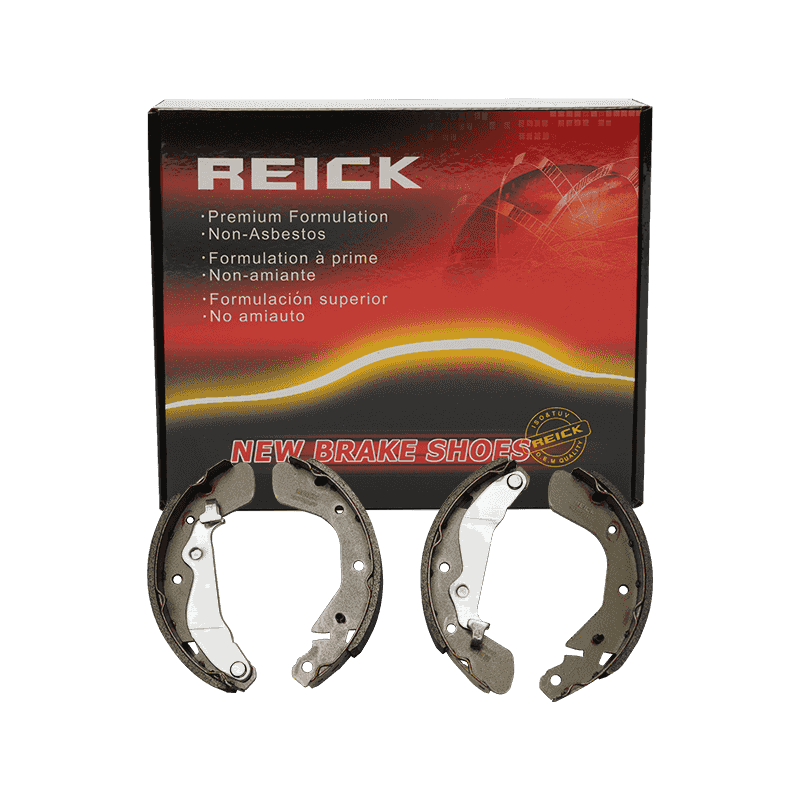
That division of labor is the reason a fluid service is the natural moment to inspect everything downstream of the master cylinder. Pads worn below the manufacturer's minimum, rotors under their discard thickness, or drum shoes glazed by heat all force the driver to brake longer and harder, which pushes more heat into the fluid and shortens its remaining life. Degraded fluid and worn friction components fail as a team, so both deserve attention at the same service visit.
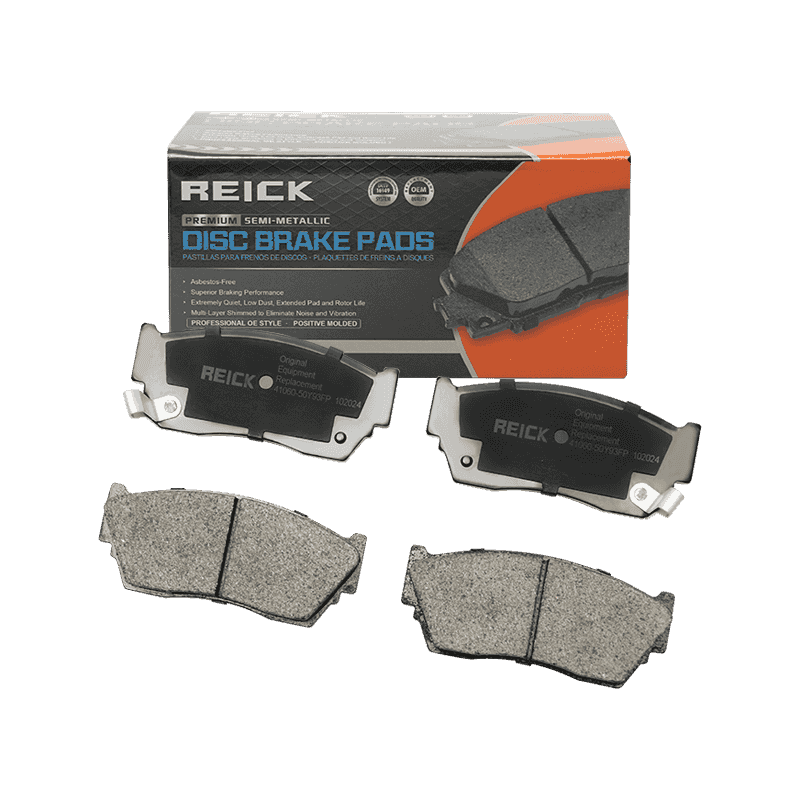
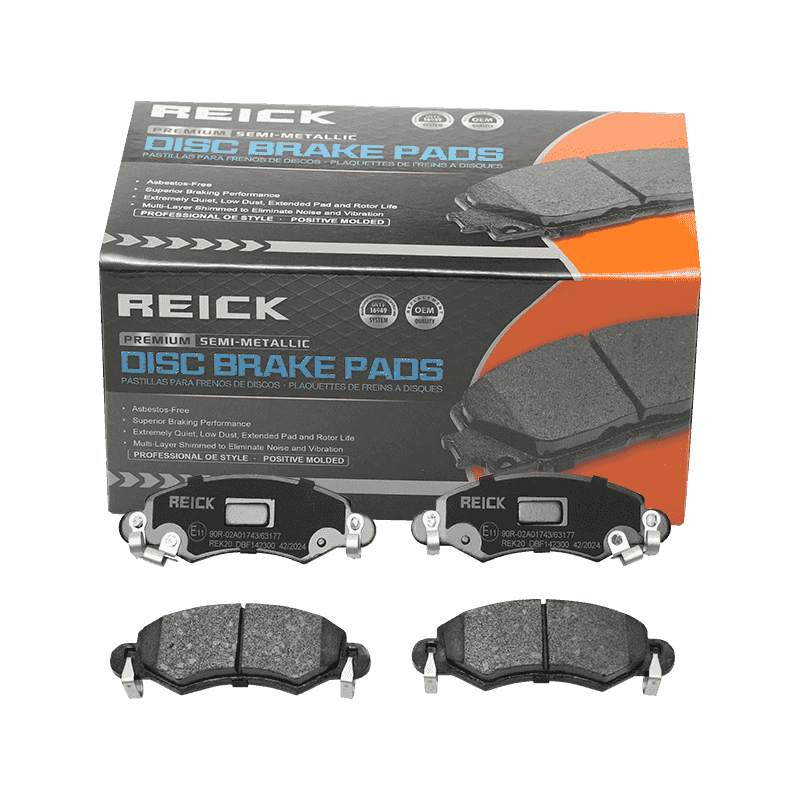
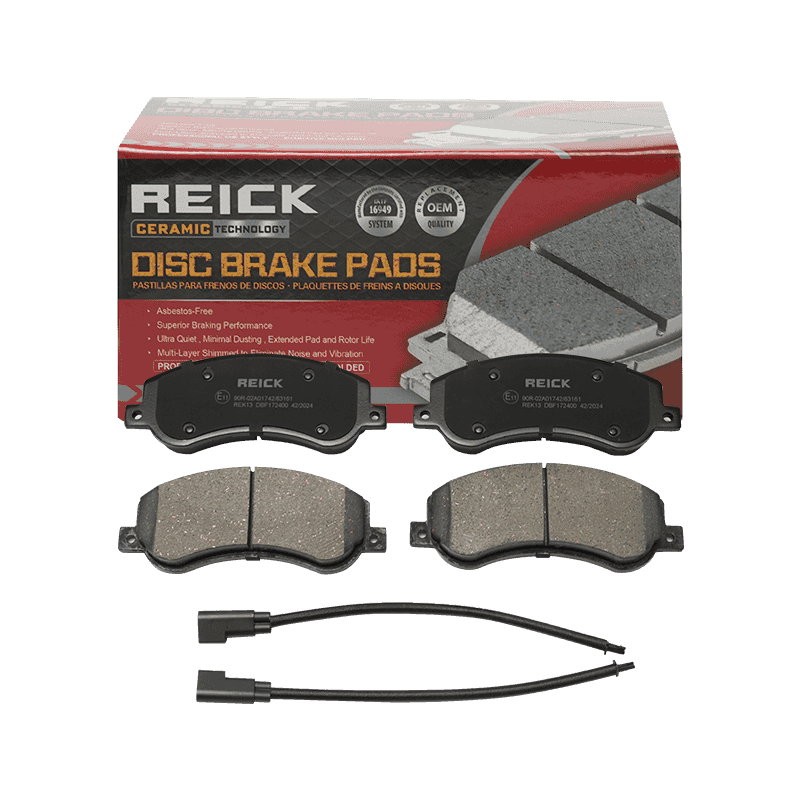
REICK COMPONENT Brake Boosters Vacuum boosters matched by OEM number, engineered to multiply pedal effort while the DOT 3 circuit carries the pressure. REICK COMPONENT Brake Pads Ceramic, semi-metallic and low-metallic formulations produced under ISO/TS16949 controls and fitted to global vehicle platforms.For a corner-by-corner walkthrough of this force path, including where disc calipers and drum wheel cylinders differ, see our complete guide to how automotive brakes work.
Glycol fluid is an effective hydraulic medium and an aggressive household chemical at the same time. A short list of shop-floor habits prevents most of the failures technicians encounter:
None of this is complicated, and all of it costs less than a single claim caused by vapor lock, corroded cylinders or a ruined paint panel.
The short version: DOT 3 is a minimum standard, not a compromise. It certifies 205°C of fresh boiling headroom, tolerates top-offs from higher glycol grades, and asks for nothing more than a flush every two years. Handled that way, it remains the most forgiving link in the braking chain.
For parts distributors and workshops, every fluid flush doubles as a checkpoint for the components the fluid protects, and sourcing those components from one qualified supplier keeps that inspection simple. REICK manufactures ceramic, semi-metallic and low-metallic brake pads, drum brake shoes, discs and rotors, vacuum boosters and asbestos-free linings under an ISO/TS16949-controlled process with ECE R90 conformity, covering passenger car, commercial vehicle and agricultural applications. The full braking parts range, matched by OEM number and vehicle model, is available for direct inquiry.
REICK COMPONENT Brake Discs & Rotors Precision-machined rotors for passenger cars and light trucks, thickness and flatness checked before shipment.Pair fresh DOT 3 with friction components that are still within specification, and the pedal you feel on the first stop of the morning will feel the same on the last stop of the day.
Recommended Products


+86-139 6193 3287
+86-515-88410559

+86-515-88580498

reickchina@reickparts.com

B1002 Huabang Dong No.1# South Renmin Road, Tinghu District, Yancheng City, Jiangsu, China
Copyright © 2024 Yancheng Reick Automotive Parts Co., Ltd. All Rights Reserved.
Automotive Brake Manufacturers Automotive Clutch Parts Suppliers



 English
 Español
 italiano