Home / News / Industry News / What Is a Caliper on a Car? How Brake Calipers Work, Fail and Get Replaced
 2026.11.06
 Industry News
Content
Ask a parts counter what a caliper is and the answer usually takes one sentence: the clamp that squeezes the pads. That is correct but incomplete. The missing part is what explains a car that pulls left under braking, one pad worn to the backing plate while its partner still shows 6 mm of friction material, or a front wheel too hot to touch after a ten-minute drive. A caliper is a hydraulic actuator, a sliding bracket, a seal package and a heat sink at the same time, and each of those four jobs fails in a different way.
A brake caliper is the hydraulic clamp bolted over the brake rotor, and it converts fluid pressure from the master cylinder into the clamping force that presses the pads against the rotor to slow the wheel.
The body is cast iron or aluminum. Inside sit one or more pistons, each sealed by a square-cut rubber seal and protected by a dust boot. On the outside you find guide pins or sleeves, pad abutment surfaces, a bleed screw and a fluid inlet, usually a banjo fitting.
The pedal moves, the master cylinder displaces fluid and line pressure rises. A firm stop can push pressure past 60 bar.
Fluid enters the caliper bore and pushes the piston outward, pad first toward the rotor face.
On a floating caliper the reaction force slides the whole body inward on its guide pins, so the outer pad meets the disc at the same moment.
When pressure releases, the square-cut seal untwists and draws the piston back a fraction of a millimeter, just enough to stop pad drag.
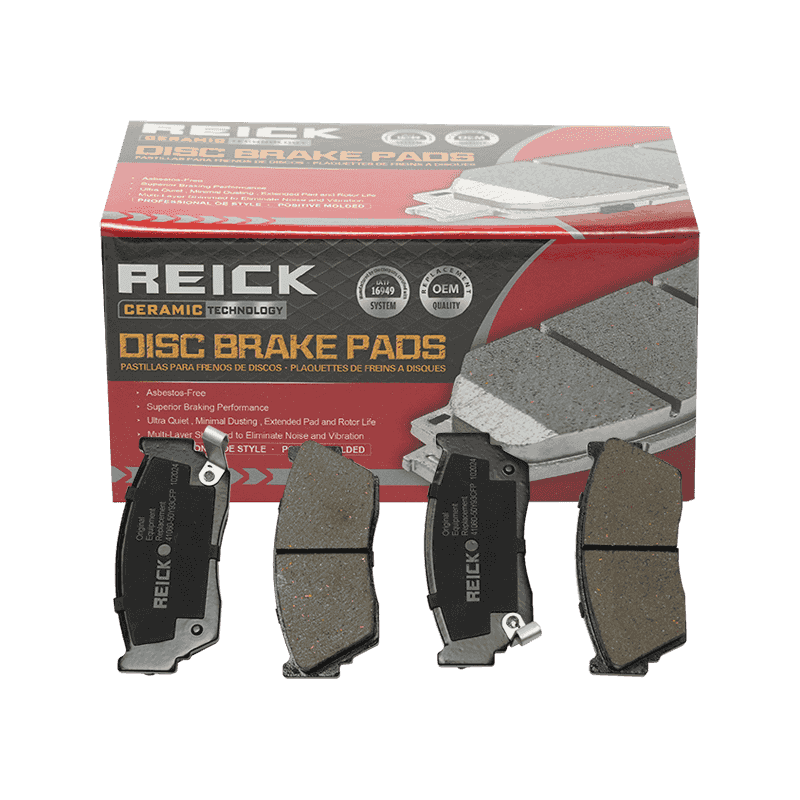
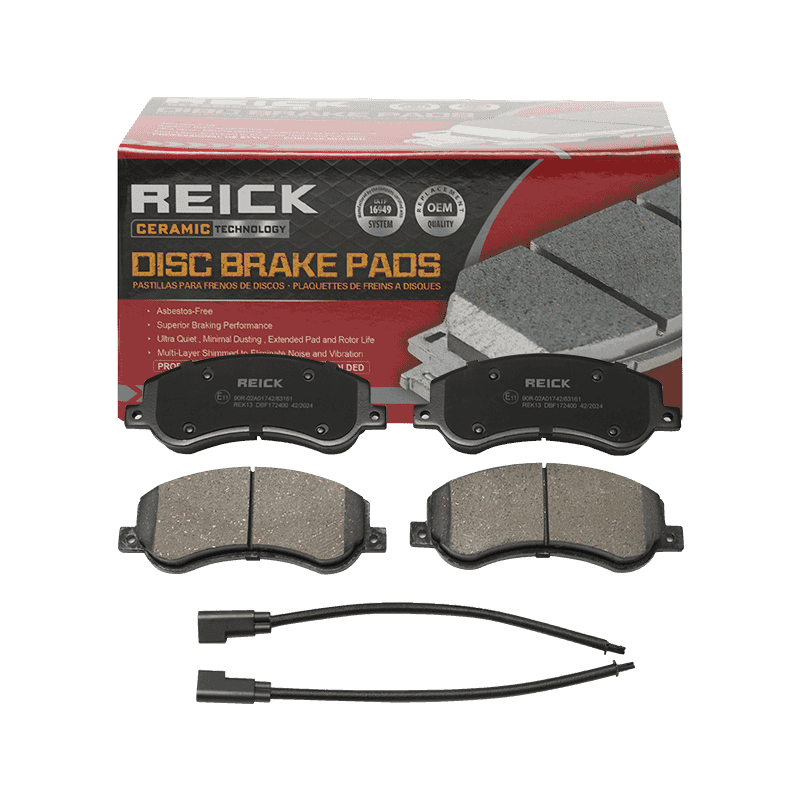
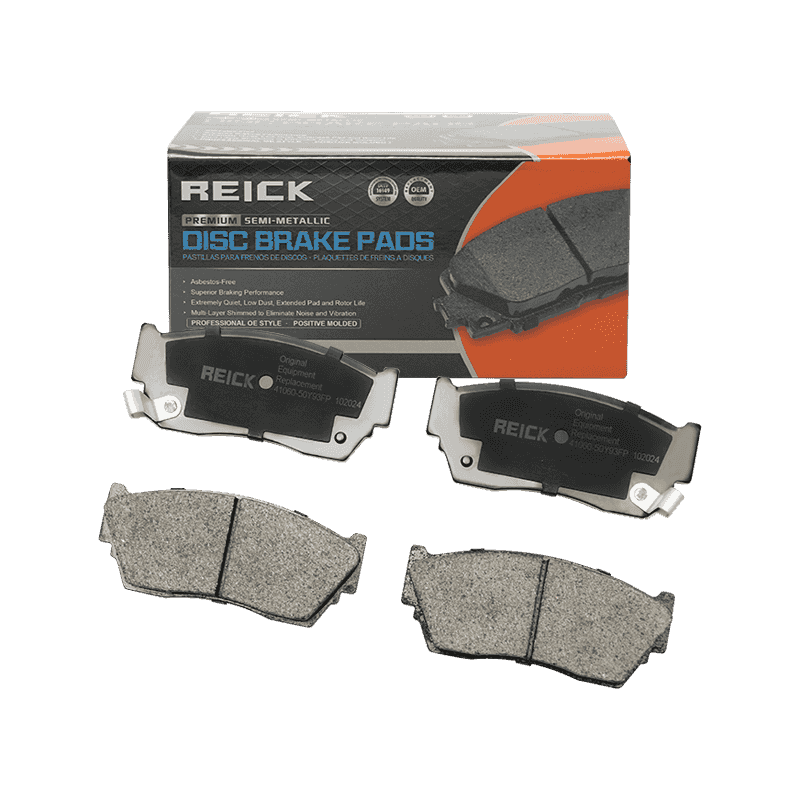 Automotive Brake Pads in Semi-Metallic, Low-Metal and Ceramic TypesBrowse semi-metallic, low-metal and ceramic brake pads for Mazda, Nissan, Subaru, Opel, Suzuki, BYD, Ford and Volkswagen applications.View Product →
Two details matter in the workshop. The retraction gap is tiny, commonly 0.1 to 0.3 mm, so corrosion on the piston skirt or a collapsing hose removes it entirely. And the caliper only transmits force: stopping distance is decided by pad compound, rotor condition and tire grip. Our guide to how automotive brakes work follows the pedal, booster, master cylinder and hydraulics in the order pressure actually travels.
Because the caliper works through the pad, pad condition and caliper health are read together. A pad that wears at an angle is a caliper story, not a friction story.
Most passenger cars use a floating, or sliding, caliper with one or two pistons on the inboard side, while performance models and light trucks more often use a fixed caliper with two to six opposed pistons.
The trade uses floating and sliding interchangeably, and both describe the same architecture: the body rides on guide pins and shifts a few millimeters sideways to center itself over the rotor. A fixed caliper has no guide pins, because pistons face each other from both halves of a rigid bridge. It never slides, never hangs up on a dry pin and holds a firmer pedal, at the cost of weight, width and price.
Piston count is not a performance guarantee. A four-piston fixed caliper can run cooler and modulate better than a single-piston slider, but a well-maintained slider with quality pads will outbrake a neglected fixed caliper every time.
The three most common caliper failures are a seized or corroded piston, a dry or rusted guide pin, and a torn dust boot that lets water and road salt reach the seal.
Caliper wear is rarely symmetrical, which is what makes it easy to spot. Check these signs on a lift or a test drive:
Heat is the multiplier. A dragging caliper can add 40 to 60 degrees Celsius to rotor temperature on an ordinary drive, and carry that into a long descent and the pad may pass its fade threshold, boil the fluid behind the piston and warp the disc. That is how a sticking caliper becomes a scored rotor and a spongy pedal within a few hundred kilometers.
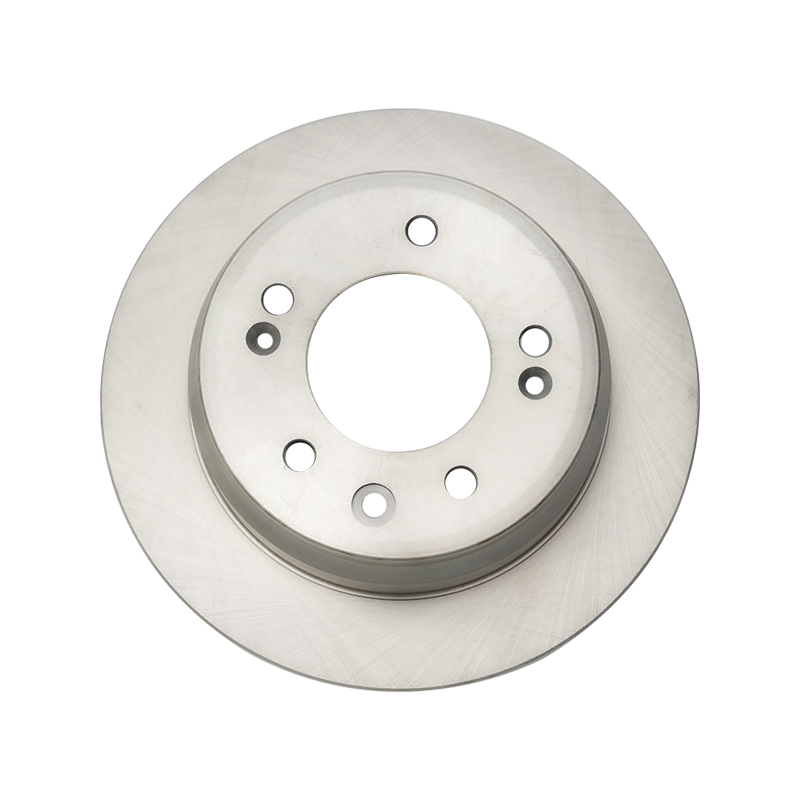 Brake Disc Rotors for Hyundai, Kia and Ford ApplicationsCompare solid and front brake disc rotors listed for Hyundai Sonata, Kia K5/Sportage and Ford F150, with OE-focused construction and selected dimensions.View Product →
A caliper is a rebuildable part: piston, seal, dust boot, guide pins and bleed screw all come in a kit, and a rebuild is normally the cheaper route unless the bore is pitted or the piston plating has lifted.
Judgement comes down to three inspections. Look at the bore for pitting where the seal seats, at the piston for chrome loss or a worn skirt, and at the guide pin bores for oval wear. If any of those is beyond cleaning, replace the unit, new or remanufactured to a known specification with the correct piston diameter. Fitting a 54 mm caliper on one side and a 57 mm unit on the other is a real risk on mixed parts shelves, and the result is a pull that no alignment will fix.
| Pulls to one side under braking | Seized piston or dry guide pin | Compare wheel temperatures and pad thickness |
| Inner pad worn to metal, outer still thick | Piston not retracting | Check piston movement with the caliper off |
| Wet dust boot, dropping reservoir | Piston seal leak | Inspect the bore for pitting and chrome loss |
| Grinding after a long drag | Pad worn past the backing plate | Measure rotor thickness against the minimum marking |
| Rear piston will not retract | Parking brake not in service mode | Run the retract function before removal |
Fluid compatibility is where most comeback jobs begin. DOT 4 fluid is designed for EPDM seals; mineral oil, engine oil or a petroleum-based parts cleaner will swell those seals within hours. Rinse with fresh brake fluid rather than solvent, and lubricate pistons and seals with brake fluid or the grease supplied in the kit.
The caliper is only the last link in the chain, and a tired booster or a swollen hose changes pedal feel long before the pads ever touch the disc.
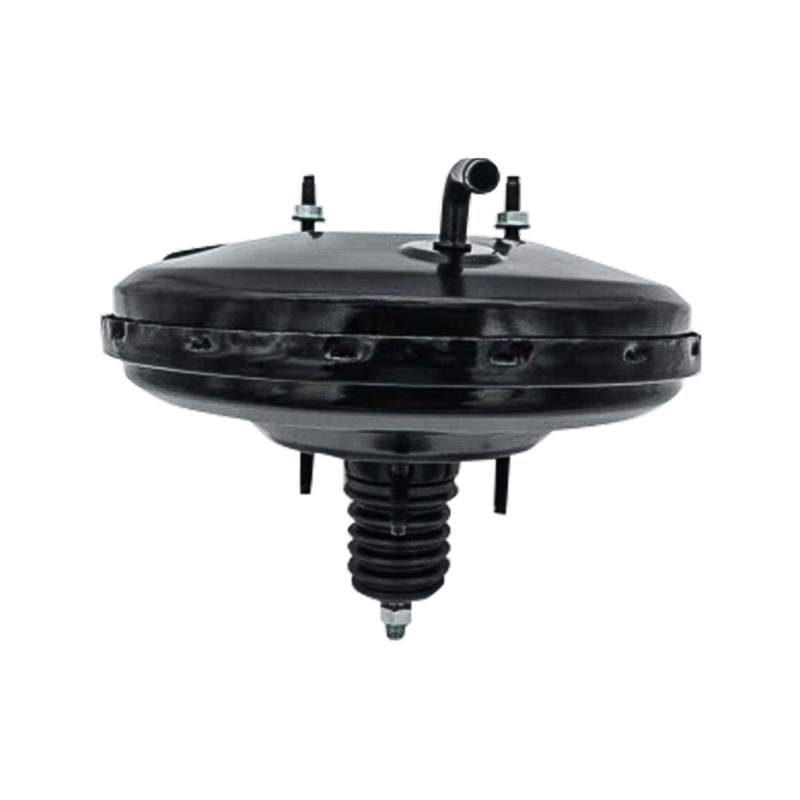
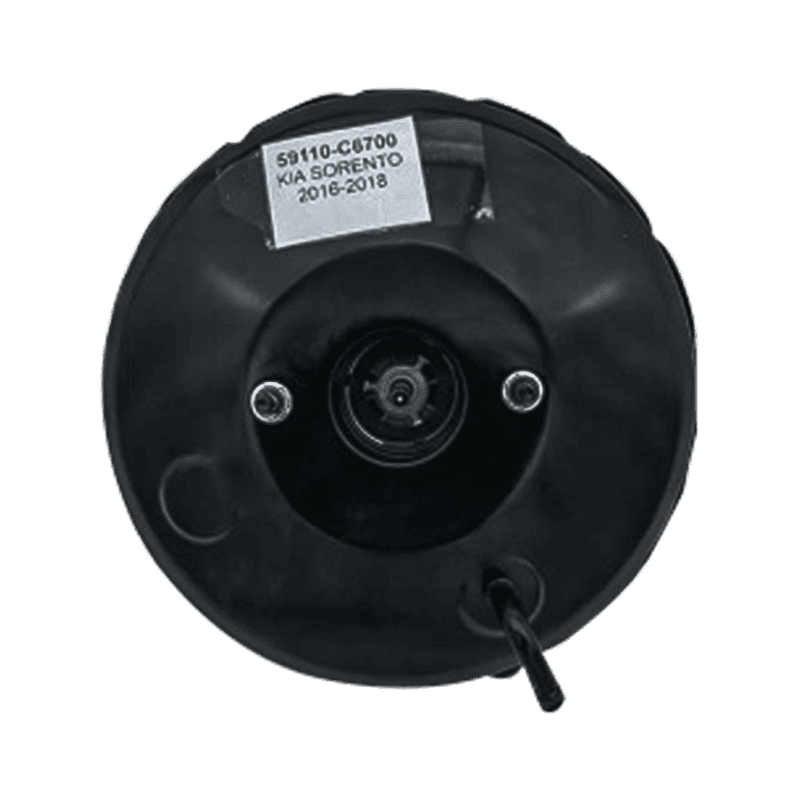 Power Brake Booster for Hyundai and Kia SorentoReplacement power brake booster for listed Hyundai and Kia Sorento applications, with cross-reference numbers 591102W300, 591104Z300 and 59110C6700.View Product →
Torque matters as much as cleanliness. Guide pin bolts commonly fall in the 25 to 45 Nm range and banjo bolts near 25 to 35 Nm, but confirm every figure against the model-specific manual, because aluminum knuckles and steel bolts do not forgive over-torque. Bleed each corner in the sequence the manufacturer specifies and never let the reservoir run dry mid-process.
For workshops and distributors building an inventory around these parts, pads, rotors and hydraulics have to line up with the same vehicle applications, so contact our team with your model list and OEM numbers to confirm fitment before ordering.
No. The pad is the friction material that touches the rotor, while the caliper is the hydraulic clamp that pushes it. Calipers last far longer than pads, but they live in the same heat and inherit the same consequences when a pad wears out.
Usually 75,000 to 100,000 miles, or roughly eight to ten years, with fluid changed on schedule. Cars driven through salted winters often need guide pins serviced long before the piston seal fails.
Only to the nearest workshop. A dragging caliper keeps generating heat, which can glaze the pad, boil the fluid and score the rotor within a few hundred kilometers, turning a small seal kit into a caliper, disc and pad replacement.
Open the bleed screw on the suspect corner. If the wheel frees up and the drag disappears, the hose is collapsing internally and trapping pressure; if the drag stays, the piston or the guide pins are the problem.
Recommended Products


+86-139 6193 3287
+86-515-88410559

+86-515-88580498

reickchina@reickparts.com

B1002 Huabang Dong No.1# South Renmin Road, Tinghu District, Yancheng City, Jiangsu, China
Copyright © 2024 Yancheng Reick Automotive Parts Co., Ltd. All Rights Reserved.
Automotive Brake Manufacturers Automotive Clutch Parts Suppliers


 English
 Español
 italiano