Home / News / Industry News / What Brake Fluid Does: Hydraulic Force, Boiling Points, and DOT Grades
 2026.10.26
 Industry News
Content
A pedal that sinks half an inch lower than it did last month is rarely a pad problem. What changed sits inside the hydraulic circuit: fluid that has taken on water, boiled earlier than it should, or lost the additives that keep seals supple.
Brake fluid is the quietest part of the braking system and the one that touches everything else. It fills the reservoir, travels through steel lines and rubber hoses, pushes the pistons in calipers and wheel cylinders, and lubricates the seals that keep the circuit closed. When it degrades, every one of those jobs degrades with it.
Three numbers explain most of the buying decision, so start there. The figures below are the minimum dry boiling points written into each DOT specification.
Brake fluid is a hydraulic medium: it converts the force of your foot into pressure at every wheel, and it is chosen because it barely compresses under load.
Liquid does not compress. Push a piston into a sealed line full of fluid and pressure rises almost instantly everywhere in that line. A master cylinder bore is larger than the caliper pistons it feeds, so a modest pedal travel produces a force multiplication of roughly three to five times before the booster assist is counted. That is how a light push at the pedal clamps four discs hard enough to stop a two-tonne vehicle.
Glycol fluid also carries corrosion inhibitors that protect steel lines, aluminium calipers and the ABS pump. Those inhibitors deplete long before the fluid looks dirty, which is why appearance alone is a poor service indicator. For a deeper walk through the circuit, this guide to hydraulic braking covers the parts and their failure points.
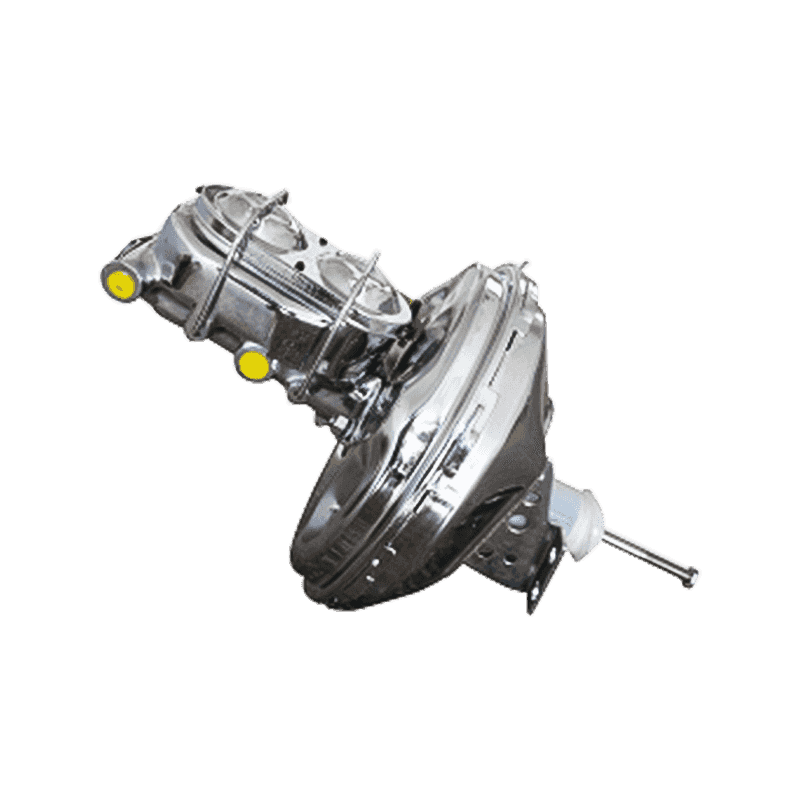 PB11003C Chrome Brake Booster and Master Cylinder AssemblyCombines a brake booster and master cylinder in one chrome-finished assembly, offering reduced pedal effort and corrosion protection for braking-system service.View Product →
Boiling point is the most important number on a brake fluid label, because vapor compresses and liquid does not.
A hard stop from highway speed can take a disc past 600 degrees Celsius. The caliper body and its fluid sit lower, but they climb fast, and once the fluid reaches its boiling point the first bubbles of vapor appear at the piston. From that moment the pedal feels long and soft, and a second hard stop can put it on the floor. This is vapor lock, and it explains why fluid that passed every check when cold can fail exactly when it is needed.
Minimum dry and wet boiling points in degrees Celsius, plotted on a 300 degree scale. Dark bars are wet values.
Wet boiling points are measured after the fluid has absorbed roughly 3.7 percent water by volume. That is why every wet figure sits 60 to 90 degrees below its dry partner, and why the wet column is the one that matters on a vehicle in service rather than on a shelf.
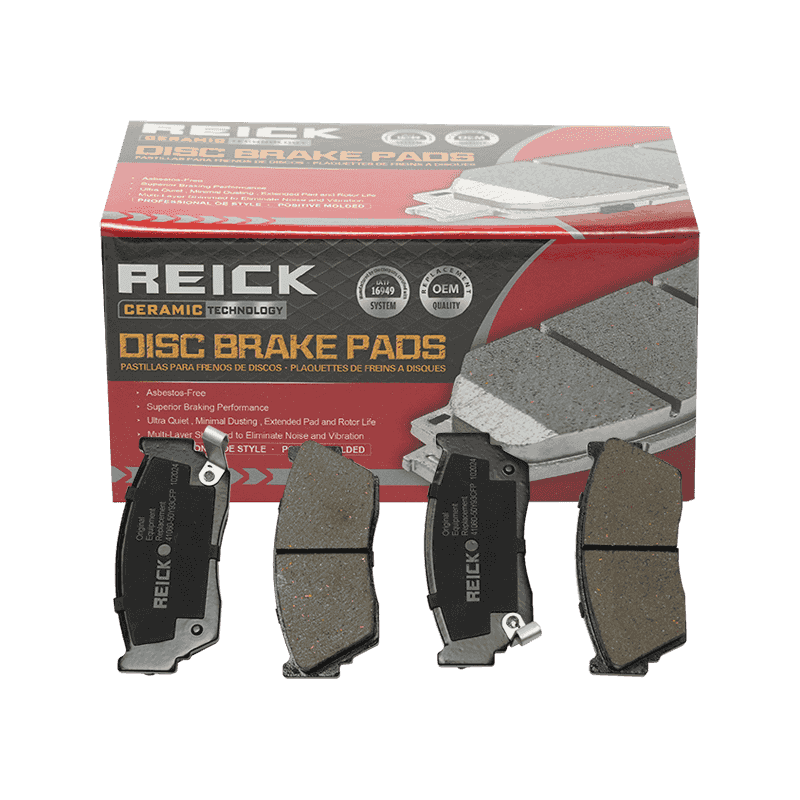
Fluid heat and friction heat come from the same stop, so pad choice and fluid choice are read together. A ceramic compound that runs cooler at the rotor leaves more headroom in the fluid, while an aggressive semi-metallic pad working a heavy car hard will find the limit of stale DOT 3 first.
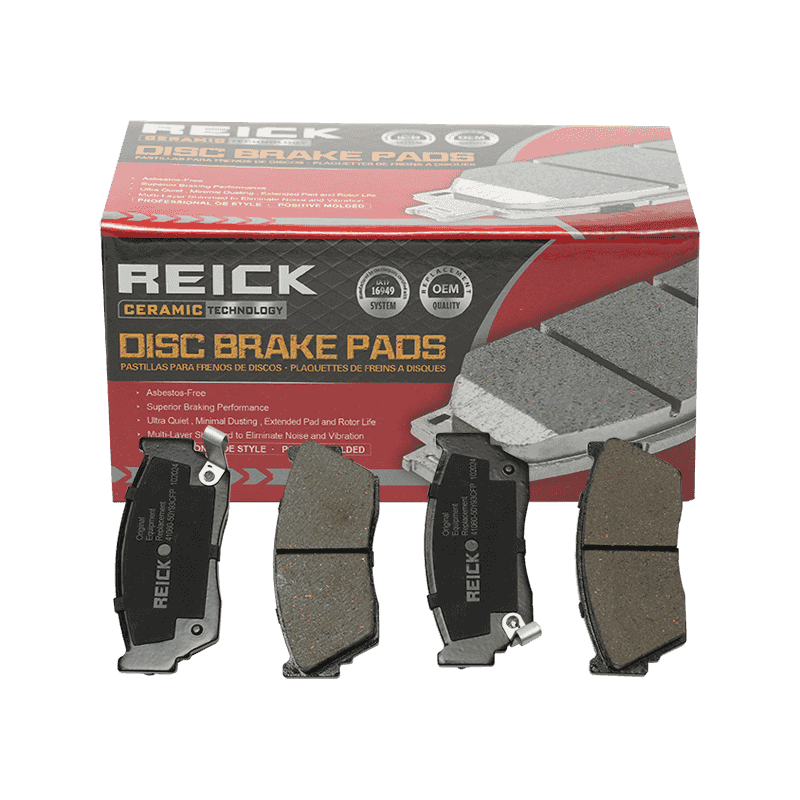 REICK Ceramic Brake Pads for Passenger and Performance ModelsCleaner, quieter ceramic pads with high heat resistance and listed fitments for Mazda, Nissan, Subaru, BYD, Ford and Volkswagen applications.View Product →
The DOT grade on the reservoir cap is the specification, and it sets minimum dry and wet boiling points plus viscosity limits at low temperature.
DOT 3, DOT 4 and DOT 5.1 are all glycol based and can be mixed in an emergency, although the result behaves like the lower grade. DOT 5 is silicone, does not mix with glycol, and belongs only in systems that specify it.
| Grade | Base chemistry | Dry boiling point | Wet boiling point | Mixes with glycol |
| DOT 3 | Glycol ether | 205 C minimum | 140 C minimum | Yes |
| DOT 4 | Glycol ether with borate esters | 230 C minimum | 155 C minimum | Yes |
| DOT 5.1 | Low viscosity glycol ether | 270 C minimum | 190 C minimum | Yes |
| DOT 5 | Silicone | 260 C minimum | 180 C minimum | No |
Two practical notes follow from that table. The figures are floors rather than typical values, so a quality DOT 4 usually tests well above 230 degrees dry. And viscosity matters in cold climates and in ABS or stability-control systems, where low-viscosity DOT 4 and DOT 5.1 fluids move through narrow valve passages faster.
Mixing a glycol fluid with DOT 5 silicone can swell seals, aerate the circuit and produce a pedal that never firms up, so base chemistry matters more than the number on the bottle.
Because glycol fluid absorbs water rather than repelling it, an opened container has a shelf life. A bottle that sat uncapped through a humid summer is not the product that left the factory. Decant from a freshly opened container during a flush and discard the remainder.
Most brake fluid failures are moisture failures rather than manufacturing defects, with glycol fluid pulling water through the reservoir cap and flexible hoses at roughly one to two percent of its volume per year.
Two years or 40,000 km is a common European schedule, three years or 60,000 km appears on many Asian and American ones, and annual changes are sensible for track use, heavy towing or mountain routes. On vehicles that sit unused for months, a boiling point test is a better guide than the calendar.
For a shop or a fleet, the fluid decision is a documentation decision: the grade on the job card, the test value recorded and the change interval all have to line up with the vehicle.
Two details catch people out in volume work. Fluid trapped in the ABS pump and stability-control valve block does not always exchange during a simple gravity bleed, so follow the manufacturer's actuation routine. And freshly changed fluid can feel slightly different for the first few kilometres while the last of the air works its way out.
REICK manufactures brake pads, brake shoes, discs, linings, boosters and clutch kits for passenger car, commercial and agricultural applications, and the team can answer fitment and specification questions directly. If a fleet programme needs parts and fluid matched to a specific model list, get in touch with our team to work through the details.
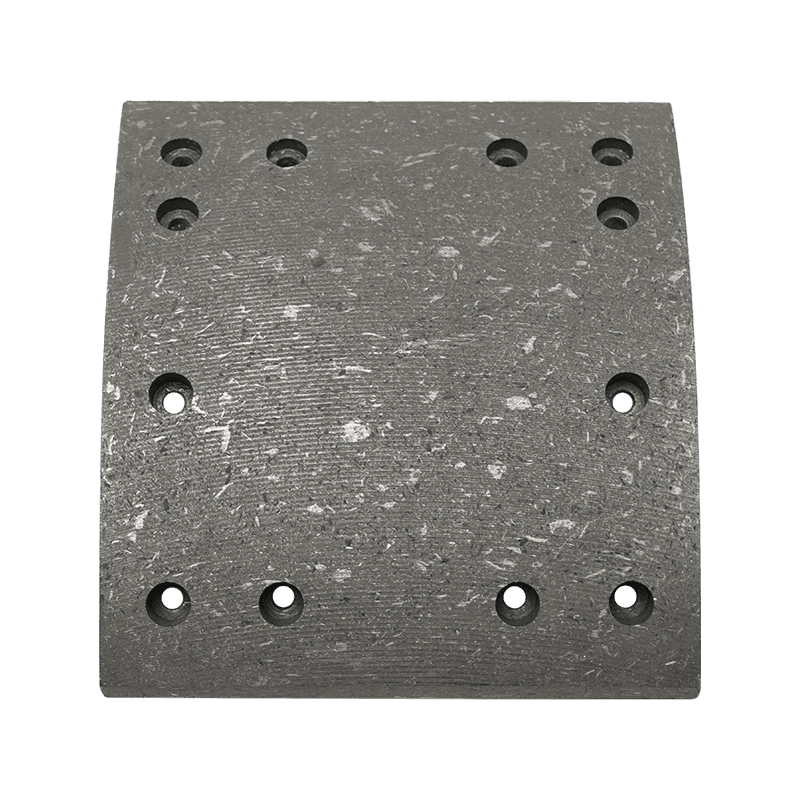
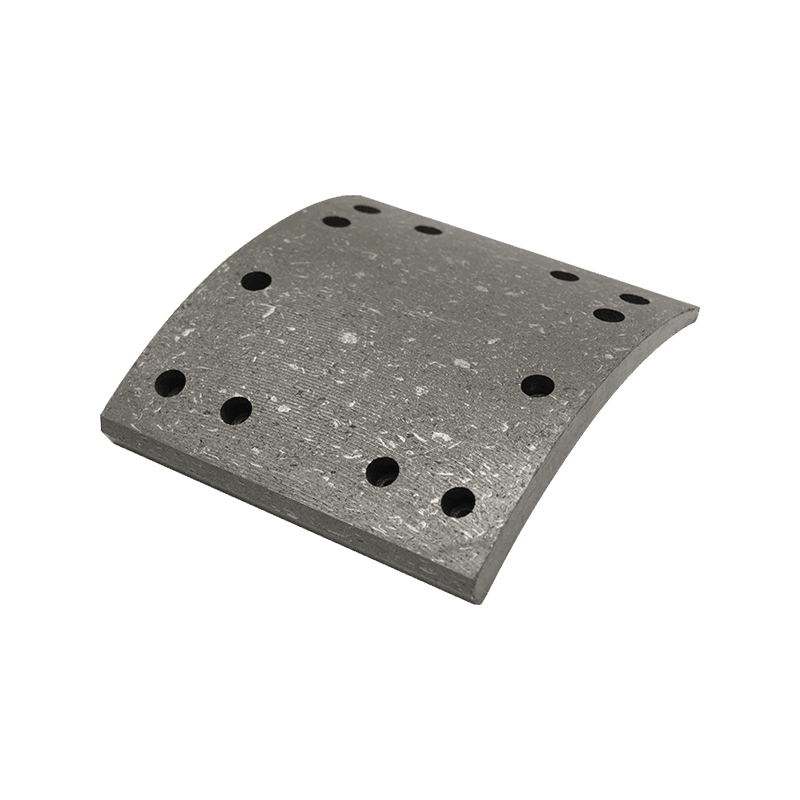 4515 Heavy-Duty Truck Brake LiningHeavy-duty brake lining with high wear and temperature resistance, available in +1, +2 and +3 mm repair sizes for demanding truck service.View Product →
Indirectly, yes. Fluid in good condition transmits pressure with almost no loss, so pedal travel stays short and modulation is more precise. Fluid near its boiling point introduces vapor, which lengthens pedal travel and can add several metres to a stop from highway speed.
It works in an emergency because both are glycol based. The mixture then behaves like the lower grade, so a DOT 4 system topped up with DOT 3 gives up roughly 25 degrees of dry boiling margin until the next full flush.
Two years or 40,000 km is the common European interval, three years on many Asian and American schedules, and annually for track use or heavy towing. A boiling point test beats the calendar on vehicles that sit unused for long periods.
Healthy DOT 4 is clear amber. Used fluid turns darker brown, and cloudiness or sediment points to contamination. Colour alone is unreliable, because corrosion inhibitors can break down before the fluid visibly darkens.
Recommended Products


+86-139 6193 3287
+86-515-88410559

+86-515-88580498

reickchina@reickparts.com

B1002 Huabang Dong No.1# South Renmin Road, Tinghu District, Yancheng City, Jiangsu, China
Copyright © 2024 Yancheng Reick Automotive Parts Co., Ltd. All Rights Reserved.
Automotive Brake Manufacturers Automotive Clutch Parts Suppliers


 English
 Español
 italiano