Home / News / Industry News / Warped Rotor Symptoms: How to Diagnose, Confirm and Fix Brake Pulsation
 2026.09.30
 Industry News
Content
The complaint usually arrives the same way: nothing feels wrong until the brakes are warm. Fifteen minutes into a drive, the pedal starts to pulse at 50 to 60 mph, the steering wheel shudders under light braking, and both symptoms disappear the moment the driver lifts off. That warm-up pattern is the signature of a rotor whose friction faces are no longer parallel, and it is the fastest way to separate a real rotor fault from worn pads, a bent wheel, or a tire balance problem.
Rotor work is also one of the easiest jobs to get wrong. Replace pads after a cold road test, or fit new rotors without cleaning the hub face underneath them, and the same customer returns a few thousand miles later with an identical vibration and a smaller wallet.
The symptoms of a warped rotor are a pulsating brake pedal, a shimmy through the steering wheel or floor pan, a rhythmic squeak or scrape that rises and falls with road speed, and a stopping distance that becomes less predictable once the brakes are hot.
A warped rotor is rarely bent metal. It is a rotor whose friction faces have developed thickness variation, often 0.02 mm to 0.05 mm across the face, which is enough to push the pads apart and squeeze them back together on every rotation.
The mechanism explains the pattern. At 60 mph a typical tire turns about 13 times per second, so one high spot on a rotor face produces a rapid pulse rather than a single thump. Each pass knocks the pads back and pushes the caliper piston deeper into its bore, and the piston cannot refill that gap instantly. The driver feels the result as a shudder that tracks road speed and stops the moment the pedal is released.
Every rotor complaint has a location, a road speed, and a temperature at which it appears. Those three details narrow the diagnosis faster than the word vibration on its own.
| Symptom | Where it is felt | Most likely source | Diagnostic weight |
| Pedal pulsation, worse when hot | Brake pedal, felt through the foot | Thickness variation on a front or rear rotor | High |
| Steering wheel shimmy | Steering rim, 45 to 70 mph | Front rotor runout or thickness variation | High |
| Seat and floor pan shake | Seat, footwell, centre console | Rear rotor thickness variation | Medium |
| Rhythmic squeak or scrape | Wheel area, changes with road speed | High spot striking the pad surface | Medium |
| Vibration with no brake input | Whole car at steady speed | Wheel balance, tire, or wheel bearing | Low |
A shimmy that stays constant with the brakes released is not a rotor symptom. Rotor faults change with brake application, with heat, and with road speed.
Front rotors are the usual suspects. They carry roughly two thirds of the braking load, run hotter, and sit directly under the driver's hands.
Hands point to the front axle, seat and floor point to the rear. When both are shaking, start at the front and measure before ordering anything.
Warping is a heat and clamping problem far more often than a materials problem. Six causes account for most of the pulsation jobs that arrive at a workshop counter.
Rotor faces only stay flat while the pads press them evenly, which is why uneven pad wear is an early warning worth acting on rather than logging for the next service.
A rotor that measures true on the bench can still pulse on the car if the hub flange underneath it was never cleaned.
Measure runout and thickness variation before quoting parts. A road test alone cannot tell you which rotor is at fault, or whether the problem is a rotor at all.
Almost every pulsation complaint that survives a proper hub clean comes back with a thickness variation above 0.03 mm.
Workshop rule of thumbResurfacing fixes a pulse only when the rotor still has enough material for a full cut and the runout source underneath it has been corrected. Otherwise, replacement is the cheaper answer over the life of the vehicle.
A rotor can be machined if the finished thickness stays above the minimum figure stamped on the hat and material remains for a future service. On-car machining removes runout in the assembled position, which is an advantage when the hub itself is slightly out of true.
Replace the rotor when it sits at or near minimum thickness, when thickness variation exceeds specification, or when the vehicle tows and carries loads. A new rotor is frequently cheaper than two machining passes plus the labour and the comeback risk.
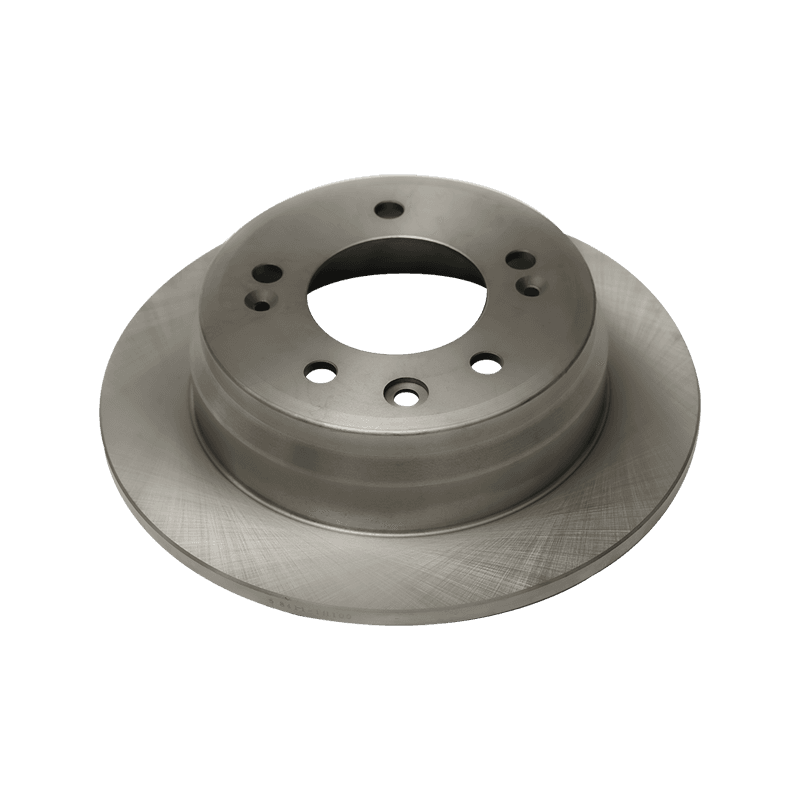 58411-1H100 Brake rotor disc for HYUNDAI Sonata, KIA K5 and Sportage• Elevated quality standards. • Lower in weight. • Superior vibration absorption capabilities. • Drilled and counter sunk holes process. • Exceptional thermal resistan...View Product →
Whichever route you take, new pads go on at the same time. Used pads carry the imprint of the surface they wore against, and that imprint will transfer straight onto a fresh rotor. Check when a rotor is past resurfacing before you book lathe time.
Never mix a machined rotor with used pads on the same corner. Pad surface and rotor surface must be bedded together from the same starting condition.
Truck and fleet rotors warp for the same reasons, but the consequences are measured in downtime rather than driver comfort.
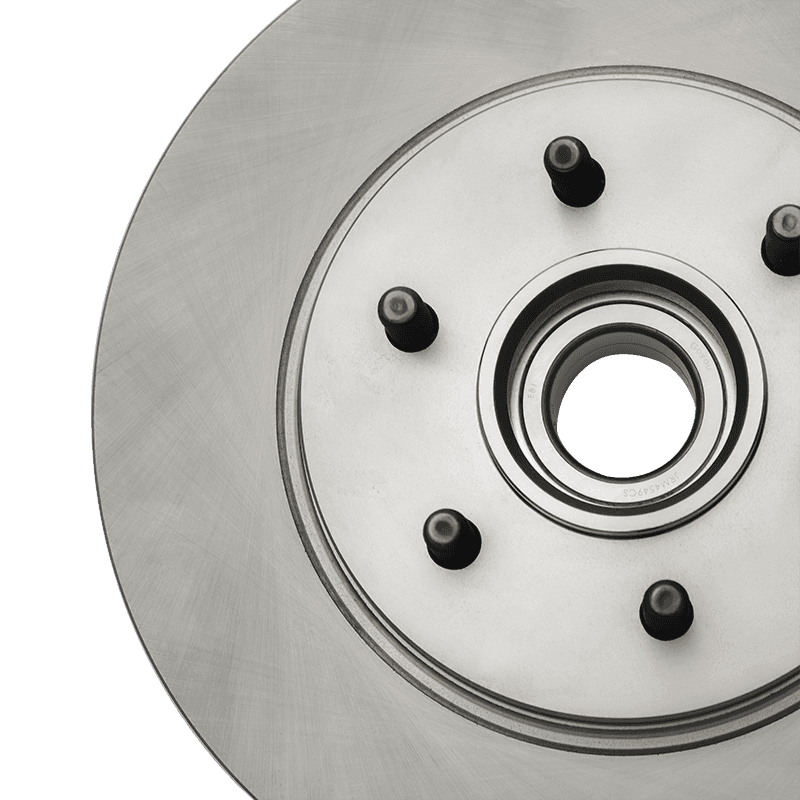 54107 Brake disc rotor for FORD TRUCK F150 and LINCOLN TRUCK Mark• Easy installation. • Corrosion resistance. • Excellent braking experience. • Short stopping distances. • Exceptional durability.View Product →
In fleet use, a rotor that reaches minimum thickness early is a warning about caliper drag or driving pattern, not a bad batch of rotors.
Clean hub faces, correct fastener torque, and a genuine bed-in procedure prevent most repeat rotor complaints.
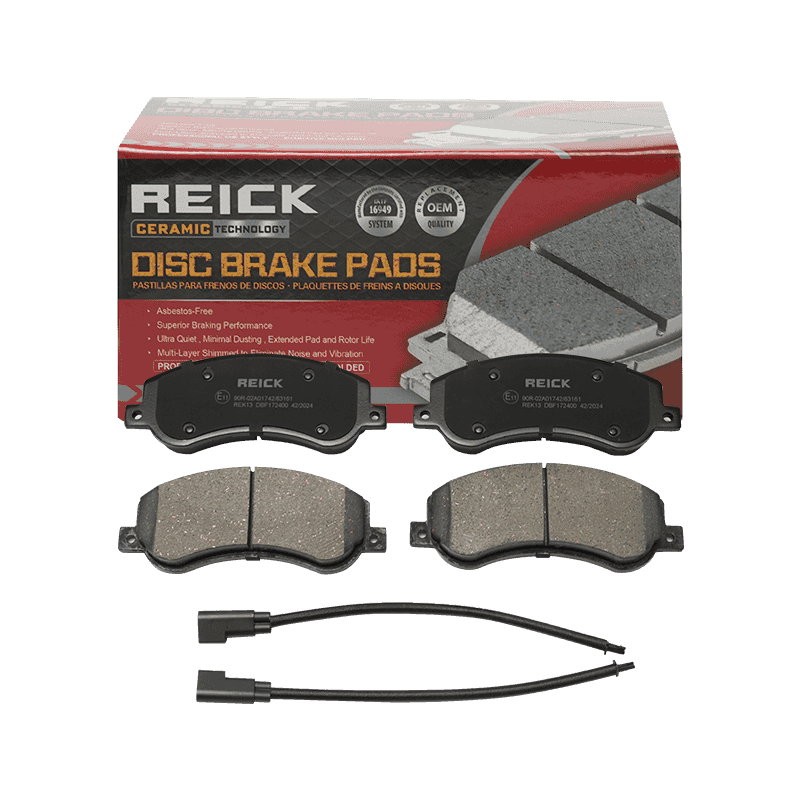
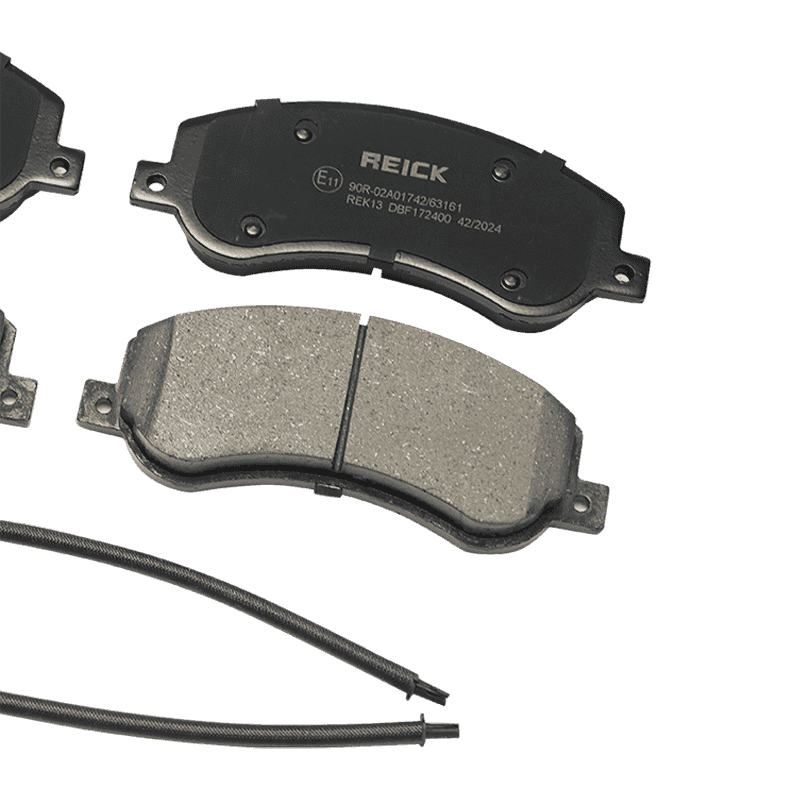 GDB1724 Front Disc brake pads for BYD Tang, FORD Transit and VOLKSWAGEN Amarok• Exceptional anti-dust capability. • Shorter braking distances. • Applicable to original equipment specifications. • Positive mold care press. • Quiet braking.View Product →
A rotor only stays flat when the pads press it evenly and the heat leaves it evenly. Both conditions are decided during installation, not during the first hard stop.
No. Light pad deposits can wear away with gentle driving, but thickness variation in the metal does not correct itself. The pulse usually returns as soon as the brakes are hot again.
They are rarely an immediate safety failure, but they reduce pad contact, lengthen stopping distances, and add heat to the caliper. Any change in pedal travel, or a pedal that sinks toward the floor, should be treated as urgent.
While the pedal stays firm and the vibration remains a comfort issue, the car is still drivable at reduced speed, but rotor and pads continue to wear unevenly. Book the job rather than waiting for the noise to worsen.
Less often, because they carry less braking load and run cooler. When they do, the vibration is felt through the seat and floor pan rather than through the steering wheel.
Measure first, clean the hub face, replace pads whenever rotors are changed, and bed the pair in properly. That sequence solves the large majority of warped rotor complaints on the first visit.
Recommended Products


+86-139 6193 3287
+86-515-88410559

+86-515-88580498

reickchina@reickparts.com

B1002 Huabang Dong No.1# South Renmin Road, Tinghu District, Yancheng City, Jiangsu, China
Copyright © 2024 Yancheng Reick Automotive Parts Co., Ltd. All Rights Reserved.
Automotive Brake Manufacturers Automotive Clutch Parts Suppliers



 English
 Español
 italiano