Home / News / Industry News / What Is Brake Fade? Causes, Warning Signs, and Proven Fixes That Restore Stopping Power
 2026.10.09
 Industry News
Content
Five minutes into a long descent, the pedal has already traveled lower than it did at the top, the car is still picking up speed, and nothing has snapped, leaked, or lit a warning light. The brakes still work. They simply work less. That difference between the brake you had and the brake you have is brake fade, and it is the most common reason a mechanically healthy braking system stops performing on a mountain road, in a loaded pickup, or on the third hard lap of a track day.
Brake fade is a temporary loss of braking force caused by heat, not by a failed component.
Brake fade is the heat-driven reduction in braking effectiveness that occurs when either the friction material at the pad and rotor interface, or the hydraulic fluid pushing it, is forced outside its designed temperature window.
The word temporary carries most of the meaning. A worn pad, a dragging caliper, or a leaking line produces weak brakes from the first stop of the morning and stays weak all day. Fade is temperature-dependent: it builds after repeated or sustained braking, it gets worse the harder you lean on the pedal, and it usually retreats within ten to fifteen minutes once the system cools.
Nothing has mechanically failed when fade sets in. The master cylinder still builds pressure, the calipers still clamp, and the pads still touch the rotor. What changes is the conversion rate at the contact patch. A pad that generates a friction coefficient of roughly 0.40 when cool can fall toward 0.20 when it overheats, which means the same pedal pressure now produces about half the stopping force.
Friction fade, fluid fade, and green fade are the three forms brake fade takes, and the fix for one will not cure another.
| Form of fade | What happens inside the system | What the driver feels | Typical trigger | How it clears |
| Friction fade | The pad passes its temperature window and its friction coefficient collapses | Firm pedal, weak brakes, longer stops | Repeated hard stops, long descents, track laps | Fully, once pads and rotor cool |
| Fluid fade | Moisture in the fluid boils and vapor compresses instead of transmitting force | Pedal goes long and spongy, may sink toward the floor | Sustained heavy braking on old or wet fluid | Only after cooling plus a fluid change |
| Green fade | Binders in a new pad release gas and form a lubricating layer on the friction surface | Weak, inconsistent braking right after a pad change | The first hard stops on freshly fitted pads | Disappears after correct bedding-in |
Friction fade costs you stopping distance. Fluid fade takes the pedal away entirely. If the pedal sinks toward the floor, stop the vehicle and treat it as a breakdown rather than a driving technique problem.
The three forms are often confused because they arrive in the same place. A driver who has just cooked a set of pads on a downhill run usually assumes the fluid is at fault, replaces it, and repeats the failure a month later. Matching the symptom to the mechanism is what makes the repair stick.
Brake fade warns you through the pedal and through your nose long before the car stops responding.
A soft pedal on a cold start is not fade. It is air in the lines, a failing master cylinder, or a leak, and it should be diagnosed before the next drive. Fade only appears after heat has built up, and it improves as the brakes cool.
Fade begins at a temperature, and every brake system has one.
The gap between the second and third figures is the entire argument for fluid maintenance. A system filled with fresh DOT 3 boils near 205 °C. The same system two or three years later boils near 140 °C, and on a long descent that difference arrives as a pedal that goes soft and then long. Higher-specification fluids raise the wet ceiling, which is why fresh DOT 4 has become the workshop default.
Brake fluid is the only part of the braking system that gets worse while the car sits still. Two years is the standard service interval, and fluid that has already boiled once should be replaced, not topped up.
Fade is a thermal problem, so every fix that genuinely works either moves heat out of the system faster or raises the temperature at which something gives up.
Friction compounds are designed around a working range. Below it, cold bite is weak. Above it, the binder softens, the friction surface glazes, and the coefficient of friction collapses. Organic and NAO compounds generally fade earlier and harder than semimetallic material, because the steel and iron content in a semimetallic pad keeps usable friction available at higher temperatures. The trade-offs are real, however: semimetallic pads run noisier and wear rotors faster than ceramic compounds. Independent comparisons indicate that semimetallic brake pads resist fade better than organic pads once rotor temperatures climb past 400 °C, which is exactly the range a loaded vehicle reaches on a steep grade.
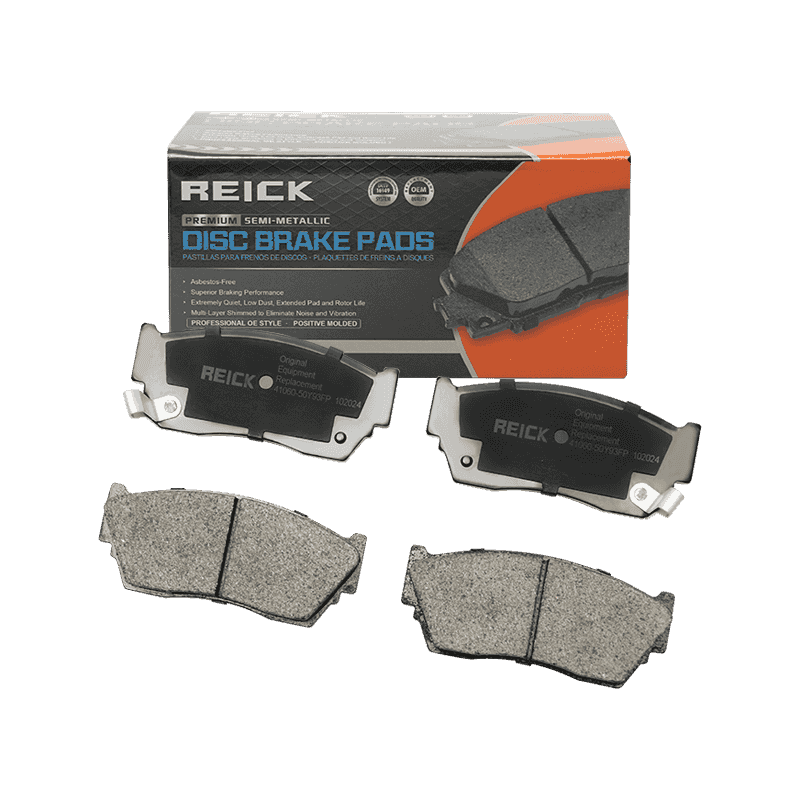
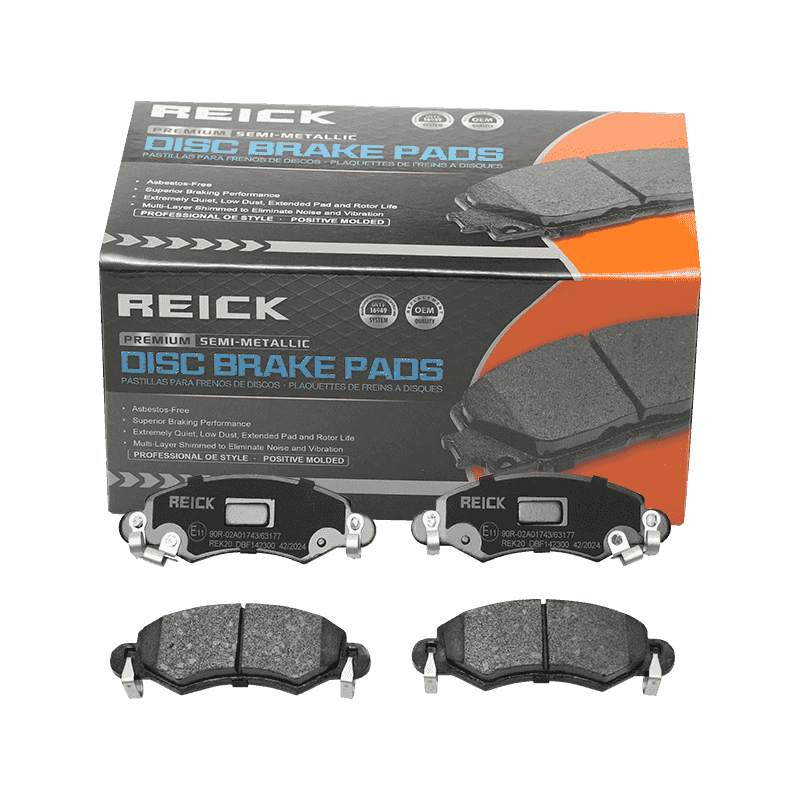
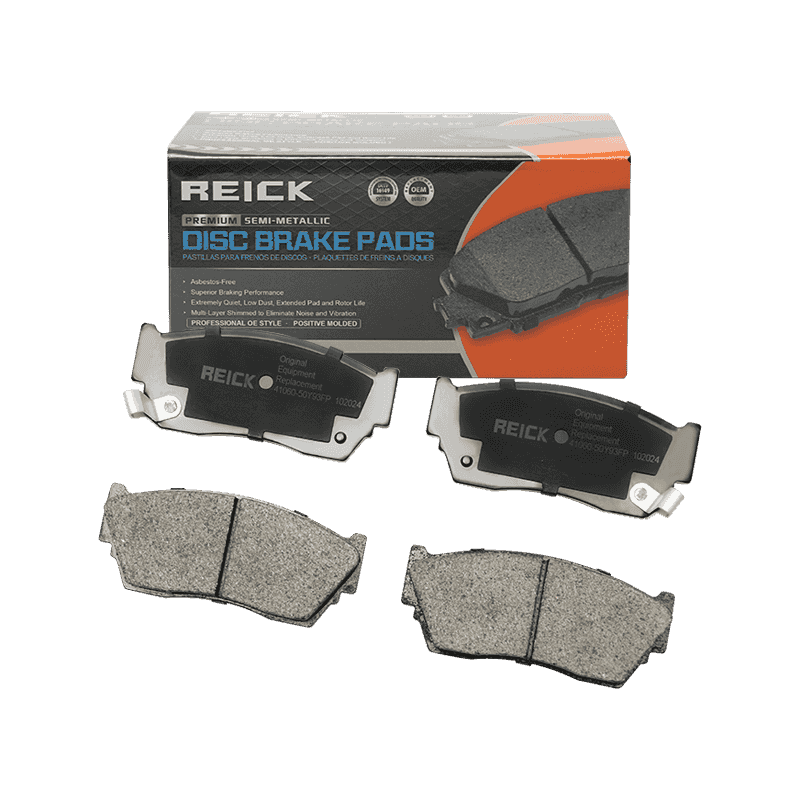 Semi-Metallic Brake Pads for Heavy-Load and High-Temperature UseView REICK semi-metallic brake pads suited to heavy-load and high-speed driving, with steep-grade fade resistance and fitments for Mazda, Nissan, Subaru and Dongfeng.View Product →
DOT 3, DOT 4 and DOT 5.1 fluids are hygroscopic by design. A sealed system still pulls in one to three percent water by volume each year through hoses, seals and the reservoir cap. Water lowers the boiling point, and boiled fluid leaves vapor that compresses under the pedal instead of moving the calipers. Replace the fluid every 24 months, or every 12 months on a vehicle that tows, hauls or descends regularly. Never mix DOT 5 silicone fluid into a system built for glycol-based fluid.
A brake rotor is a heat sink before it is a friction surface. A rotor with a 24 mm original thickness worn to its 22 mm minimum has roughly eight percent less metal to absorb the same energy, so it reaches fade temperature sooner on the same hill. Vented rotors shed heat faster than solid ones, which is why heavily loaded vehicles and performance cars use them. Measure rotor thickness with a micrometer at every pad change rather than judging by the wear lip, and replace rotors in pairs on the same axle.
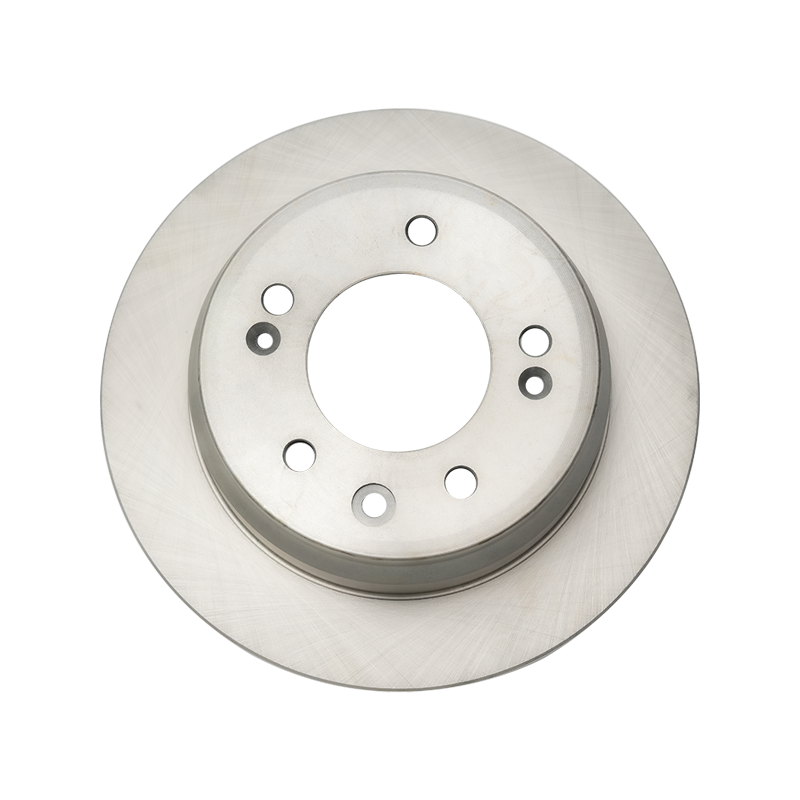 OE-Standard Brake Disc Rotors for Cars and TrucksReview REICK brake disc rotors with DTV management and drilled or slotted cooling options, including fitments for Hyundai, Kia, Ford and Lincoln.View Product →
This is also where supplier testing shows up in the specification. Working with a manufacturer that runs laboratory and road tests on brake components before mass production gives a fleet buyer documented evidence rather than a price promise, which matters when the same vehicle keeps overheating its brakes.
Riding the brakes down a four kilometer descent puts roughly the same thermal load into the system as a short track session, just delivered more slowly. The fix costs nothing. Select a lower gear, let engine braking hold the speed, brake firmly and briefly instead of lightly and continuously, and stop for fifteen to twenty minutes if the pedal starts to feel long. A fade event that has already begun rarely reverses while the vehicle keeps descending.
The cheapest anti-fade upgrade on any vehicle is a fresh fluid change with a quality DOT 4, followed by pads rated for the load the vehicle actually carries rather than the load the brochure assumes.
The right anti-fade setup depends on duty cycle, not on price.
Ceramic or low-metal pads, DOT 4 fluid every two years, standard vented rotors, and a proper bedding-in routine after every pad change.
Semimetallic pads, annual fluid service, rotor thickness checked at every service, and deliberate use of engine braking on long grades.
High-temperature semimetallic pads, DOT 5.1 where the system allows it, planned cooldown stops, and brake cooling ducts if they fit.
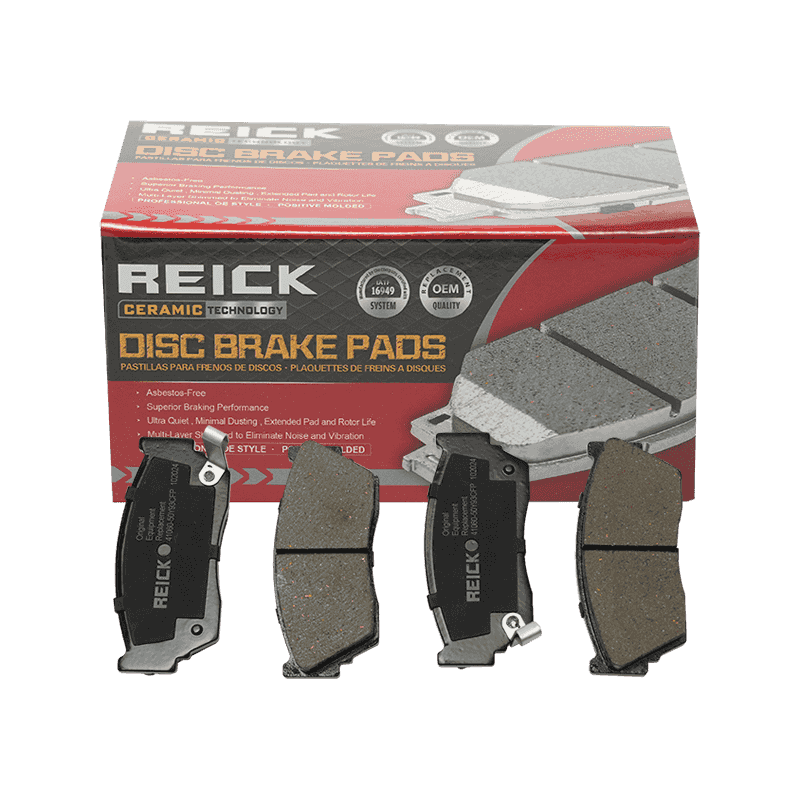
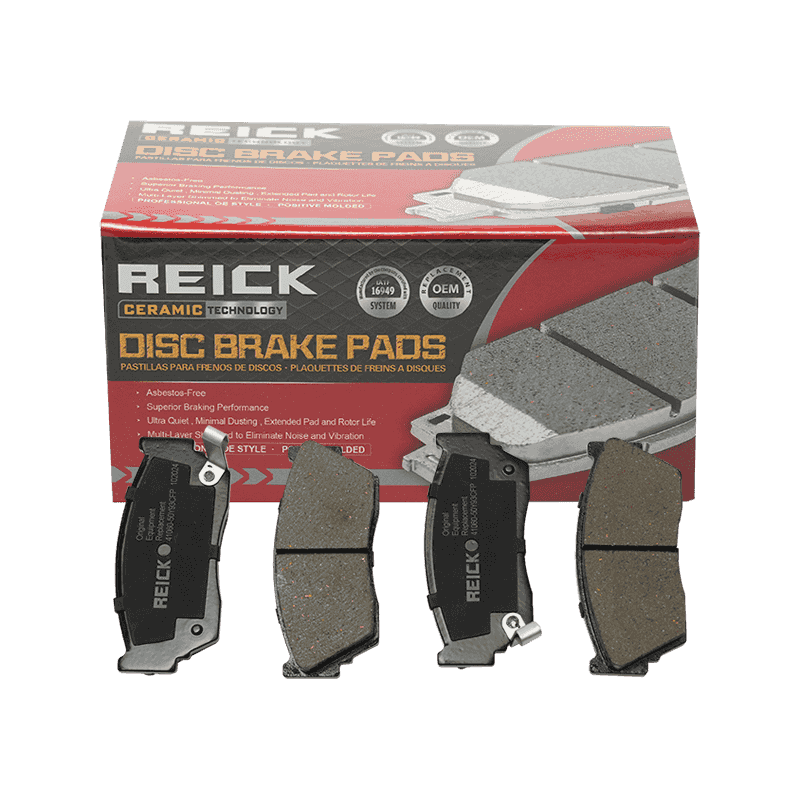 Ceramic Brake Pads for Quiet High-Speed BrakingReview REICK ceramic brake pads with mineral, aramid and ceramic fibers for quieter, high-heat stops, with fitments for Mazda, Nissan, Subaru, BYD, Ford and Volkswagen.View Product →
Two fade events inside the same month mean something in the system is undersized for the job. That is a specification problem, and it has a specification answer.
Load matters as much as hardware. A vehicle at its gross vehicle weight rating needs noticeably more stopping energy than the same vehicle empty, and the brake system has no way to know the difference until the temperature climbs. If a route or a trailer pushes the vehicle near its limit, the pad compound and fluid specification should reflect that before the first descent, not after it.
Friction fade is not permanent. Once pads and rotor return to their normal temperature range, usually after ten to fifteen minutes of light driving or standing still, braking force returns on its own. Fluid fade behaves differently. Once the fluid has boiled, vapor will form again at a lower temperature, so the fluid has to be replaced rather than simply cooled.
Yes. Green fade commonly appears in the first few hundred kilometers after fitting new pads, because the resins and binders on the friction surface release gas under heat and create a thin, slippery layer between pad and rotor. A proper bedding-in routine, a series of firm stops from around 60 km/h with cooling intervals between them, removes most of it.
No. ABS manages wheel lockup and a booster multiplies the force you apply, but neither adds friction at the contact patch nor raises the boiling point of the fluid. A powerful booster can make fade feel worse, because the pedal still travels normally while actual stopping power drops away.
Timing separates them. Air in the hydraulic system gives a spongy or low pedal on the first stop of the day, when everything is cold, and the pedal never firms up properly. Fade appears only after heat has built in the brakes and improves once they cool. A pedal that is soft from a cold start needs bleeding or repair, not a pad upgrade.
Fade is predictable. Heat, load and moisture decide when it happens, and all three can be managed before the fade rather than after it.
The pedal stays where you expect it when four things are true: the fluid has not absorbed its way down to a wet boiling point, the pads are rated for the load they carry, the rotors sit above minimum thickness, and the driver lets the engine do part of the work on a descent. Get those four right and brake fade becomes something you read about instead of something you survive.
Recommended Products


+86-139 6193 3287
+86-515-88410559

+86-515-88580498

reickchina@reickparts.com

B1002 Huabang Dong No.1# South Renmin Road, Tinghu District, Yancheng City, Jiangsu, China
Copyright © 2024 Yancheng Reick Automotive Parts Co., Ltd. All Rights Reserved.
Automotive Brake Manufacturers Automotive Clutch Parts Suppliers



 English
 Español
 italiano